
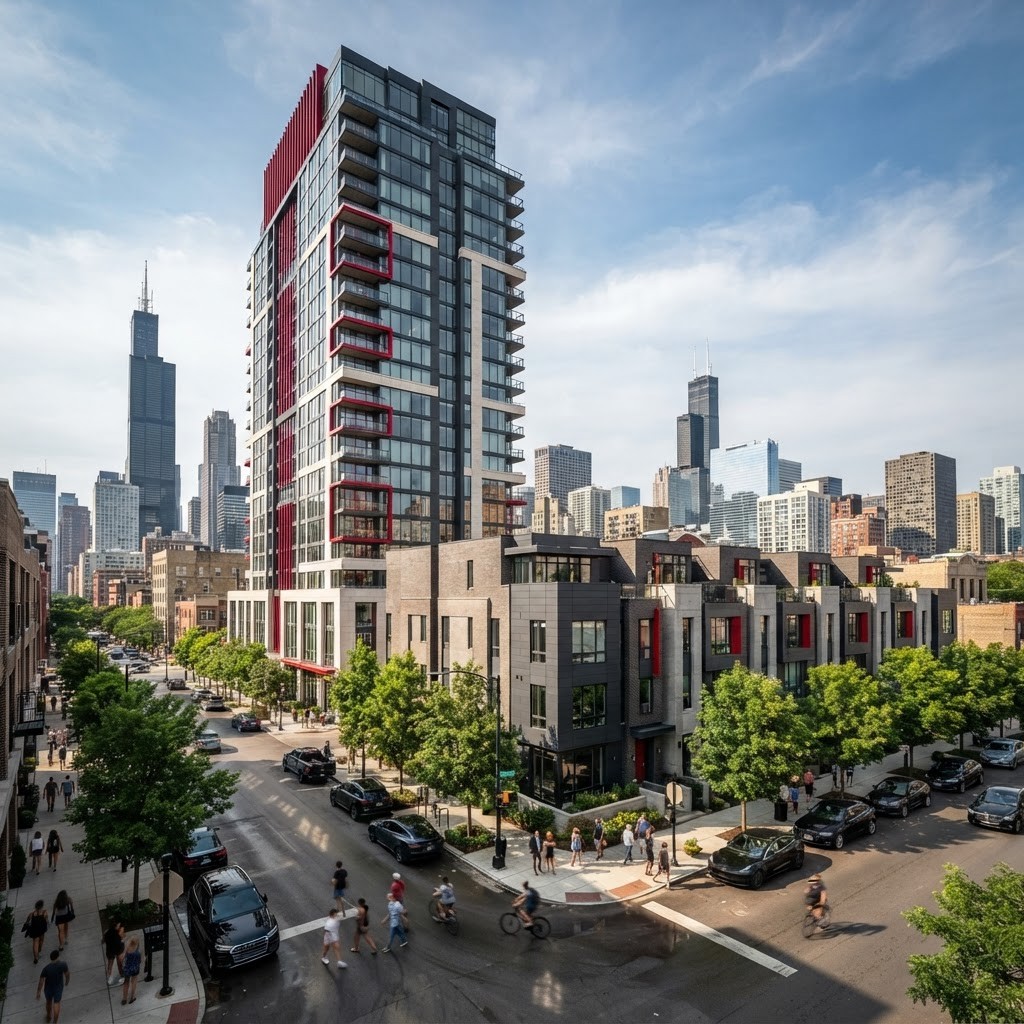
Who Is Building Chicago’s Next Chapter?
Chicago’s residential market is defined by contrasts: historic brick neighborhoods, lakefront high-rises, adaptive-reuse lofts, modern rental towers, and carefully planned suburban communities. Developers influence not only individual homes but also street life, infrastructure, retail activity, and long-term neighborhood identity. The best firms combine financial discipline, design quality, construction oversight, community awareness, and credible plans for operating or completing what they build.
Prospective buyers and renters should judge each property independently. A respected developer is a positive signal, not a guarantee. Review building disclosures, association budgets, warranties, finish specifications, delivery history, and the team responsible for construction. These ten developers have made meaningful contributions to residential real estate across Chicago and its metropolitan area.
1. Related Midwest
Related Midwest is one of Chicago’s most visible residential developers, with luxury condominiums, rental towers, and large mixed-use plans. The firm is known for ambitious architecture, extensive amenities, and projects positioned to reshape significant urban sites. Its scale allows it to coordinate complex financing and public-realm improvements, making it a central participant in Chicago’s high-end and master-planned market.
2. Magellan Development Group
Magellan Development Group has played a defining role in Lakeshore East and other prominent downtown communities. Its strength lies in creating integrated environments where residences, parks, hospitality, and retail work together. Buyers attracted to amenity-rich towers and carefully managed public spaces will frequently encounter Magellan’s influence.
3. Sterling Bay
Sterling Bay is widely recognized for commercial and mixed-use development, but its residential work is an important part of its neighborhood-scale vision. The company favors design-led projects in growth districts and often combines housing with offices, dining, and public spaces. Its developments appeal to residents seeking contemporary buildings in active urban locations.
4. Fifield Companies
Fifield Companies has developed numerous high-rise rental communities in Chicago, often emphasizing upscale amenities, strong views, and resident services. The firm understands the lifestyle expectations of renters choosing new downtown and near-downtown apartments. Its buildings commonly focus on shared spaces that extend the practical living area beyond individual units.
5. CMK Companies
CMK Companies is associated with modern condominium and apartment projects, especially in the South Loop and adjacent areas. Its portfolio often features clean contemporary design and efficient urban living. The company has also participated in larger district-building efforts, demonstrating how multiple residential projects can help establish a new neighborhood identity.
6. Belgravia Group
Belgravia Group specializes in for-sale residential development, including condominiums and townhomes in established Chicago neighborhoods. The firm is known for thoughtful floor plans and projects designed around owner occupancy. Buyers seeking newer construction at a scale smaller than a major tower may find Belgravia’s approach especially relevant.
7. Moceri + Roszak
Moceri + Roszak integrates development and architecture, producing contemporary residential towers with a cohesive design vision. Its projects are recognized for modern materials, efficient layouts, and prominent communal amenities. The combined perspective can reduce disconnects between design intent and development execution.
8. Cedar Street Companies
Cedar Street Companies has built a reputation around adaptive reuse and multifamily projects, including the conversion of older Chicago buildings into housing. Adaptive reuse can preserve neighborhood character while extending the useful life of existing structures. The approach also presents technical challenges, making experience with historic fabric and complex renovations important.
9. Draper and Kramer
Draper and Kramer brings a long Chicago history spanning development, finance, leasing, and property management. Its residential work benefits from an understanding of how buildings perform after opening, not only how they are marketed during construction. That operational perspective can support practical decisions about amenities, maintenance, and resident experience.
10. Lexington Homes
Lexington Homes is known for townhome and single-family communities across Chicago and the suburbs. Its projects often serve buyers seeking more space and a neighborhood setting while retaining metropolitan access. The company’s focus differs from downtown tower developers, illustrating the breadth of residential demand in the region.
Development Trends to Watch
Chicago developers are responding to demand for flexible work areas, efficient building systems, package management, wellness amenities, and usable outdoor space. Transit access remains a major value driver. At the same time, higher construction and financing costs are encouraging phased projects, adaptive reuse, and careful unit sizing. Sustainability is moving from a marketing feature toward an operating concern as owners focus on energy costs and resilience.
Evaluating a New Development
Visit the site at different times, research nearby planned construction, and distinguish model-unit upgrades from standard finishes. Condominium buyers should study reserves, assessments, insurance, owner-occupancy expectations, and control-transfer provisions. Renters should compare recurring fees, renewal history, utility structures, and actual usable space. Investors need realistic assumptions for taxes, vacancy, maintenance, and association rules.
A developer’s most valuable differentiator is consistent execution. Look beyond renderings to completed properties, resident experience, material durability, and responsiveness when issues arise. Chicago’s top residential developers offer compelling projects across many formats, but careful due diligence remains the key to finding a home or investment that performs well after the opening excitement fades.
