
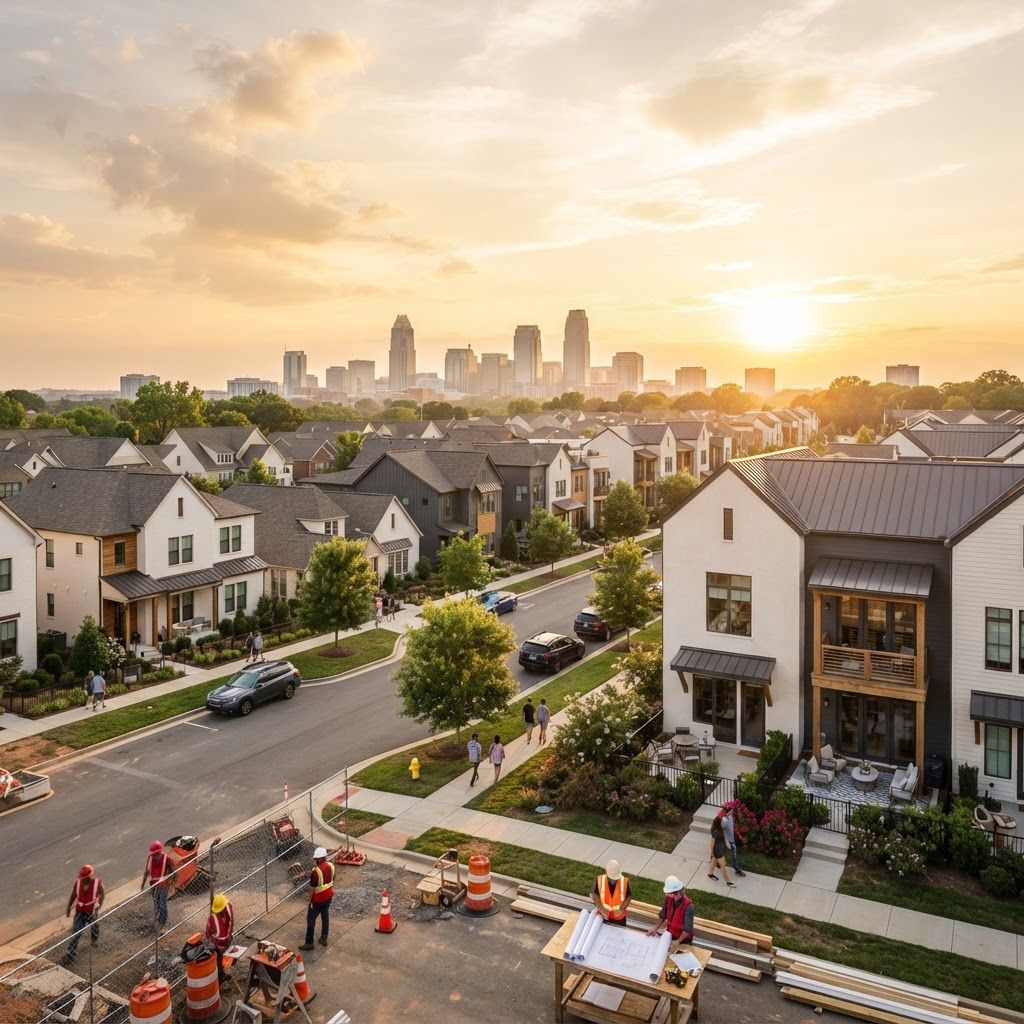
Building the Queen City's Neighborhoods
Charlotte ranks among the fastest-growing cities in the United States, and residential real estate developers have been central to that transformation. From revitalized urban districts like South End and NoDa to sprawling master-planned communities in surrounding suburbs, developers shape how and where Charlotte residents live. The best developers combine vision, financial discipline, and community sensitivity to create neighborhoods that stand the test of time.
For homebuyers, investors, and civic leaders alike, understanding the residential development landscape offers valuable perspective on the region's growth and where opportunity may lie in the years ahead.
Types of Residential Development
Residential development in Charlotte spans several distinct categories. Single-family home builders create detached houses in subdivisions and infill lots, catering to families seeking space and privacy. Townhome and condominium developers focus on higher-density housing, often in walkable urban and transit-oriented locations that appeal to young professionals and downsizers.
Master-planned community developers undertake the most ambitious projects, integrating homes, parks, retail, schools, and amenities into cohesive neighborhoods. Meanwhile, multifamily developers build apartment communities to meet the demand of Charlotte's growing renter population. Each type requires different expertise, and the leading firms often specialize while a few operate across multiple segments.
What Distinguishes a Top Developer
The best residential developers in Charlotte are defined by the quality and longevity of their work. Construction craftsmanship, thoughtful design, and durable materials distinguish enduring communities from those that deteriorate quickly. Reputable developers also honor their timelines and deliver on the promises made to buyers, protecting their reputation and their investors' confidence.
Community integration is another mark of excellence. Leading developers consider traffic, green space, walkability, and connection to existing neighborhoods rather than simply maximizing density. Strong relationships with local government, careful site selection, and a track record of successful projects all signal a developer worth trusting.
Trends Shaping Charlotte Development
Several trends are reshaping residential development in the Queen City. Transit-oriented development has gained momentum along the light rail corridor, with developers building walkable communities near stations. Demand for mixed-use projects that blend housing, dining, and retail continues to grow as residents seek convenience and connection.
Sustainability has also moved to the forefront. Energy-efficient construction, green building certifications, and environmentally conscious site planning increasingly influence buyer preferences and municipal requirements. Additionally, developers are responding to housing affordability pressures by exploring diverse product types, from smaller homes to attainable townhomes, aimed at a broader range of buyers.
The Impact on Buyers and Communities
Residential developers influence far more than the homes they build. Their decisions shape school enrollment, traffic patterns, local economies, and the character of entire neighborhoods. Thoughtful development can enhance quality of life and property values, while poorly planned projects can strain infrastructure and community resources.
For buyers, the reputation of a developer carries real weight. A home built by a respected developer often holds value better and comes with fewer construction issues. Researching a developer's past communities, warranty policies, and homeowner feedback provides insight into what future residents can expect.
Looking Ahead
As Charlotte continues to attract new residents and businesses, residential developers will remain pivotal in accommodating that growth responsibly. The best firms balance profitability with placemaking, creating communities where families want to put down roots. For anyone buying a home or watching the region evolve, understanding the developers behind Charlotte's neighborhoods offers a clearer picture of the city's dynamic and promising future.
