
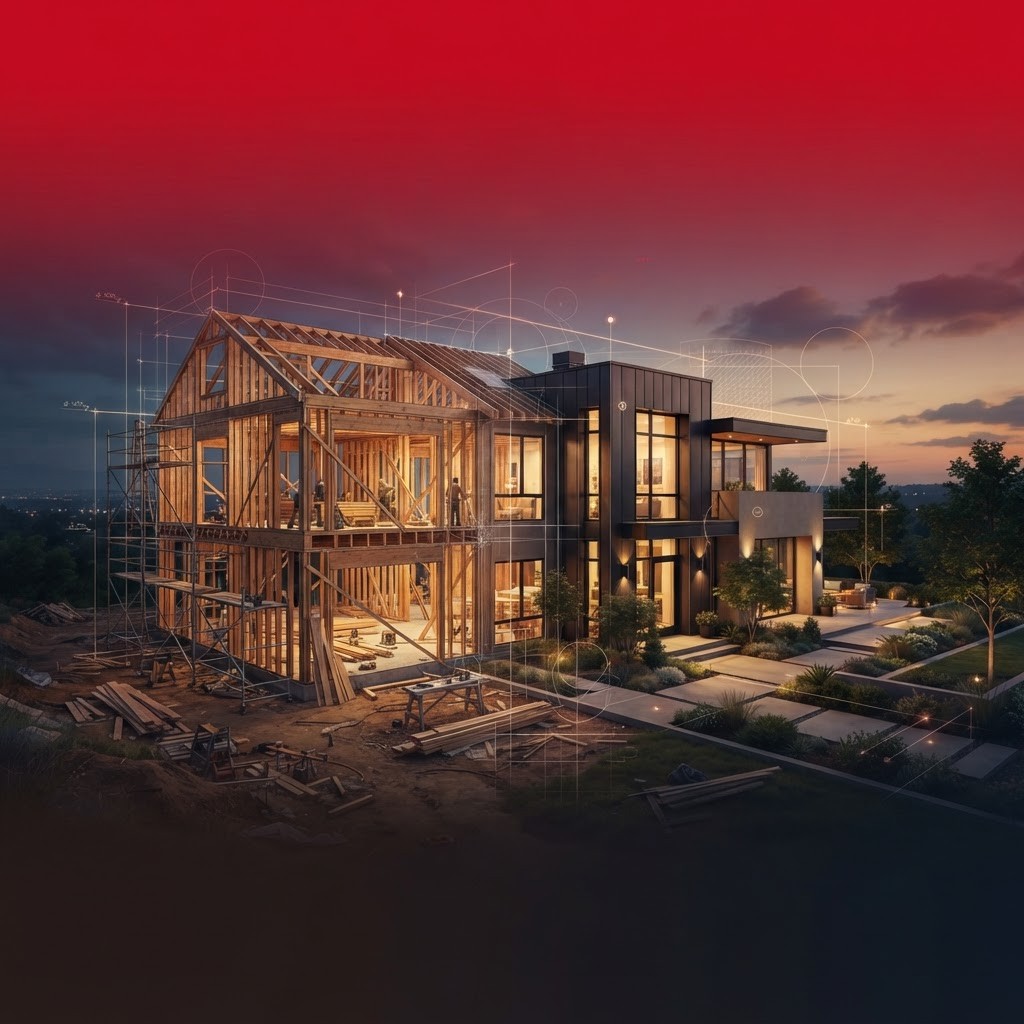
Residential Building Across Metro Detroit
Housing in metro Detroit is unusually diverse. The city itself contains vast neighborhoods of early twentieth-century single-family homes, many of which are being renovated or replaced through infill construction. Surrounding communities offer everything from mid-century ranches undergoing whole-home updates to new custom construction on large suburban and waterfront parcels. Each of these situations calls for a different kind of builder.
Residential construction companies in the region generally sort into recognizable specializations, and matching the builder to the project type is the most reliable predictor of a smooth experience.
1. Custom Home Builders
Custom builders construct one-of-a-kind homes from architectural plans, managing everything from site work to final finishes. They typically build a small number of homes per year and assign a dedicated project manager to each. The best custom builders in the area are strong on preconstruction, providing realistic budgets before design is complete so owners avoid designing a home they cannot afford to build.
2. Semi-Custom and Production Builders
Production builders offer defined floor plans with selectable options, constructing homes at higher volume in developed subdivisions. The tradeoff is reduced flexibility for lower cost and shorter schedules, since materials and trade sequencing are standardized. For buyers who want new construction without managing extensive design decisions, this model works well and pricing is far more predictable.
3. Infill and Urban Housing Builders
Infill builders construct new homes on vacant lots within established Detroit neighborhoods. The work requires navigating city permitting, connecting to existing utilities of uncertain condition, addressing soil and prior foundation conditions, and designing homes that fit the scale and character of surrounding blocks. Several builders have developed repeatable, efficient designs specifically for this market, often with strong energy performance.
4. Whole-Home Renovation Specialists
Given the age of the region's housing stock, gut renovation is one of the largest residential segments. These contractors replace electrical service and wiring, plumbing supply and drainage, heating and cooling systems, insulation, windows, and roofing while restoring or reconfiguring the interior. Working in older homes requires the ability to diagnose structural settlement, prior unpermitted alterations, and moisture damage before scope is fixed.
5. Historic Home Restoration Builders
Detroit's historic districts contain architecturally significant homes with details that cannot simply be replaced. Restoration builders repair original wood windows rather than replacing them, repoint masonry with historically appropriate mortar, restore plaster and millwork, and satisfy historic district review requirements. Owners pursuing historic tax credits need builders familiar with documentation and approval processes.
6. Addition and Structural Modification Contractors
Additions are structurally demanding because new construction must integrate with existing framing, foundations, and rooflines while matching exterior materials. Common projects include second-story additions, primary suite additions, sunrooms, garage conversions, and open-concept reconfigurations requiring beam installation and load path analysis. These contractors work closely with structural engineers.
7. Kitchen and Bathroom Remodeling Firms
Specialized remodelers focus on the two rooms with the highest cost per square foot and the highest resale impact. Their work involves cabinetry layout, plumbing relocation, electrical circuit additions, ventilation, waterproofing of wet areas, and tile installation. The strongest firms operate design studios so material selection and layout are resolved before demolition, which prevents mid-project delays.
8. Basement Finishing and Waterproofing Contractors
Michigan basements are both an opportunity and a risk. Finishing contractors add living space with proper egress windows, insulation appropriate for below-grade assemblies, and moisture-tolerant materials. Waterproofing specialists address hydrostatic pressure with interior or exterior drainage, sump systems, crack injection, and grading corrections. Any basement finish should follow, not precede, resolution of water intrusion.
9. Multifamily Residential Builders
Builders in this category construct duplexes, townhomes, small apartment buildings, and accessory dwelling units. Detroit's housing demand has increased interest in modest-density residential development, and these builders manage fire separation requirements, sound isolation between units, shared utility metering, and code provisions specific to multiple dwellings.
10. Energy Retrofit and High-Performance Builders
High-performance builders focus on comfort and operating cost. Work includes blower door testing and air sealing, dense-pack or spray foam insulation, attic and rim joist treatment, heat pump installation, heat recovery ventilation, and window replacement. In a climate with cold winters and humid summers, these upgrades deliver measurable comfort improvements and reduce utility costs meaningfully over time.
What Drives Residential Construction Cost
Cost concentrates in a few areas. Site conditions, including soil bearing capacity, drainage, and utility distance, can shift foundation and sitework costs substantially. Structural complexity matters: rooflines with many intersections, cantilevers, and large clear spans require more engineering and labor. Mechanical systems, window quality and quantity, cabinetry, tile, and plumbing fixtures account for most finish variation.
In renovation work, hidden conditions are the dominant risk. Requesting an investigative phase, where selective demolition exposes framing, wiring, and plumbing before the final contract price is set, converts unknowns into known scope and dramatically reduces change orders.
Contract Protections for Homeowners
Verify Michigan residential builder licensure directly with the state and confirm general liability and workers compensation coverage. Require a written contract that includes a detailed scope of work, specifications and allowances for finishes, a payment schedule tied to completed milestones rather than dates, a change order procedure requiring written approval, a construction schedule, warranty terms, and lien waiver provisions.
Avoid large upfront deposits disproportionate to mobilization and material procurement. Retain a final payment amount until punch list items are complete and closeout documents, including permits closed and warranty registrations, are delivered.
Building for the Michigan Climate
Durability details matter here more than in milder climates. Ice dam prevention requires continuous attic insulation, sealed ceiling penetrations, and adequate ventilation. Foundations need proper drainage, damp proofing, and insulation to control condensation. Exterior assemblies should include a drainage plane and flashing details at every penetration, because freeze-thaw cycling will find any water that gets in. Frost depth requirements govern footing design for decks, porches, and garages as well as the main structure.
Choosing Your Builder
Interview at least three companies. Ask how many projects each manages simultaneously and who will be on site daily. Request references from projects completed one to three years ago, since warranty responsiveness reveals more than a fresh handoff does. Tour completed work in person, paying attention to trim alignment, tile layout, drywall finish quality, and mechanical room organization, all of which reflect craftsmanship standards.
Final Thoughts
Metro Detroit offers residential builders with genuine depth across new construction, renovation, and restoration. Define your project type clearly, select a builder whose portfolio matches it closely, invest in preconstruction and investigative work before fixing a price, and use contract structure to manage risk. Prioritize envelope quality and mechanical performance over decorative upgrades, and the home will remain comfortable and durable through decades of Michigan seasons.
