
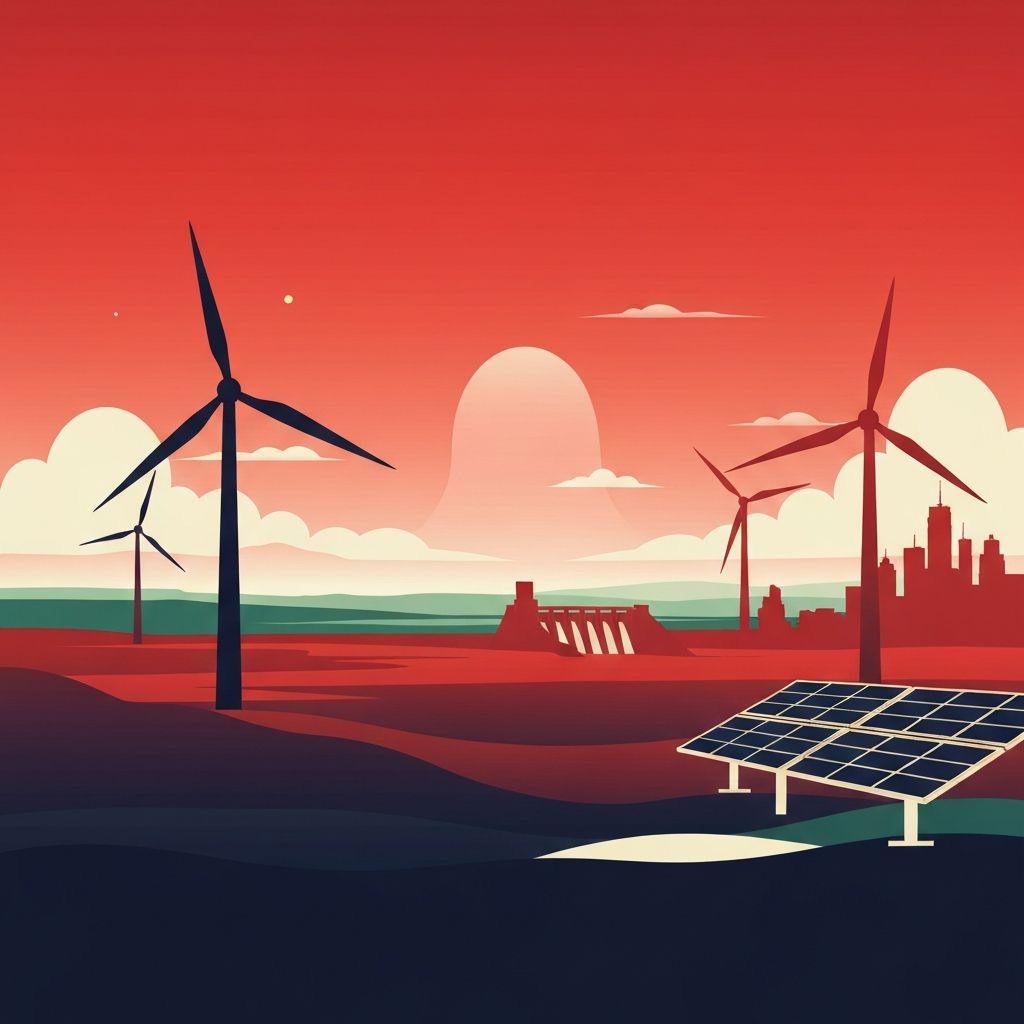
Russia’s Evolving Renewable Energy Landscape
Russia is best known for its vast oil, gas, and coal reserves, but renewable energy is gaining strategic importance. Government support programs, capacity auctions, and corporate sustainability commitments are pushing investment into wind, solar, small hydro, and biomass projects. The country’s diverse geography — from windy Arctic coastlines to sunny southern regions and powerful river systems — offers significant untapped potential.
While renewables still represent a modest share of Russia’s total energy mix, the trajectory is clearly upward. The leading companies in this sector blend engineering excellence with long-term commitment, often partnering with international technology providers and local industrial groups.
1. RusHydro
RusHydro is one of the largest hydropower producers in the world and a cornerstone of Russia’s renewable energy sector. The company operates major hydroelectric plants across the country, complemented by investments in geothermal, small hydro, and emerging renewable technologies, particularly in the Far East.
2. Hevel Group
Hevel is a leading vertically integrated solar company in Russia. It produces high-efficiency solar modules, builds utility-scale solar power plants, and offers solutions for industrial and residential customers. Hevel has played a central role in scaling solar capacity in regions such as the Republic of Bashkortostan and the Astrakhan Region.
3. Solar Systems
Solar Systems develops, builds, and operates large solar power plants across Russia, often in partnership with Chinese technology providers. The company has been instrumental in expanding solar capacity in southern Russia and is recognized for executing complex multi-megawatt projects.
4. Fortum (Russian Wind Projects)
Fortum has been a major participant in Russian wind energy through joint ventures and partnerships. The company has helped commission some of the country’s largest wind farms, leveraging deep experience with renewable assets from its Nordic operations.
5. NovaWind
NovaWind, part of a large Russian state-owned group, focuses on wind energy generation and equipment manufacturing. It develops wind farms in regions such as Adygea and Stavropol Krai and supports the localization of wind turbine components within Russia.
6. Enel Russia
Enel Russia has expanded from traditional thermal generation into renewables, particularly wind power. The company commissioned several utility-scale wind projects in regions including Murmansk and Rostov, contributing meaningfully to Russia’s green energy capacity.
7. Avelar Energy
Avelar Energy has been active in Russian solar development, partnering with technology providers and industrial groups. The company supports project structuring, equipment supply, and operations for solar plants in southern Russia.
8. UNIGREEN ENERGY
UNIGREEN ENERGY is involved in the development and operation of solar power plants, as well as research and manufacturing of solar modules. The company focuses on integrating high-quality components with reliable engineering for long-term performance.
9. T Plus Group
T Plus is one of Russia’s largest private power and heat companies, with growing involvement in clean and efficient generation. While its core remains combined heat and power, the group invests in efficiency, modernization, and renewable-adjacent technologies.
10. Inter RAO
Inter RAO is a major Russian electricity holding with operations spanning generation, supply, and international trading. The company is increasingly active in low-carbon and renewable initiatives, supporting Russia’s broader energy transition agenda.
Sectors and Technologies
Renewable energy in Russia covers a broad mix of technologies. Hydroelectric power remains dominant, but solar and wind are growing rapidly. Other promising areas include geothermal energy in volcanic regions, biomass from agricultural and forestry residues, and small-scale renewables for remote and off-grid communities.
Trends Shaping Russian Renewables
Key trends include capacity support programs that reward developers for new renewable projects, increasing localization of equipment manufacturing, rising corporate demand for green power purchase agreements, and growing focus on hybrid systems combining solar, wind, and storage. International cooperation continues to play a role, even as supply chains adapt to changing market conditions.
Choosing a Renewable Energy Partner
For developers, industrial customers, and investors, selecting a renewable energy partner in Russia involves evaluating project track record, engineering capabilities, financial strength, and ability to navigate Russian regulatory and procurement frameworks. Long-term operational reliability and a clear sustainability strategy are equally important.
The companies highlighted above represent the backbone of Russia’s renewable sector, leading the way as the country gradually diversifies its energy mix and embraces cleaner, more sustainable power generation.
