
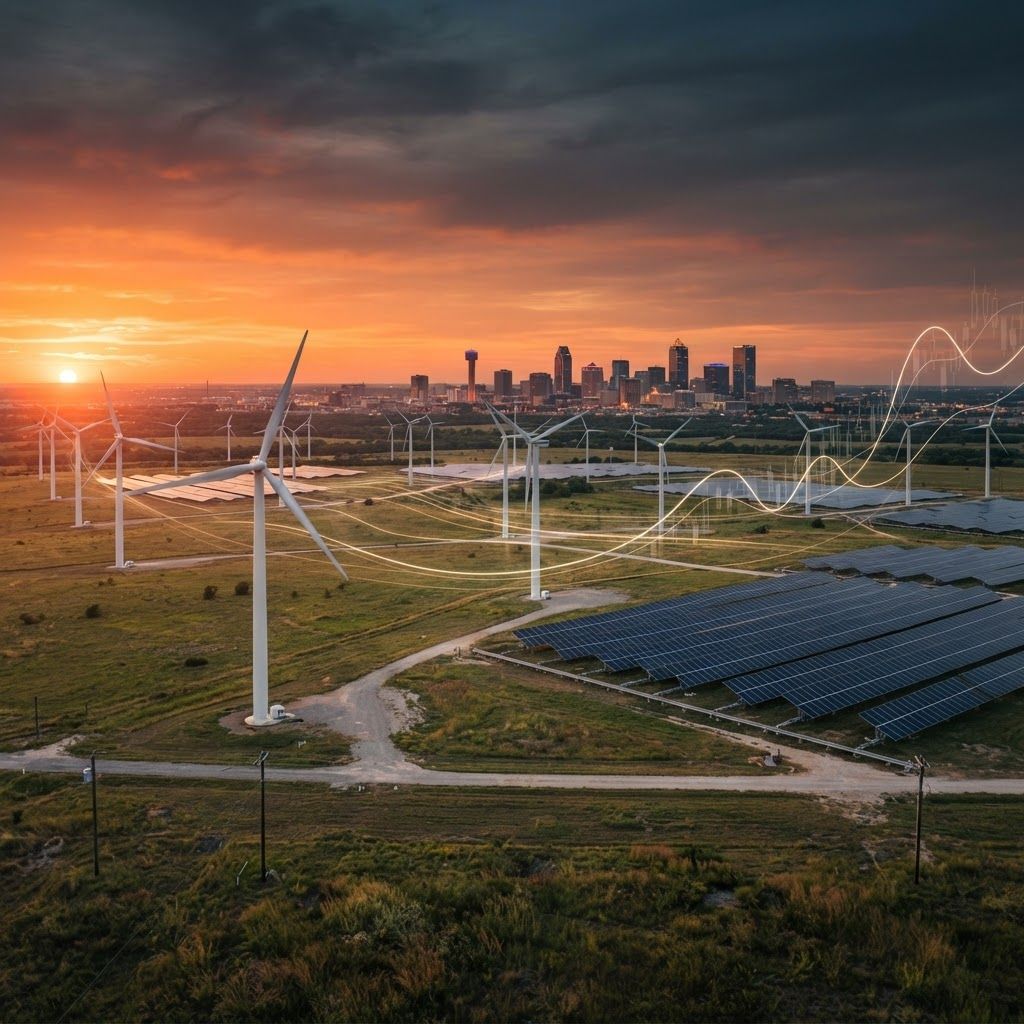
Fort Worth’s Expanding Clean Energy Economy
Texas leads the nation in wind generation and has rapidly expanded solar and battery capacity. Fort Worth benefits from that scale through its energy workforce, transmission connections, industrial demand, engineering talent, and proximity to projects across West and North Texas. Renewable development also brings challenges involving interconnection queues, land rights, price volatility, wildlife, recycling, and community support. The companies below are not all headquartered within city limits, but each has a meaningful Fort Worth, North Texas, or statewide role relevant to local customers and professionals.
1. Tri Global Energy
Tri Global Energy was founded in the Dallas-Fort Worth region and became known for originating utility-scale wind, solar, and energy storage projects. Its development model emphasized landowner relationships and early-stage project creation across Texas and other markets. The company’s regional roots make it an important example of North Texas entrepreneurship influencing renewable infrastructure.
2. Leeward Renewable Energy
Dallas-based Leeward Renewable Energy owns and operates wind, solar, and energy storage projects across the United States, including significant Texas activity. Its integrated approach covers development through long-term operations. For Fort Worth businesses seeking renewable supply, companies of this scale help create the project pipeline behind utility and corporate power agreements.
3. RWE Clean Energy
RWE develops and operates large renewable projects and battery storage assets in Texas and nationwide. The company combines international energy experience with a substantial United States portfolio. Its work is relevant to the Fort Worth market because grid-scale projects, storage, and power trading collectively influence reliability and clean-energy availability across ERCOT.
4. NextEra Energy Resources
NextEra Energy Resources is one of the country’s largest renewable developers and operators, with extensive wind, solar, and storage interests in Texas. Scale provides capabilities in financing, construction, analytics, and operations. North Texas organizations may encounter the company through wholesale energy, project partnerships, land arrangements, or sustainability procurement.
5. Ørsted
Ørsted operates onshore wind, solar, and storage projects in the United States and has invested in Texas generation. Although widely associated with offshore wind, its onshore portfolio is particularly relevant inland. Its projects illustrate how global capital and operating expertise participate in the competitive Texas electricity market.
6. Invenergy
Invenergy develops, owns, and operates wind, solar, storage, transmission, and other energy infrastructure. The company has a broad Texas presence and works with utilities, corporate buyers, landowners, and communities. Its diversified technology portfolio reflects a key industry trend: pairing variable renewable output with transmission, flexible capacity, and storage.
7. Apex Clean Energy
Apex Clean Energy develops utility-scale wind, solar, storage, and green-fuel projects, including work in Texas. Its services include project development and customized energy solutions for large buyers. Fort Worth-area corporations pursuing emissions goals may consider arrangements supported by developers like Apex rather than installing all generation onsite.
8. Enel North America
Enel North America operates renewable generation, battery storage, demand response, and energy management services. Texas is a major market for its wind and grid-related portfolio. Its combination of physical assets and flexible-demand technology highlights how clean energy increasingly depends on coordination between generators and customers.
9. Pattern Energy
Pattern Energy develops and operates renewable energy and transmission infrastructure, with major investments tied to Texas. The company is known for large-scale projects and long-distance transmission concepts that connect resource-rich regions with demand. Such infrastructure is crucial to serving growing loads around Fort Worth while reducing congestion.
10. Oncor
Oncor is not a renewable generator, but its transmission and distribution network is fundamental to delivering electricity across North Texas. The Fort Worth area depends on grid upgrades, interconnections, advanced meters, and resilient infrastructure as renewable and storage capacity grows. Including Oncor recognizes that the energy transition requires networks as much as generation.
What Sets Leading Renewable Companies Apart
Strong developers combine resource quality with responsible siting, interconnection expertise, financing, construction discipline, and long-term operations. Customers should assess project additionality, contract risk, environmental attributes, settlement structures, and credible reporting. Landowners should understand easements, restoration, taxes, insurance, decommissioning, and assignment rights. For Fort Worth, the next phase will likely emphasize storage, transmission, industrial electrification, and flexible demand alongside continued wind and solar growth.
