
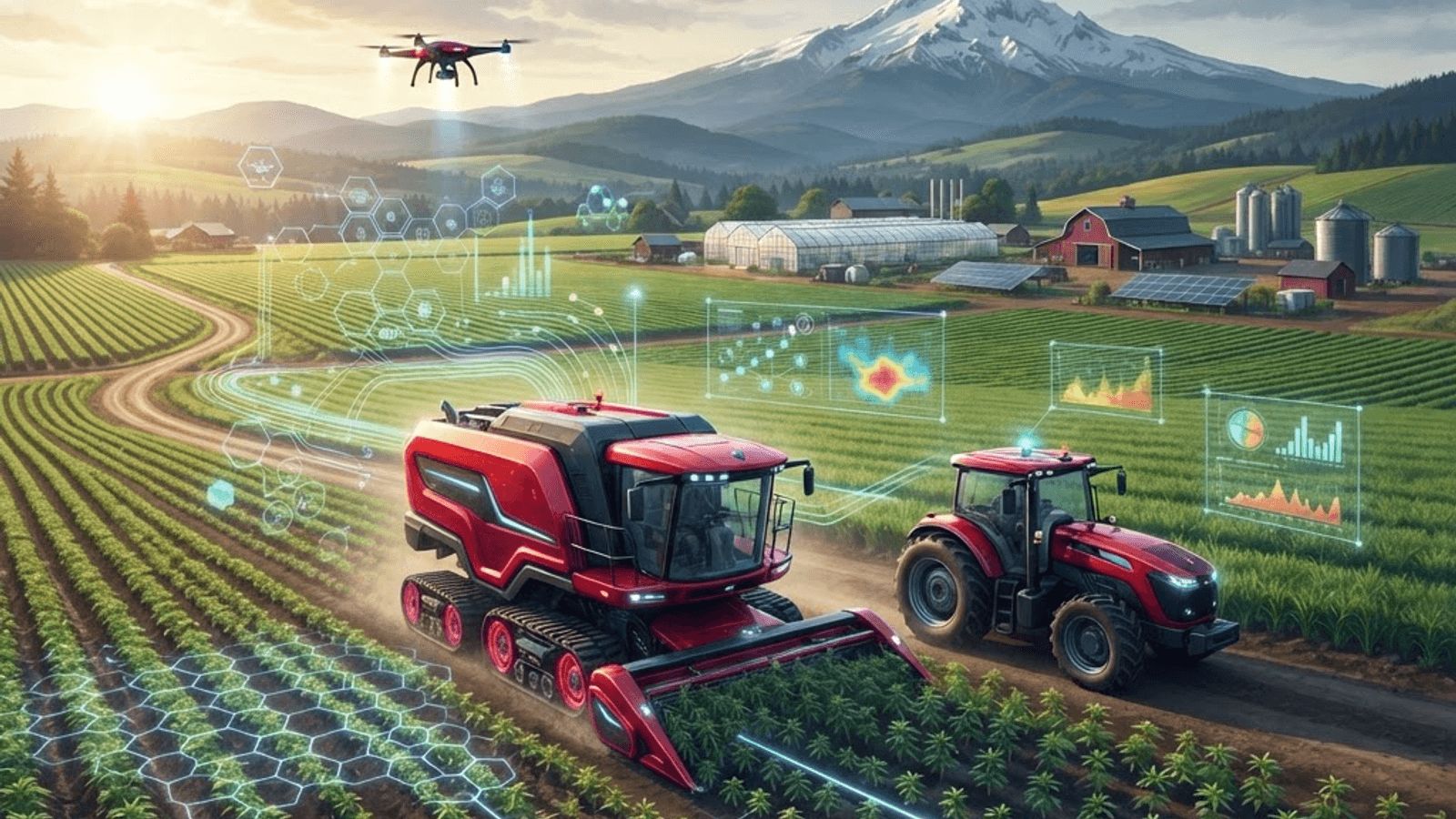
Portland's Role in Northwest Agriculture
Portland is often described as an urban food city, but it functions just as importantly as the commercial hub for one of the most agriculturally diverse valleys on earth. Within a short drive of the metro area, growers produce grass seed, hazelnuts, wine grapes, berries, hops, nursery stock, Christmas trees, vegetables, and grains. Each of those crops demands different machinery, and that diversity has attracted an unusually broad range of equipment brands and dealers to the region.
The practical consequence for farmers is choice. Rather than settling for general-purpose machines, Portland-area operators can specify narrow vineyard tractors, precision nursery handling equipment, or high-capacity seed harvesters, and still find local parts inventory and trained service technicians.
What Matters When Choosing Equipment
Purchase price is rarely the deciding factor for experienced growers. The variables that determine long-term value are parts availability, dealer service response time, resale value, operator ergonomics, and compatibility with precision agriculture systems. A tractor that sits idle for two weeks waiting on a hydraulic component can cost more in lost field days than the entire price difference between brands.
Terrain and crop geometry matter too. Willamette Valley soils hold moisture late into spring, which rewards machines with good flotation and traction. Vineyard and orchard rows require narrow track widths and tight turning radii. Nursery operations need gentle handling and precise low-speed control.
1. John Deere
John Deere remains the benchmark brand across Portland-area agriculture. Its strengths are breadth of product line, mature precision agriculture integration, exceptional resale value, and one of the densest dealer and parts networks in the region. Growers running mixed operations often standardize on Deere simply because a single dealer relationship covers tractors, combines, hay equipment, and guidance technology.
2. Kubota
Kubota dominates the compact and utility tractor segment that suits Portland's many small and mid-sized farms, nurseries, and vineyards. The brand is valued for reliable diesel engines, excellent visibility, comfortable operator stations, and a strong lineup of loaders and implements. For operations under a hundred acres, Kubota frequently delivers the best balance of capability and cost.
3. New Holland
New Holland has a loyal following among grass seed and hay producers in the valley. Its balers, windrowers, and combines are engineered for high-throughput forage and small-grain work, and the brand's narrow specialty tractors serve vineyards well. Operators often cite intuitive controls and strong hydraulic performance as differentiators.
4. Case IH
Case IH is a natural fit for larger row-crop and grain operations on the valley floor. High-horsepower tractors, advanced transmissions, and robust tillage tools are the brand's core strengths, along with well-developed autonomous guidance and telematics platforms that appeal to data-driven farm managers.
5. Massey Ferguson
Massey Ferguson competes effectively on value, offering durable mid-range tractors with straightforward mechanical systems that are easier and less expensive to maintain. For growers who prefer serviceable simplicity over maximum electronic sophistication, Massey Ferguson is a compelling option.
6. Kioti
Kioti has grown quickly in the Pacific Northwest compact tractor market. The brand delivers strong lift capacity and generous standard features at competitive price points, which resonates with hobby farms, small vineyards, and property managers. Long warranty coverage has helped build credibility with cautious buyers.
7. Claas
Claas is a specialist choice for forage harvesting at scale. Its self-propelled forage harvesters and large square balers are engineered for demanding grass and silage work, and the brand's chopping quality and fuel efficiency are widely respected among custom operators serving the valley.
8. Bobcat and Compact Equipment Platforms
Compact loaders, skid steers, and mini excavators have become indispensable on modern farms. Bobcat and comparable compact platforms handle irrigation trenching, pad preparation, manure handling, and nursery yard logistics. Their attachment ecosystems allow a single machine to replace several purpose-built implements, which is especially valuable on space-constrained operations.
9. Rain for Rent and Irrigation Systems Suppliers
Irrigation is equipment too, and it is increasingly decisive. Suppliers of pumps, mainline, drip systems, and pivot components help growers respond to tightening water regulation and drier late summers. The best providers offer hydraulic engineering support rather than simply selling parts, designing systems that reduce energy use while improving distribution uniformity.
10. Specialty Vineyard, Orchard, and Nursery Implement Makers
Finally, a group of specialty manufacturers builds the tools that make Oregon's high-value crops viable: mechanical leaf removers, over-row sprayers, hazelnut harvesters, pot handling systems, and precision seeders. These brands rarely appear in national advertising, but among valley growers they are essential and closely tracked.
Technology Trends Reshaping the Field
Precision agriculture has moved from novelty to expectation. GPS guidance reduces overlap and input waste, variable-rate application matches fertilizer to soil zones, and telematics allows managers to monitor fuel burn and machine hours remotely. Sensor-driven spraying that targets individual plants is cutting chemical use substantially in orchards and vineyards.
Electrification is arriving next. Compact electric tractors are already practical for greenhouse, nursery, and vineyard work where run times are short and emissions matter indoors. Autonomy is progressing fastest in repetitive tasks such as mowing and spraying.
Buying, Leasing, or Renting
Ownership makes sense for machines used across many field days each season. Leasing suits operations that want current technology and predictable costs without residual value risk. Renting is often the right answer for seasonal peaks such as harvest or one-time land improvement projects. Portland's dealer density makes all three options genuinely accessible, which is a real competitive advantage for local farms.
Final Thoughts
The best agricultural equipment brand is the one that matches your crop, your acreage, your terrain, and your service expectations. Portland growers benefit from a market where global manufacturers and regional specialists compete side by side. Evaluate total cost of ownership rather than sticker price, insist on a service commitment in writing, and demand a field demonstration on your own ground before signing. That discipline consistently separates satisfied buyers from frustrated ones.
