
A City That Redefined Stadium Architecture
When Baltimore opened its downtown ballpark in the early 1990s, it did more than give a baseball team a new home. It reversed three decades of stadium design orthodoxy. The multipurpose concrete bowls of the 1970s were replaced by an intimate, brick-and-steel venue integrated into an existing warehouse district, and virtually every major American ballpark built since has borrowed from that template. That legacy makes Baltimore a genuinely important city for anyone interested in sports venues.
Beyond the marquee professional facilities, the region supports a deep bench of college stadiums, historic athletic fields and community arenas. Together they host baseball, football, lacrosse, soccer, basketball, track, concerts and conventions, making the local venue economy a meaningful contributor to tourism and hospitality spending.
1. Oriole Park at Camden Yards
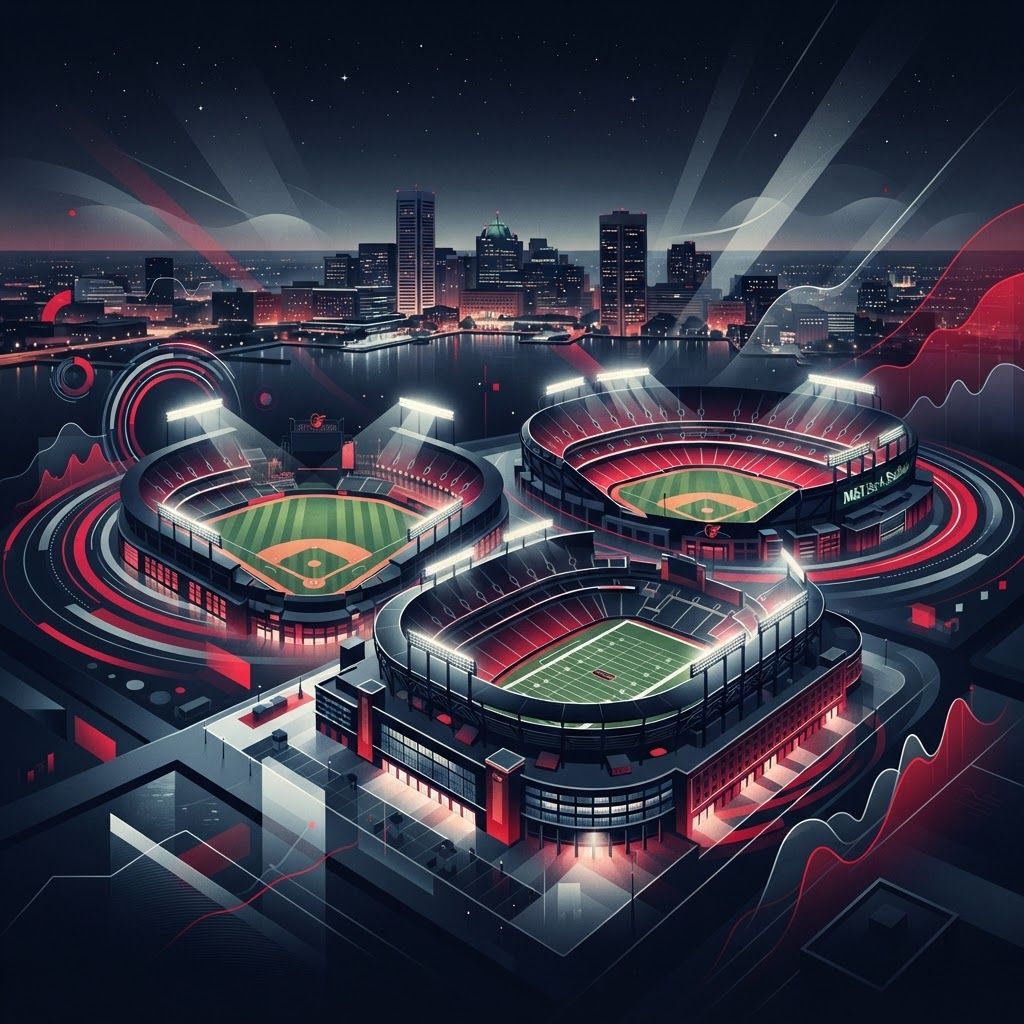
The retro-classic ballpark that started a movement remains the region's signature venue. Its defining feature is the B&O Warehouse beyond right field, the longest building on the East Coast, which frames the outfield and anchors the park to the city's rail heritage. Sightlines are famously generous, the concourse food program has evolved into a destination in its own right, and the walkable location beside the Inner Harbor makes game day part of a broader downtown experience.
2. M&T Bank Stadium
Sharing the Camden Yards sports complex, this football stadium is regularly cited among the loudest and best-maintained venues in professional football. Successive renovation phases have added expansive video boards, upgraded club and suite levels, improved concourse circulation and enhanced connectivity for mobile ticketing and in-seat ordering. The proximity of two major venues within a single walkable campus is genuinely rare in American sports.
3. CFG Bank Arena
Following one of the most significant arena renovations in the country, this downtown indoor venue reopened with a dramatically increased capacity ceiling, a redesigned seating bowl, modern suites, new loading and rigging infrastructure, and vastly improved acoustics. It now competes for major concert tours, championship college basketball events and family entertainment programming that previously bypassed the city.
4. Homewood Field
Located on the Johns Hopkins University campus, Homewood Field is one of the most storied venues in lacrosse. Its compact grandstands put spectators close to the action, and the atmosphere during rivalry matches is a reminder that Maryland is the sport's cultural heartland. The facility also hosts soccer and community athletics.
5. Towson University's Johnny Unitas Stadium
Named for one of football's most influential figures, this suburban stadium serves college football, lacrosse and track and field. Its bowl-style design, press facilities and adjacent athletic complex make it a frequent host for conference championships and high school title games.
6. SECU Arena
Also on the Towson campus, SECU Arena is a modern mid-size indoor venue used for basketball, volleyball, gymnastics, commencements and concerts. Steep seating geometry keeps crowd noise concentrated, and the building's flexible floor supports quick conversions between event types.
7. Loyola's Ridley Athletic Complex
Situated along the Gwynns Falls corridor, Ridley Athletic Complex offers one of the most attractive settings in the region, with a synthetic turf field, a well-designed grandstand and a skyline backdrop. It is a preferred venue for collegiate lacrosse and soccer as well as youth tournaments.
8. Morgan State University's Hughes Stadium
Hughes Stadium carries deep community significance in Northeast Baltimore, hosting football, track and field and cultural events. Its combination of athletic tradition and historically Black college heritage gives event days an atmosphere that extends well beyond the scoreboard.
9. Joseph Mullan Stadium at Coppin State
A compact campus venue supporting soccer, track and community programming, this stadium reflects a broader trend of urban universities investing in athletic facilities that double as neighborhood assets, offering youth clinics, public fitness access and event space.
10. Leidos Field at Ripken Stadium
Just north of the city, this minor league ballpark rounds out the list with an emphasis on family affordability, lawn seating, and a design lineage connected to Baltimore's most famous baseball family. It is a popular option for groups seeking a professional baseball experience at a lower price point.
What Makes a Great Stadium Experience
Venue quality is no longer measured only by capacity. Fans evaluate ingress and egress speed, restroom-to-seat ratios, cellular and Wi-Fi density, concession variety including local vendors, sightline quality from value seats, shade and weather protection, and transit access. Operators increasingly track these metrics directly, using surveys and anonymized movement data to redesign concourse flow and staffing.
Trends in Venue Development
Three shifts are especially visible in the Baltimore market. First, renovation over replacement: modernizing an existing well-located building often delivers better economics than new construction. Second, year-round utilization, with stadiums pursuing concerts, festivals, corporate events and community programming to spread fixed costs. Third, district thinking, where venues are treated as anchors for surrounding hospitality, retail and residential investment rather than isolated destinations.
Planning Your Visit
For downtown venues, public transit and light rail reduce parking friction considerably, and arriving early lets you take advantage of pregame neighborhood dining. Campus venues generally offer easier parking but smaller concession footprints, so plan accordingly. Ticket demand for rivalry games, championship rounds and major tours moves quickly, and secondary pricing in this market can be volatile.
Final Thoughts
Baltimore's venue portfolio is unusually strong for a city of its size, combining a globally influential ballpark, a top-tier football stadium, a fully modernized downtown arena and a rich set of collegiate facilities. Whether you are chasing architectural history, elite lacrosse or an affordable summer evening at the ballpark, the region delivers a remarkable range of options within a short drive.
