
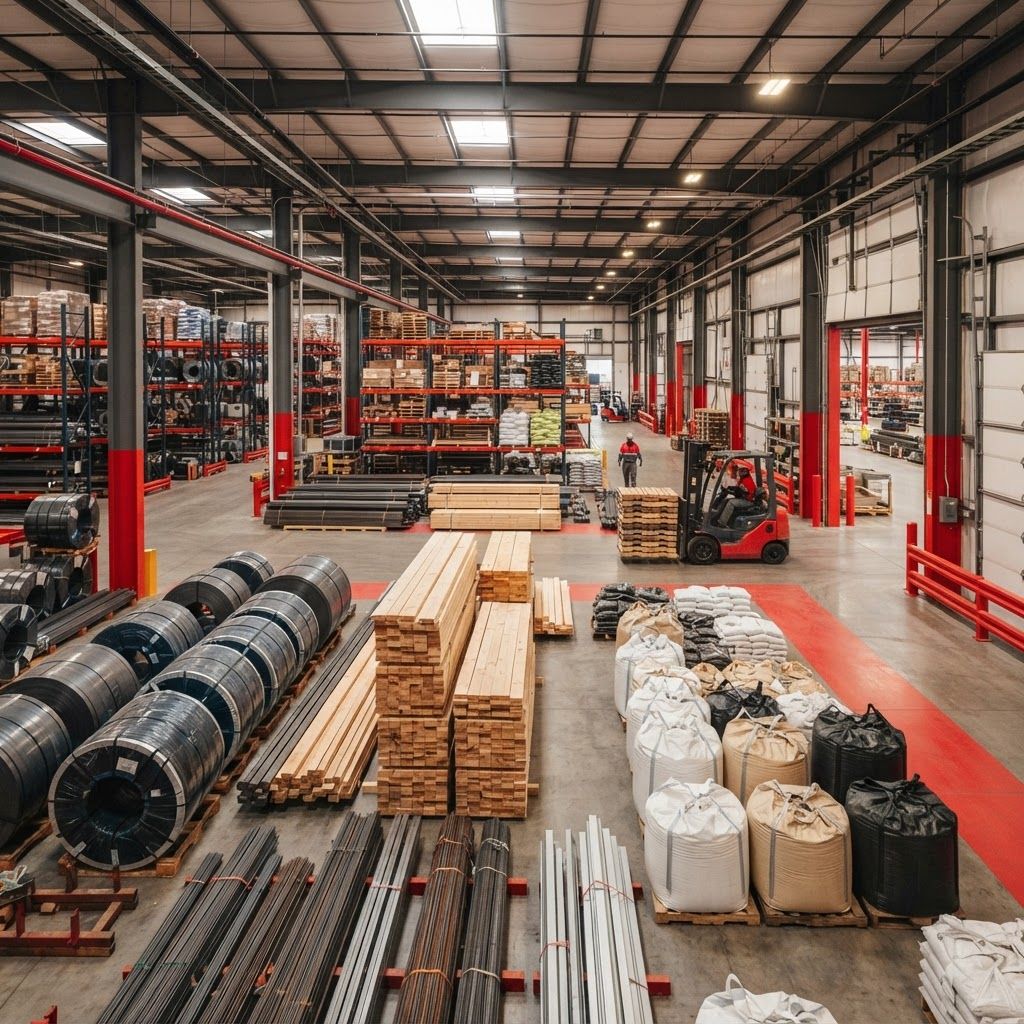
Dallas as a Raw Materials Hub
Dallas–Fort Worth supports aerospace, electronics, food processing, construction, energy services, and general manufacturing. Its rail, highway, and air connections make the region a strategic place to stock and process industrial inputs. Buyers can find suppliers for steel, aluminum, plastics, chemicals, composites, lumber, concrete, and engineered materials.
Raw material sourcing requires precise specifications. Grade, temper, tolerance, certification, lot traceability, storage, and processing can matter more than headline price. The following companies are significant resources in or around the Dallas market.
1. Ryerson
Ryerson is a major metals processor and distributor with service capabilities for carbon steel, stainless steel, aluminum, and specialty metals. Manufacturers can source sheet, plate, bar, and tubing along with cutting and processing. Value-added services may reduce in-house labor and material waste.
2. Alro Steel
Alro Steel distributes metals and industrial plastics to manufacturing customers. Its range includes steel, stainless, aluminum, tool steel, and engineered plastic forms. Broad inventory is useful for job shops managing varied drawings and short production runs.
3. Kloeckner Metals
Kloeckner Metals combines metal distribution with processing and digital supply-chain capabilities. Dallas-area manufacturers may use it for flat-rolled products, plate, long products, and fabricated blanks. Buyers should compare mill certifications, tolerance capability, and program-based inventory options.
4. Metal Supermarkets
Metal Supermarkets serves customers needing smaller quantities of metal without mill-size commitments. Its product range generally includes steel, stainless, aluminum, brass, and copper in common shapes. This model can benefit prototype teams, maintenance departments, fabricators, and educational projects.
5. TW Metals
TW Metals specializes in high-performance metals and tubing for demanding industries. Its portfolio includes stainless, aluminum, nickel alloys, and other specialty materials. Aerospace and precision manufacturers may value its quality systems, documentation, and application-specific inventory.
6. Professional Plastics
Professional Plastics distributes engineering plastic sheet, rod, tubing, and film. Materials support semiconductor, aerospace, food equipment, medical, and general industrial applications. Selection should be based on temperature, chemical resistance, wear, dielectric properties, and regulatory needs.
7. Piedmont Plastics
Piedmont Plastics supplies plastic sheet, rod, tube, and film along with fabrication services. Common uses include signage, machine guarding, displays, construction, and industrial components. Cutting and routing can help Dallas buyers receive near-net shapes and reduce scrap.
8. Univar Solutions
Univar Solutions distributes chemicals and ingredients to industrial and consumer-product manufacturers. Its portfolio spans solvents, additives, cleaning ingredients, coatings inputs, and specialty chemicals. Strong safety documentation, regulatory support, and responsible handling are essential in this category.
9. Builders FirstSource
Dallas-based Builders FirstSource is a major supplier of structural and building materials. It provides lumber, panels, trusses, components, windows, and related products to professional builders. Scale, manufacturing capability, and jobsite delivery are important advantages in a fast-growing metro construction market.
10. CMC
Irving-based Commercial Metals Company produces and supplies steel and related construction products. Its reinforcing steel and fabrication capabilities are highly relevant to infrastructure and commercial construction. Local market experience and recycling-based steel production add supply-chain significance.
How to Qualify a Material Supplier
Create specifications that state standards, grade, dimensions, tolerances, surface condition, documentation, and packaging. Audit suppliers for quality controls and ask how nonconforming material is isolated. Compare yield and processing cost, not simply price per pound. A precut blank may cost more initially but reduce labor, scrap, and machine time.
North Texas buyers should plan for weather exposure, freight volatility, and rapid construction cycles. Dual-source critical materials when possible and define safety-stock levels based on actual lead-time variability. Sustainability is also increasingly relevant; recycled content, material declarations, and efficient nesting can support customer requirements. A dependable supplier protects production continuity through accurate documentation, consistent quality, and transparent communication.
Practical Due Diligence Before Ordering
Before opening an account, ask each business for its current trade requirements, service area, minimum purchase, payment terms, lead times, and written return policy. Company offerings can change, so confirm that the products and support described here remain available. New buyers should begin with a measured order and assess accuracy, packaging, product consistency, and communication before making a larger commitment. References from comparable Dallas businesses can provide useful insight into real-world service.
Create a simple supplier scorecard and review it after every delivery. Useful measures include on-time performance, complete-order rate, defect frequency, response time, and the total cost after freight, handling, waste, and returns. Keep purchase orders, specifications, lot or model details, and approval records organized. Clear documentation makes discrepancies easier to resolve and helps multiple employees follow the same buying standards.
Finally, avoid depending entirely on one source for critical inventory. Dallas has strong logistics infrastructure, but severe weather, transportation interruptions, seasonal demand, and manufacturer shortages can still affect supply. Maintain a qualified secondary vendor and identify acceptable substitutes before they are urgently needed. Forecast from actual sales or usage data, review slow-moving stock, and share upcoming demand with suppliers. This disciplined approach turns a directory of possible vendors into a resilient purchasing strategy and helps a business build relationships based on quality, transparency, and dependable long-term value.
