
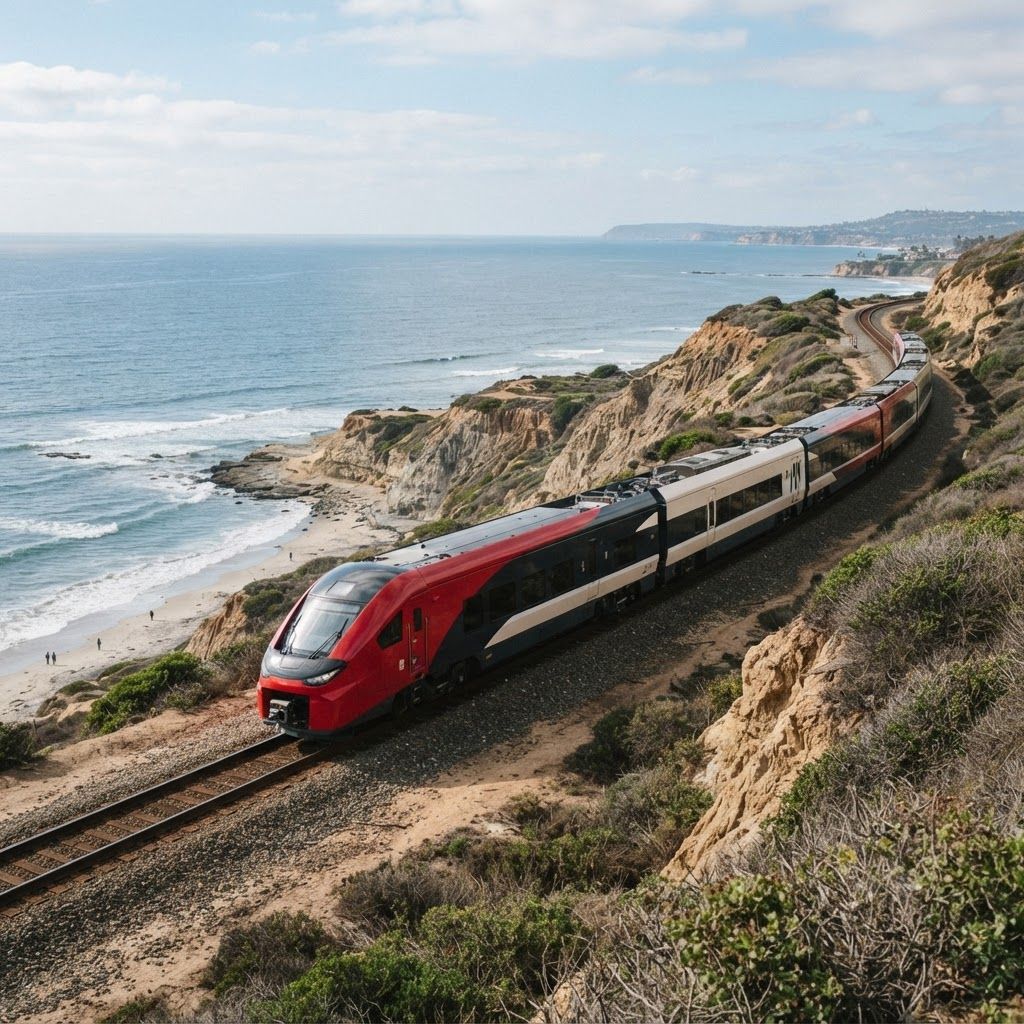
Understanding Rail Service in San Diego
San Diego’s rail landscape is more varied than it first appears. Intercity trains follow the scenic coast, commuter rail links downtown with North County, light rail reaches neighborhoods and the international border, and freight rail supports regional commerce. Several agencies own infrastructure while other organizations operate trains, so this list includes the principal operators and rail services most relevant to local passengers and businesses.
Rail schedules can change because of coastal construction, bluff stabilization, maintenance, and seasonal demand. Riders should confirm departure details shortly before travel, especially on the Los Angeles–San Diego corridor where track interruptions may trigger bus bridges.
1. Amtrak
Amtrak operates the Pacific Surfliner, San Diego’s primary intercity passenger train. The route connects downtown and Old Town with Orange County, Los Angeles, and communities farther north. Comfortable seating, generous baggage policies, and coastal scenery make it attractive for leisure and business travel, while journey times can vary where trains share track.
2. North County Transit District COASTER
The COASTER is a commuter rail service operated for North County Transit District. It connects Oceanside, coastal North County stations, Sorrento Valley, Old Town, and downtown San Diego. The service is especially useful for weekday commuters and event travel, although its frequency is more limited than an urban subway.
3. San Diego Metropolitan Transit System Trolley
The San Diego Trolley is the region’s light-rail backbone. Its lines connect downtown with UC San Diego, Mission Valley, East County, South Bay, and the San Ysidro border crossing. Frequent service and straightforward transfers make it one of the most practical ways to reach major destinations without parking.
4. BNSF Railway
BNSF Railway is a major freight railroad serving Southern California and connecting regional cargo to the national network. Though not a passenger operator in San Diego, its role is important to businesses moving bulk and intermodal freight. Freight rail can lower emissions and cost per ton-mile for suitable long-distance shipments.
5. San Diego and Imperial Valley Railroad
San Diego and Imperial Valley Railroad is a short-line freight operator serving local customers and connecting with larger rail networks. Short lines provide the crucial first or last rail segment between industrial facilities and national carriers. Their local switching expertise supports shippers that generate consistent rail volumes.
6. Pacific Southwest Railway Museum
The Pacific Southwest Railway Museum preserves regional rail history and operates heritage train experiences in Campo. It offers families and enthusiasts a different form of railway travel, centered on historic equipment and education. Excursion schedules are event-based, so advance planning is recommended.
7. Southern California Railway Museum
Although located outside central San Diego County, the Southern California Railway Museum is relevant to regional rail enthusiasts. It operates preserved streetcars and trains while interpreting Southern California transportation history. It makes a worthwhile day trip for visitors interested in the technology and communities shaped by rail.
8. Metrolink
Metrolink does not extend to downtown San Diego, but its Orange County and Inland Empire–Orange County services connect at Oceanside. This makes it part of the practical regional network for passengers transferring between San Diego County and stations across greater Los Angeles. Transfer timing should be checked carefully because separate schedules are involved.
9. LOSSAN Rail Corridor Agency
The LOSSAN Rail Corridor Agency coordinates the Pacific Surfliner service and broader corridor planning with partner agencies. While Amtrak operates the trains, LOSSAN helps shape schedules, improvements, and regional strategy. Its work is central to reliability and future capacity on the heavily traveled coastal corridor.
10. San Diego Association of Governments
SANDAG is a regional planning agency rather than a train company, but it plays a major role in funding and delivering rail infrastructure. Projects involving double tracking, stations, and long-term relocation of vulnerable coastal track affect how operators perform. Understanding this role helps riders distinguish daily operations from capital planning.
Choosing the Right Rail Option
Use the Trolley for frequent urban trips, the COASTER for North County travel, and the Pacific Surfliner for intercity journeys. Metrolink expands onward options from Oceanside, while heritage museums serve recreational travelers. Check bicycle rules, accessibility, last-train times, parking, and transfer windows before departure.
Rail offers an appealing alternative to congested highways and supports San Diego’s climate goals, but resilience remains a central challenge along the eroding coastal bluffs. Continued investment, better schedule integration, and improved connections will determine how effectively the region’s railway operators serve a growing binational economy.
