
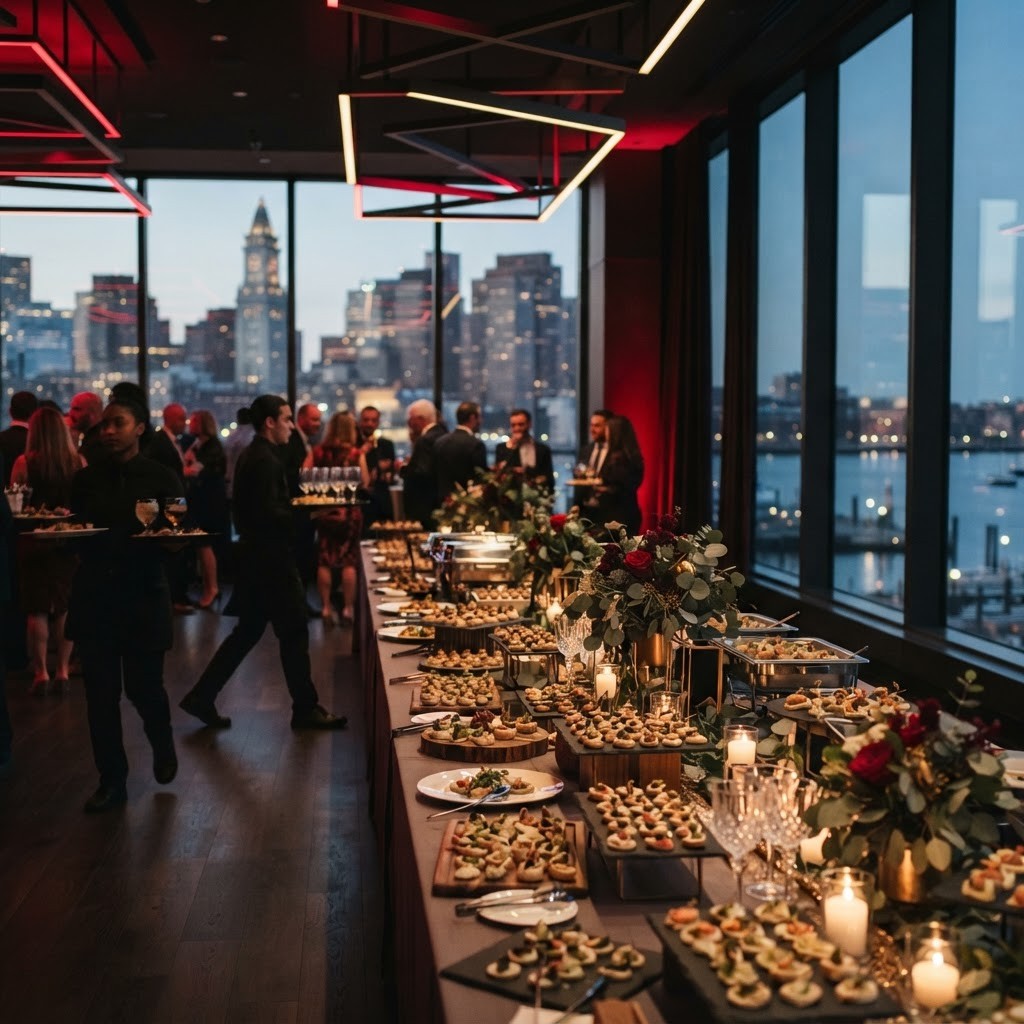
Catering in a City of Complicated Venues
Catering in Boston is a logistics discipline as much as a culinary one. The city's most desirable event spaces include historic buildings with protected interiors, waterfront properties with tight loading windows, museum galleries with strict rules, and converted industrial spaces in the Seaport that lack permanent kitchens. Add narrow colonial streets, seasonal weather swings, and university calendars that spike demand in May and September, and it becomes clear why experienced local operators command a premium.
The strongest caterers in the market therefore sell two things at once: food that holds its quality after transport, and operational competence that keeps an event on schedule when conditions are difficult.
The Ten Best Catering Services in Boston
1. The Catered Affair
Long associated with Boston's landmark venues, The Catered Affair specializes in weddings and formal events that demand precise service choreography. Its teams know the constraints of historic properties intimately, which reduces surprises on event day. Clients typically cite thorough planning documentation and consistent plated dinner execution at scale as the main strengths.
2. Max Ultimate Food
A frequent choice for galas, museum events, and design-conscious corporate functions, Max Ultimate Food is known for creative presentation and strong seasonal menus. Its stations and passed items are built to look striking under event lighting while remaining practical for large guest counts. The company invests heavily in staff training, which shows in front-of-house polish.
3. Gourmet Caterers
With deep experience in nonprofit fundraisers, weddings, and large institutional events, Gourmet Caterers is a dependable full-service option that handles rentals, staffing, and production planning as a single package. It is a particularly good fit for organizers who want one accountable partner rather than coordinating multiple vendors themselves.
4. East Meets West Catering
This established operator offers unusually broad menu range, moving comfortably between New England seafood, Mediterranean spreads, and Asian-influenced dishes. That flexibility makes it well suited to diverse guest lists and multicultural celebrations. Its corporate drop-off program is also strong for recurring office needs.
5. Capers Catering
Capers has built a reputation on hospitality and attention to individual client preferences. It handles weddings, corporate meetings, and private parties with an emphasis on personalized menu development rather than fixed packages. Smaller-scale events with specific dietary or cultural requirements are handled thoughtfully here.
6. Season to Taste Catering
A chef-driven operation grounded in New England ingredients, Season to Taste appeals to hosts who want restaurant-quality plates in a private setting. Menus shift meaningfully with the growing season, and the team is comfortable with intimate dinners as well as mid-size weddings. Sourcing transparency is a consistent differentiator.
7. Fireside Catering
Serving Greater Boston and the South Shore, Fireside combines venue partnerships with flexible catering packages, which simplifies planning for couples and corporate organizers working within a defined budget. Its clambakes and New England-style buffets are especially popular for summer events and company outings.
8. Blue Ribbon Barbecue
For company picnics, casual celebrations, and volume-driven events, Blue Ribbon delivers slow-smoked meats and classic sides with reliable consistency. It solves a specific problem well: feeding large groups something universally appealing without formal service staff. Pricing tends to be among the most predictable in the market.
9. Tatte Catering
Best known for breakfast, brunch, and meeting catering, Tatte's platters bring bakery-level pastry and Mediterranean plates to corporate settings. It has become a default choice for morning offsites, board meetings, and conference hospitality suites where presentation matters and setup time is short.
10. Flour Bakery Catering
Flour extends its café strengths into corporate catering with sandwich platters, salads, breakfast pastry assortments, and dessert boxes. Reliability and clear ordering processes make it easy for administrative teams managing recurring lunches. Vegetarian and lighter options are handled better than typical office catering fare.
Understanding Catering Costs
Catering quotes bundle several distinct cost centers, and confusion between them causes most budget disputes. Food cost is only part of the picture. Labor for chefs, captains, servers, and bartenders is often the largest single line for full-service events. Rentals cover tables, linens, china, glassware, and sometimes cooking equipment when a venue has no kitchen. Administrative fees, delivery charges, and gratuity policies vary widely between companies.
Ask for a quote broken into these categories rather than a single per-person number. That structure makes it possible to compare proposals fairly and to identify where reductions are realistic without harming guest experience.
Questions That Prevent Problems
Several questions consistently separate smooth events from difficult ones. Has the caterer worked in your specific venue, and if not, will they conduct a site visit? What is the staffing ratio for the service style you have chosen? How are dietary restrictions communicated and plated, and will allergy-sensitive guests be identified discreetly? What is the contingency plan for outdoor components if weather turns, which in Boston it frequently does?
Also confirm timing details in writing: kitchen access, load-in windows, service start, last call, and breakdown completion. Venues in the city often enforce hard end times, and a caterer unfamiliar with those rules can create genuine liability for the host.
Current Trends in Boston Catering
Menus continue to move toward vegetable-forward center plates rather than treating plant-based options as substitutions. Interactive stations and chef-attended courses have returned strongly for corporate events seeking a reason for employees to attend in person. Hybrid meeting catering, involving simultaneous delivery to multiple offices or home addresses, has become a standing service line rather than an exception.
Sustainability expectations are rising too. Clients increasingly ask about compostable service ware, food donation partnerships, and local sourcing, and the leading operators now answer those questions with specifics rather than generalities.
Final Thoughts
The right caterer depends on your event's format, venue constraints, and tolerance for coordination work. Formal weddings in historic buildings reward specialists with venue-specific experience, while corporate programs benefit from operators built for repeatable precision. Any of the ten companies above can deliver a strong event when matched to the right brief and engaged early enough to plan properly.
