
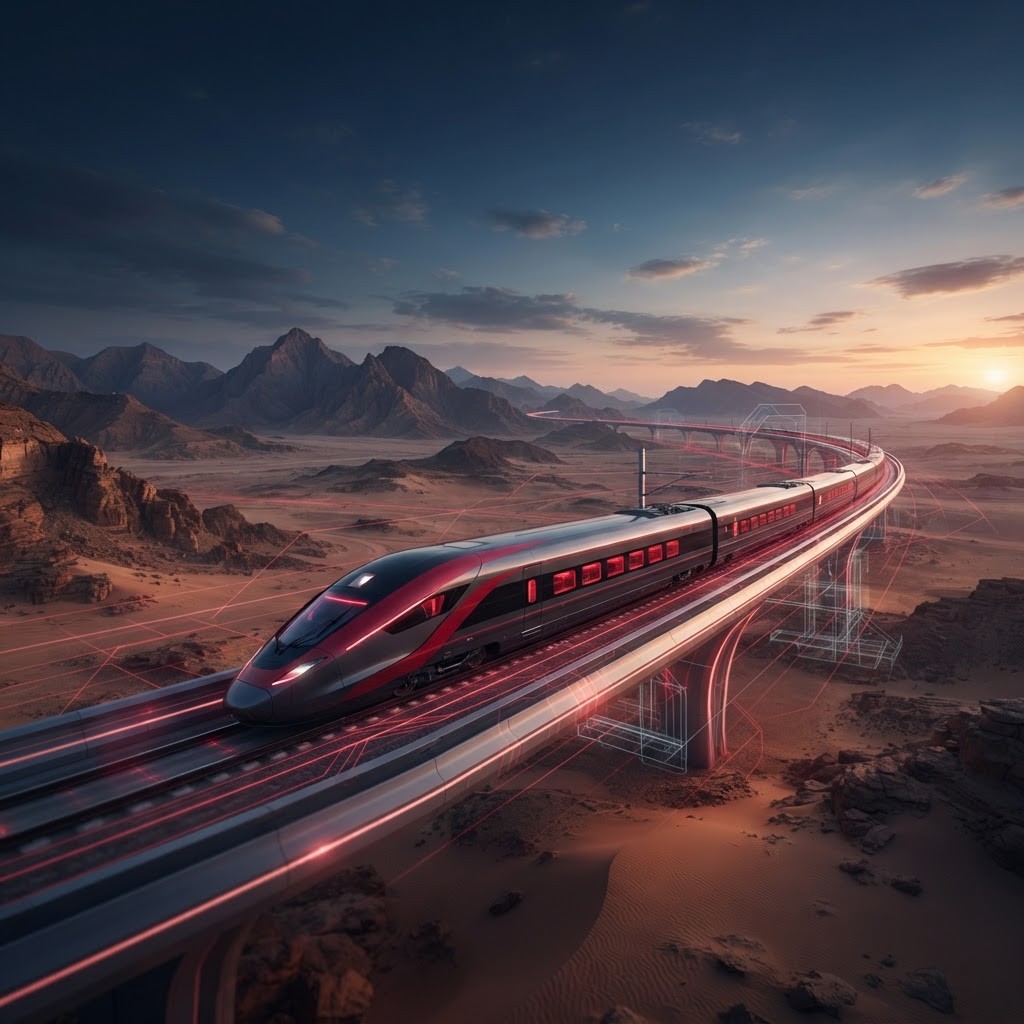
The Emergence of Rail in Oman
Railways represent one of the most ambitious frontiers in Oman's transport development. While the Sultanate has historically relied on road and sea transport, the vision for a national and regional rail network promises to reshape how goods and, eventually, people move across the country. Rail offers the potential for efficient, high-capacity freight transport, reduced road congestion, and stronger connectivity with neighboring Gulf states through the planned GCC railway network.
The development of rail infrastructure aligns closely with Oman's economic diversification goals. By linking ports, industrial zones, and mineral-rich regions, railways can lower transport costs, boost trade, and support the growth of key sectors such as mining, manufacturing, and logistics. This makes the organizations driving rail development critically important to the nation's future.
Understanding the Railway Landscape
Oman's railway sector is still in a developmental phase, shaped by government entities, planning authorities, and international partners rather than numerous competing commercial operators. The key players include national bodies responsible for planning and delivering rail projects, as well as international firms contributing engineering, consulting, and operational expertise.
Evaluating stakeholders in this emerging sector involves considering their role in planning, infrastructure development, technical expertise, and alignment with national strategy. Together, these organizations are laying the groundwork for a transformative rail network.
Key Railway Stakeholders and Operators
Oman Rail (Oman National Railway Company) is the central entity responsible for planning, developing, and operating the national rail network. As the leading authority in the sector, it drives the vision for connecting ports, industrial hubs, and regional networks across the Sultanate.
Asyad Group plays a strategic role through its integration of ports, logistics, and transport infrastructure, supporting rail development as part of Oman's broader logistics ecosystem.
Ministry of Transport, Communications and Information Technology provides the policy framework and strategic direction guiding railway development, ensuring alignment with national economic objectives.
Hafeet Rail (regional partnership) represents cross-border rail collaboration, notably the project connecting Oman and the United Arab Emirates, advancing regional connectivity and trade.
Development and Engineering Partners
The realization of Oman's rail ambitions depends heavily on specialized engineering and consulting expertise. Italferr, an internationally experienced railway engineering firm, has contributed to design and feasibility work supporting the network's development.
Mott MacDonald, a global infrastructure consultancy, brings extensive rail planning and engineering capabilities to major transport projects in the region.
SYSTRA, a specialist in rail and transit systems, offers technical expertise in the design and delivery of modern railway infrastructure.
WSP, a leading engineering professional services firm, supports large-scale transport and rail projects with planning, design, and advisory services.
Regional and Freight-Focused Stakeholders
Etihad Rail (UAE partner) is a key regional collaborator, as its network is set to connect with Oman's rail links, forming part of the wider Gulf railway vision that will enhance cross-border freight movement.
Completing the list, GCC Railway Authority stakeholders collectively coordinate the broader ambition of a unified Gulf rail network, working to align standards and infrastructure across member states so that goods can move seamlessly throughout the region.
The Vision for Rail Freight and Connectivity
The primary focus of Oman's railway development is freight. Rail offers a highly efficient means of transporting bulk goods such as minerals, containers, and industrial materials over long distances. By connecting mining regions and industrial zones to major ports like Sohar and Duqm, rail can significantly reduce transport costs and road wear while boosting export competitiveness.
Regional connectivity is equally important. Links with the UAE and the broader GCC network promise to integrate Oman into a seamless Gulf-wide rail system, facilitating trade and strengthening economic ties. Over time, passenger services may also emerge, offering a new mode of intercity travel.
Challenges and Opportunities
Developing a railway network from the ground up presents significant challenges, including large capital requirements, complex engineering across varied terrain, and the need for regional coordination. However, the opportunities are substantial. Rail can catalyze industrial growth, attract investment, and position Oman as a key link in regional supply chains.
Phased development, strong government backing, and international partnerships are helping to manage these challenges. Each milestone brings the vision of a connected, efficient rail network closer to reality.
Industry Trends and the Future
Momentum behind rail development in the Gulf is building, with several member states advancing national networks and cross-border links. Oman's participation in this movement reflects a long-term commitment to sustainable, efficient transport infrastructure.
As projects progress, the emphasis is on modern technology, environmental sustainability, and integration with ports and logistics hubs. The organizations shaping this sector today are laying the foundation for a transport transformation that will benefit generations to come.
Conclusion
Railway development in Oman is a bold, forward-looking endeavor that promises to redefine transport and trade in the Sultanate. The stakeholders and operators featured here are driving this vision through planning, engineering, and regional collaboration. As the network takes shape, rail will become a powerful engine for economic growth, connectivity, and sustainable mobility across Oman and the wider Gulf.
