
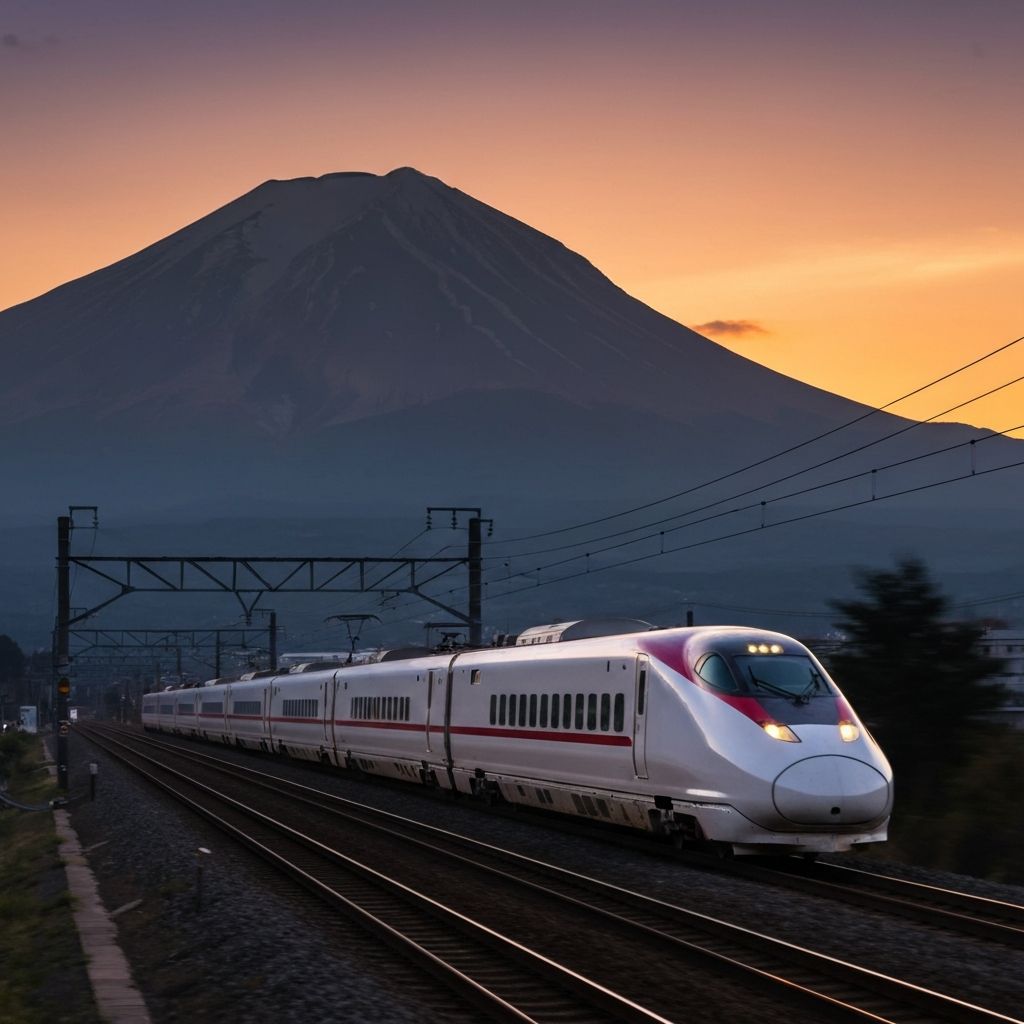
The World's Most Admired Rail Network
Japan's railway network is widely regarded as the gold standard for passenger rail worldwide. Famed for legendary punctuality, immaculate cleanliness, and engineering marvels like the Shinkansen, it serves billions of passenger journeys each year. Beyond intercity lines, dense urban metros and private regional railways form the lifeblood of the country's transport ecosystem.
Operators in Japan compete on punctuality measured in seconds, station design, station retail, and customer experience. Many railway companies have evolved into full lifestyle conglomerates, operating department stores, hotels, real estate, and entertainment venues alongside trains.
JR East (East Japan Railway Company)
JR East is the largest passenger railway company in the world by ridership. It operates the Tohoku, Joetsu, and Hokuriku Shinkansen lines, as well as Tokyo's vast commuter network including the iconic Yamanote Line. Suica IC card innovation and station-led urban development are among its signature contributions.
JR Central (Central Japan Railway Company)
JR Central operates the legendary Tokaido Shinkansen, connecting Tokyo, Nagoya, and Osaka along Japan's busiest corridor. It is also developing the Chuo Shinkansen Maglev, set to revolutionize ultra-high-speed rail. Reliability, safety, and engineering excellence define its identity.
JR West (West Japan Railway Company)
JR West manages the Sanyo and Hokuriku Shinkansen, along with extensive lines across Kansai, Chugoku, and Hokuriku regions. Tourist-friendly trains such as luxury cruise services and panoramic sightseeing trains showcase the operator's blend of utility and experience.
JR Kyushu
JR Kyushu operates trains throughout the southern island of Kyushu, including the Kyushu Shinkansen. It is celebrated for its design-forward sightseeing trains, such as those styled by industrial designer Eiji Mitooka, which have become iconic travel experiences in their own right.
JR Hokkaido
JR Hokkaido faces the unique challenge of operating across snowy, sparsely populated regions. Its Hokkaido Shinkansen connects northern Japan to the mainland, while local lines serve key cities like Sapporo. The operator is admired for resilience and engineering adaptations to harsh winters.
Tokyo Metro
Tokyo Metro operates nine subway lines covering the heart of the capital. Known for clockwork frequencies and seamless integration with private rail companies, it carries millions of passengers daily. Stations feature retail arcades, art installations, and accessible design elements.
Tokyu Corporation
Tokyu Corporation operates key suburban lines connecting Tokyo with Yokohama. It is also a major urban developer, having shaped neighborhoods like Shibuya and Futako-Tamagawa. Its trains are praised for comfort, design, and integration with shopping and lifestyle complexes.
Odakyu Electric Railway
Odakyu connects Tokyo with Hakone, one of Japan's most popular resort areas. Its Romancecar limited express trains are beloved for panoramic views and elegant interiors. Odakyu also operates department stores and tourism services that complement its rail business.
Hankyu Railway
Hankyu Railway serves the Kansai region with refined maroon-colored trains running between Osaka, Kyoto, and Kobe. It is part of Hankyu Hanshin Holdings and is celebrated for its commitment to elegant design, customer service, and cultural sponsorships, including the Takarazuka Revue.
Keio Corporation
Keio Corporation operates commuter lines in western Tokyo and is known for clean stations, efficient scheduling, and innovative special-edition trains, including character-themed services. Its connections to Mount Takao make it a favorite for both daily commuters and weekend hikers.
The Future of Japanese Rail
Japan's railway operators continue to push boundaries with maglev technology, autonomous train operations, and station redevelopment projects. Sustainability initiatives include hydrogen-powered trains and energy-efficient station design. As tourism rebounds, sightseeing trains and luxury cruise services are also expanding rapidly.
Why Japan's Railways Stand Out
The combination of cutting-edge engineering, disciplined operations, and deep cultural commitment to service makes Japan's rail operators truly exceptional. Whether commuting in Tokyo, riding the Shinkansen across the countryside, or boarding a designer sightseeing train in Kyushu, passengers experience a rail system that consistently sets global benchmarks.
