
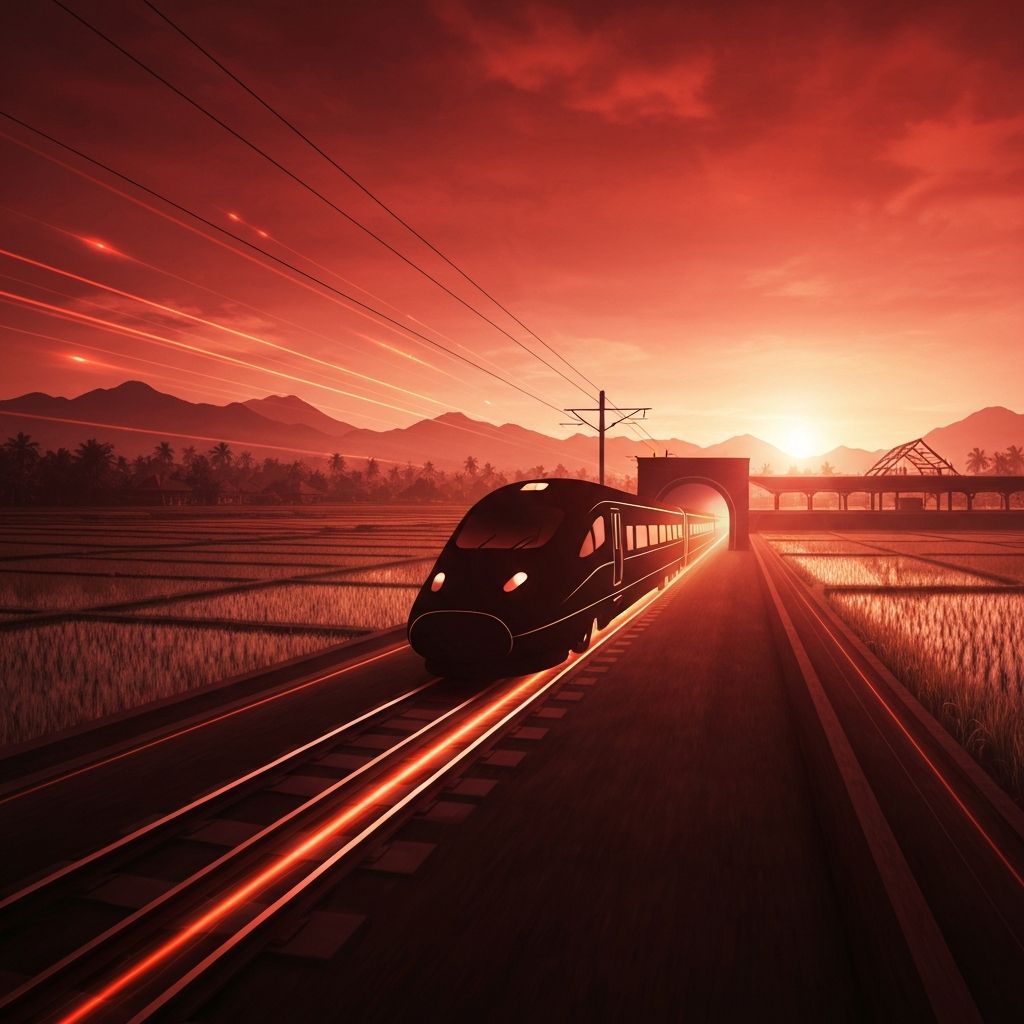
Indonesia's Evolving Railway Industry
Railways in Indonesia have a rich history dating back to the colonial era, when the first lines were built in Java in the mid-1800s. Today, the country's rail network is a critical component of national transportation, serving millions of passengers annually and transporting essential goods across the archipelago. While the rail industry is dominated by a single state-owned operator and its subsidiaries, the sector includes specialized services and modern systems such as light rail and high-speed trains.
1. PT Kereta Api Indonesia (KAI)
PT Kereta Api Indonesia, commonly known as KAI, is the state-owned company that operates the bulk of Indonesia's railway network. With routes spanning Java and Sumatra, KAI offers passenger and freight services, including economy, business, and executive class trains. The company has invested significantly in modern locomotives, comfortable carriages, digital ticketing, and customer service improvements.
2. KAI Commuter
KAI Commuter, a subsidiary of KAI, operates commuter rail services in Greater Jakarta, Yogyakarta, and Surabaya. The Jakarta commuter system is one of the busiest in Southeast Asia, transporting hundreds of thousands of passengers daily. KAI Commuter has continually expanded its network, upgraded train cars, and integrated digital payment systems to meet rising urban demand.
3. KAI Bandara
KAI Bandara provides airport rail link services, most notably connecting Jakarta city to Soekarno-Hatta International Airport. The dedicated airport line offers comfortable, punctual, and traffic-free transportation for travelers. With its modern stations, free Wi-Fi, and luggage facilities, KAI Bandara has become a preferred mode of transport for international and domestic flyers.
4. MRT Jakarta
MRT Jakarta operates the city's first mass rapid transit system, launched to ease traffic congestion and modernize urban mobility. The North-South Line connects key business and residential areas, with extensions and additional lines under development. MRT Jakarta is known for its modern stations, punctuality, and integration with other transportation modes.
5. LRT Jakarta
LRT Jakarta is Indonesia's first light rail transit system, operating in the Indonesian capital. The system offers an eco-friendly and efficient transportation option for residents in eastern and central Jakarta. With more lines planned, LRT Jakarta complements other transit systems and contributes to the city's broader public transportation strategy.
6. LRT Jabodebek
LRT Jabodebek connects Jakarta with surrounding cities such as Bekasi and Depok, providing fast and reliable commuter services. As one of the most ambitious infrastructure projects in Southeast Asia, the system features modern carriages, automated train operations, and integration with bus and rail networks, supporting millions of daily commuters.
7. Kereta Cepat Indonesia China (KCIC)
Kereta Cepat Indonesia China operates the Whoosh, Indonesia's first high-speed rail line connecting Jakarta and Bandung. With trains capable of reaching speeds well above 300 kilometers per hour, the service has dramatically reduced travel time between the two cities. KCIC is a joint venture between Indonesian and Chinese state-owned companies, marking a milestone in Indonesian rail history.
8. KAI Logistik
KAI Logistik is the freight subsidiary of PT Kereta Api Indonesia, specializing in rail-based cargo services. The company transports a wide range of goods, including coal, palm oil, container freight, and parcels. With dedicated freight terminals and integrated road services, KAI Logistik plays a vital role in Indonesia's industrial supply chain.
9. KAI Wisata
KAI Wisata focuses on tourism-oriented rail services, offering luxury train experiences such as the iconic Priority Train and tourist packages on heritage routes. The company combines train travel with hospitality, providing premium amenities, scenic routes, and curated experiences for travelers seeking unique journeys through Indonesia's landscapes.
10. PT Industri Kereta Api (INKA)
While not a passenger operator, PT Industri Kereta Api (INKA) is a critical player in Indonesia's railway industry. As a state-owned manufacturer, INKA produces locomotives, train carriages, and rail systems for domestic and international markets. The company supports the broader rail ecosystem by ensuring that operators have access to modern, locally produced rolling stock.
Modernization Efforts
Indonesia's railway industry has undergone significant modernization in recent years. Investments in electrification, double-tracking, signaling systems, and digital ticketing have improved efficiency and passenger experience. The introduction of the Whoosh high-speed train marked a major milestone, while expansions of MRT and LRT systems are reshaping urban mobility.
Sustainability and Environmental Impact
Rail travel is among the most environmentally friendly transportation modes, and Indonesia's rail operators are increasingly emphasizing sustainability. Electrification of routes, energy-efficient trains, and waste reduction programs at stations contribute to lower emissions. As the country pursues its climate goals, expanding rail infrastructure plays a key role in reducing reliance on road transportation.
Challenges Facing the Industry
Despite progress, the Indonesian rail industry faces challenges such as limited geographic coverage, particularly in eastern Indonesia, aging infrastructure on some routes, and the need for substantial investments. The government and KAI continue to address these issues through long-term development plans and partnerships with international firms.
The Passenger Experience
Today's Indonesian train passengers enjoy a much improved experience compared to the past. Air-conditioned carriages, online ticketing, comfortable seating, and clean stations have transformed perceptions of rail travel. Premium services such as the executive class on long-distance routes offer amenities that rival those of airlines, including meals, reclining seats, and entertainment.
Conclusion
Indonesia's railway industry continues to evolve, blending heritage with cutting-edge innovation. The operators highlighted above represent the diversity and dynamism of the sector, from mass transit and commuter rail to high-speed and freight services. As infrastructure investments continue and new technologies emerge, Indonesian railways are set to play an even greater role in connecting people, supporting commerce, and enabling sustainable mobility.
