
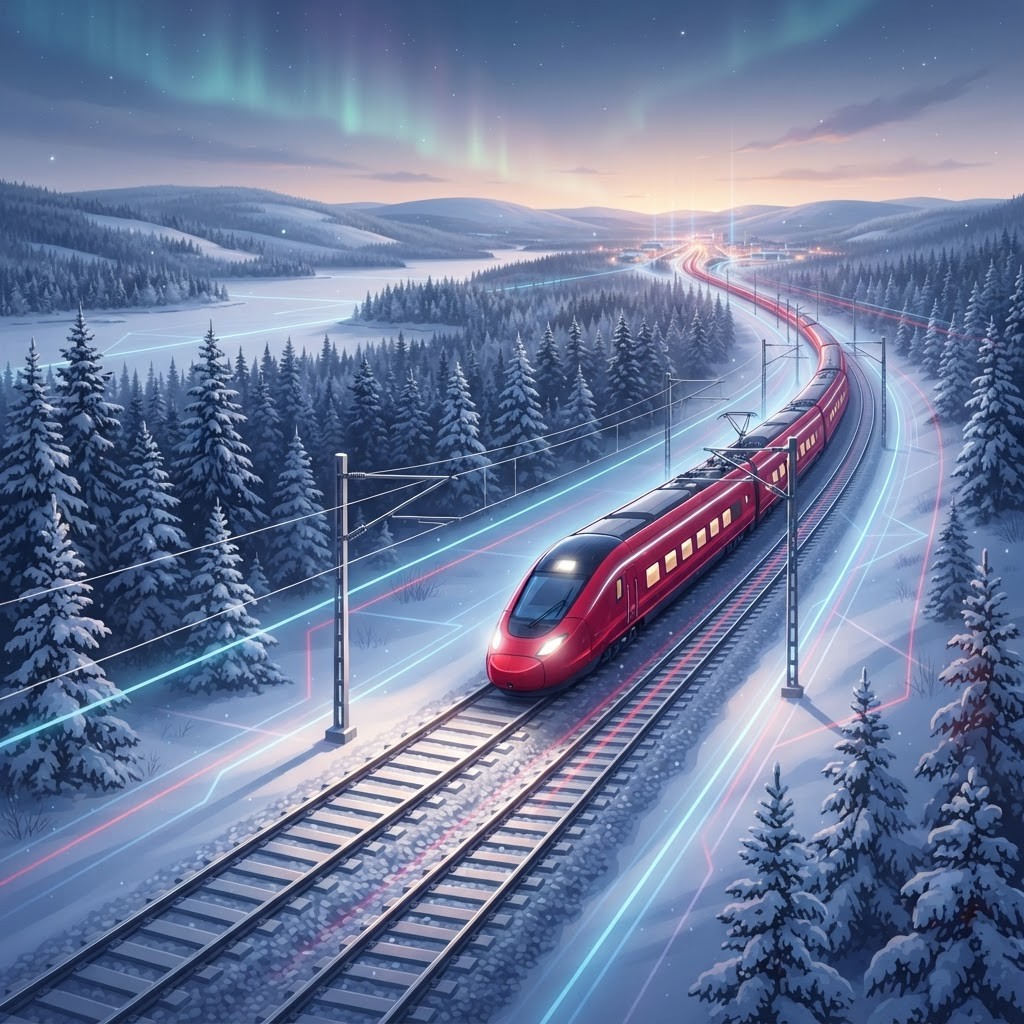
The Role of Rail in Finland
Rail transport is a vital part of Finland's mobility and freight ecosystem, offering an efficient, low-emission alternative to road travel across long distances. The country's wide-gauge network, inherited from historical ties to the east, gives Finnish railways a distinctive character and allows for spacious, comfortable carriages. From daily commuters in the south to industrial shippers in the north, millions rely on rail every year.
Finland's commitment to sustainability makes rail especially important. Electric traction covers much of the passenger network, and the government continues to invest in electrification and modernization. As climate goals tighten, rail is increasingly viewed as the backbone of a cleaner transport future, capable of moving both people and heavy cargo with minimal environmental impact.
What Makes Finnish Railways Stand Out
Punctuality, safety, and comfort define the Finnish rail experience. Operators invest heavily in modern rolling stock, quiet carriages, and passenger amenities such as onboard cafes, family compartments, and reliable connectivity. Winter resilience is a particular point of pride, with specialized maintenance keeping services running even during heavy snowfall and extreme cold.
On the freight side, railways provide a dependable solution for the forestry, metals, and chemical industries that form the core of Finland's economy. Long, heavy trains move raw materials and finished goods efficiently across the country, easing pressure on roads and reducing emissions per ton transported.
Leading Railway Operators and Organizations
VR Group is the dominant passenger rail operator in Finland, running intercity, commuter, and long-distance services with a fleet that includes the popular double-decker carriages and high-speed tilting trains. Its reputation for comfort and reliability is central to the national rail experience.
VR Transpoint, the freight division of VR Group, specializes in heavy industrial cargo, container transport, and cross-border flows, offering a sustainable option for bulk shipments.
HSL (Helsinki Region Transport) oversees commuter rail services in the capital region, coordinating frequent, well-integrated trains that connect suburbs to central Helsinki.
Fenniarail is Finland's first private rail freight operator, bringing competition and flexibility to the cargo market with tailored industrial transport solutions.
Fintraffic (rail traffic management) manages traffic control and coordination across the network, ensuring safe and efficient movement of all trains.
Väylävirasto (Finnish Transport Infrastructure Agency) maintains and develops the rail infrastructure, investing in tracks, signaling, and electrification projects that underpin the entire system.
Pääkaupunkiseudun Junakalusto owns and manages commuter train rolling stock in the Helsinki area, supporting reliable regional services.
Ratatek provides railway construction and maintenance expertise, keeping tracks and structures in top condition across the country.
NRC Group Finland delivers large-scale rail infrastructure engineering, contributing to modernization and expansion projects nationwide.
Proxion offers rail expertise in planning, safety, and digital systems, helping operators and authorities optimize the network for the future.
Trends Driving the Rail Sector
Digitalization is reshaping Finnish railways, with modern signaling, predictive maintenance, and data analytics improving reliability and capacity. Investments in the European Rail Traffic Management System promise smoother cross-border operations and enhanced safety over the coming years.
Passenger demand is also evolving. Travelers increasingly expect seamless ticketing, real-time information, and comfortable, connected journeys. Operators are responding with mobile apps, integrated regional passes, and upgraded carriages designed for both business and leisure travel.
Looking Ahead
Finland's rail future is centered on sustainability and connectivity. Continued electrification, new rolling stock, and infrastructure upgrades aim to make rail even more attractive for both passengers and freight. As the country pursues its climate ambitions, railways will play an ever-larger role in linking communities, supporting industry, and reducing the environmental footprint of transport. The operators and organizations profiled here form the foundation of a system built for the long term, combining Nordic dependability with modern innovation.
Connecting Regions and Communities
One of the most valuable contributions of Finnish railways is their role in binding together a geographically vast and sparsely populated country. Long-distance services connect the bustling south with towns and communities far to the north, ensuring that residents in remote areas retain access to work, education, and services. For many smaller towns, the railway station is a vital lifeline and a symbol of connection to the rest of the nation. By maintaining and expanding these links, rail operators support regional vitality and help counter the isolation that distance can otherwise bring.
Comfort and Sustainability in Harmony
Finnish travelers increasingly choose rail not only for its convenience but for its environmental credentials. Trains allow passengers to work, relax, or enjoy the scenery while producing a fraction of the emissions of car or air travel over comparable distances. Operators enhance this appeal with quiet carriages, comfortable seating, family and pet-friendly options, and reliable onboard services. This combination of comfort and conscience makes rail an attractive choice for a growing number of Finns, reinforcing the sector's central place in a sustainable transport future and encouraging further investment in the network.
