
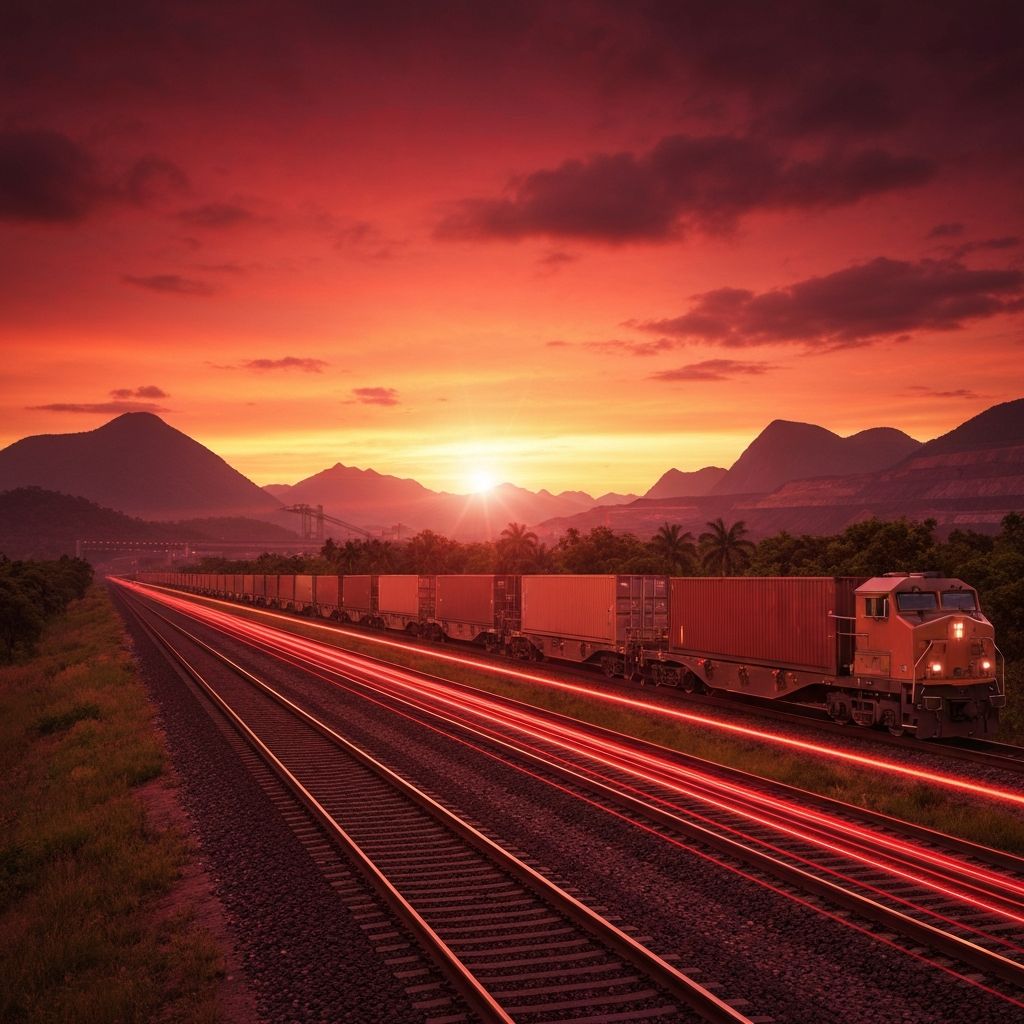
The Role of Railways in Brazil
Railways have historically played a vital role in Brazil's economic development, connecting mining regions, agricultural heartlands, and major ports. Although road transport dominates the freight matrix, rail is essential for moving heavy and bulky commodities such as iron ore, soybeans, corn, sugar, and fuels. Brazilian railway operators manage thousands of kilometers of tracks across some of the most demanding terrains in the world. Recent regulatory reforms and concession renewals are encouraging massive investments, signaling a new era of growth for the rail sector.
Why Rail Matters for the Brazilian Economy
Rail is significantly more efficient than road transport for long-distance, high-volume cargo. It reduces logistics costs, carbon emissions, and highway congestion. Brazil's main rail corridors connect the inland Midwest to coastal ports, supporting one of the world's largest agricultural export industries. Mining operations in Minas Gerais and Para also depend on dedicated rail lines to transport iron ore to terminals serving global markets.
1. Rumo Logistica
Rumo is the largest independent rail-based logistics operator in Brazil. Its network covers the South and Southeast regions, connecting key agricultural producing states to the Port of Santos. The company plays a central role in soybean and corn exports.
2. Vale Logistica
Vale, one of the largest mining companies in the world, operates the EFVM and EFC railways. These corridors are dedicated to transporting iron ore from Brazil's mines to the ports of Tubarao and Ponta da Madeira, making Vale one of the most efficient rail operators globally.
3. MRS Logistica
MRS connects the Southeast region's industrial hubs to the ports of Sepetiba and Santos. The operator handles iron ore, steel, agricultural products, and containers, making it essential for the heavy industrial economy of Minas Gerais, Rio de Janeiro, and Sao Paulo.
4. VLI Multimodal
VLI manages an integrated multimodal logistics network combining railways, ports, and inland terminals. Its services support agribusiness, mining, and steel industries with efficient corridor solutions across multiple states.
5. Ferrovia Centro-Atlantica
FCA operates an extensive network connecting the Midwest, Southeast, and Northeast. Part of the Vale rail group, the operator transports commodities and industrial goods across a strategic corridor.
6. Transnordestina Logistica
Transnordestina is developing one of the most ambitious railway projects in the country, designed to connect the agricultural areas of the Northeast to the Atlantic ports. The operator is critical for boosting export logistics in the region.
7. Ferrovia Tereza Cristina
Operating in Santa Catarina, this railway primarily serves the coal industry and supplies thermoelectric plants. It is a key piece of energy logistics in the Southern region.
8. Ferrovia Norte-Sul
This railway connects the agricultural Midwest with the Northern ports, helping diversify export routes for soybeans and other commodities. It is a transformative infrastructure project for regional logistics.
9. Estrada de Ferro Carajas
Considered one of the most efficient cargo railways in the world, EFC supports Vale's iron ore operations in Carajas, transporting massive volumes to the Port of Ponta da Madeira in Maranhao.
10. Rumo Malha Norte
Part of Rumo's network, Malha Norte plays a crucial role in linking Mato Grosso, Brazil's largest grain-producing state, to the rest of the rail corridor leading to Santos. It is essential for soybean and corn exports.
Investment and Modernization
The Brazilian government has been actively renewing rail concessions and approving new projects. Investments include modernization of locomotives, expansion of double-track sections, and construction of new corridors connecting the agricultural frontier to ports. These efforts are expected to substantially increase rail's share in the national freight matrix.
Sustainability and Efficiency
Rail transport emits significantly less CO2 per ton-kilometer compared to road freight, making it a cornerstone of sustainability strategies for major exporters. Operators are also investing in electrification studies, hybrid locomotives, and operational efficiency programs to further reduce environmental impacts.
Challenges Facing Rail Operators
Despite progress, Brazilian railways face challenges such as aging infrastructure, regulatory complexity, and the need for greater connectivity between corridors. Investments in signaling, track upgrades, and intermodal terminals are essential to unlock the full potential of the rail system.
Conclusion
Brazil's railway operators are indispensable to the country's economy, especially for commodities and industrial cargo. The companies highlighted above represent the most influential players shaping the future of rail logistics in Brazil. As infrastructure investment accelerates, the sector is poised for a transformative decade, strengthening its role in global trade and domestic supply chains.
