
Getting Around the Emerald City
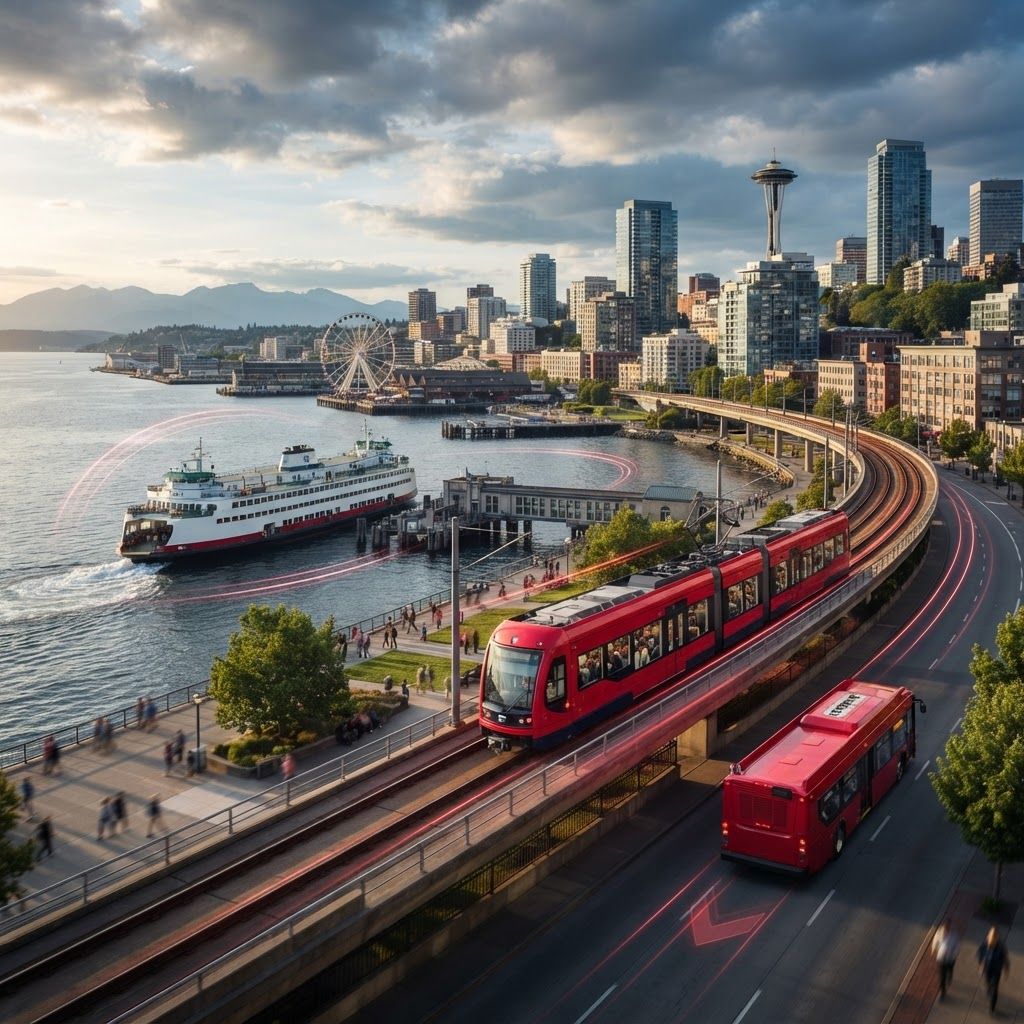
Seattle has invested heavily in public transportation to combat congestion, reduce emissions, and connect its rapidly growing neighborhoods. With a geography shaped by water, hills, and bridges, the city relies on a coordinated network of light rail, buses, streetcars, and ferries. For residents and visitors alike, understanding these services makes navigating the region far more convenient and affordable.
The Backbone: Light Rail and Buses
Sound Transit's Link light rail forms a rapidly expanding spine connecting the airport, downtown, and northern and eastern suburbs, offering a reliable alternative to driving during peak hours. King County Metro operates one of the most extensive bus networks in the country, serving neighborhoods that rail lines have yet to reach. Together, these agencies provide frequent, integrated service that anchors Seattle's transit system.
Ferries and Water Transportation
Given Puget Sound's central role in regional geography, ferry service is indispensable. Washington State Ferries operates one of the largest ferry systems in the nation, linking Seattle with Bainbridge Island, Bremerton, and beyond. The King County Water Taxi offers commuter-friendly crossings from West Seattle and Vashon Island, delivering scenic and efficient travel across the water.
Streetcars and Regional Rail
The Seattle Streetcar serves the South Lake Union and First Hill corridors, complementing other transit modes for short urban trips. For longer regional journeys, Sounder commuter rail connects Seattle with Tacoma and Everett, giving suburban commuters a comfortable rail option. These services fill important gaps and expand the reach of the broader network.
Technology and Convenience
Modern transit in Seattle emphasizes convenience through the ORCA card, a unified fare system that works across agencies, and mobile apps that provide real-time arrival information. Contactless payments, trip planning tools, and accessibility features make the system easier to use for everyone. These innovations reflect a regional commitment to making transit a practical first choice rather than a fallback option.
Sustainability and Future Growth
Seattle's transit agencies are leaders in sustainability, investing in electric buses and expanding light rail to reduce reliance on private vehicles. Voter-approved funding measures continue to fuel major expansions, promising new stations and routes in the coming years. This forward-looking approach positions the region to accommodate growth while protecting its cherished environment.
Conclusion
From light rail and buses to ferries and streetcars, Seattle's public transit services offer a comprehensive, increasingly sustainable way to move throughout the region. By taking advantage of integrated fares, real-time information, and expanding routes, residents and visitors can navigate the Emerald City efficiently while supporting a greener future.
