
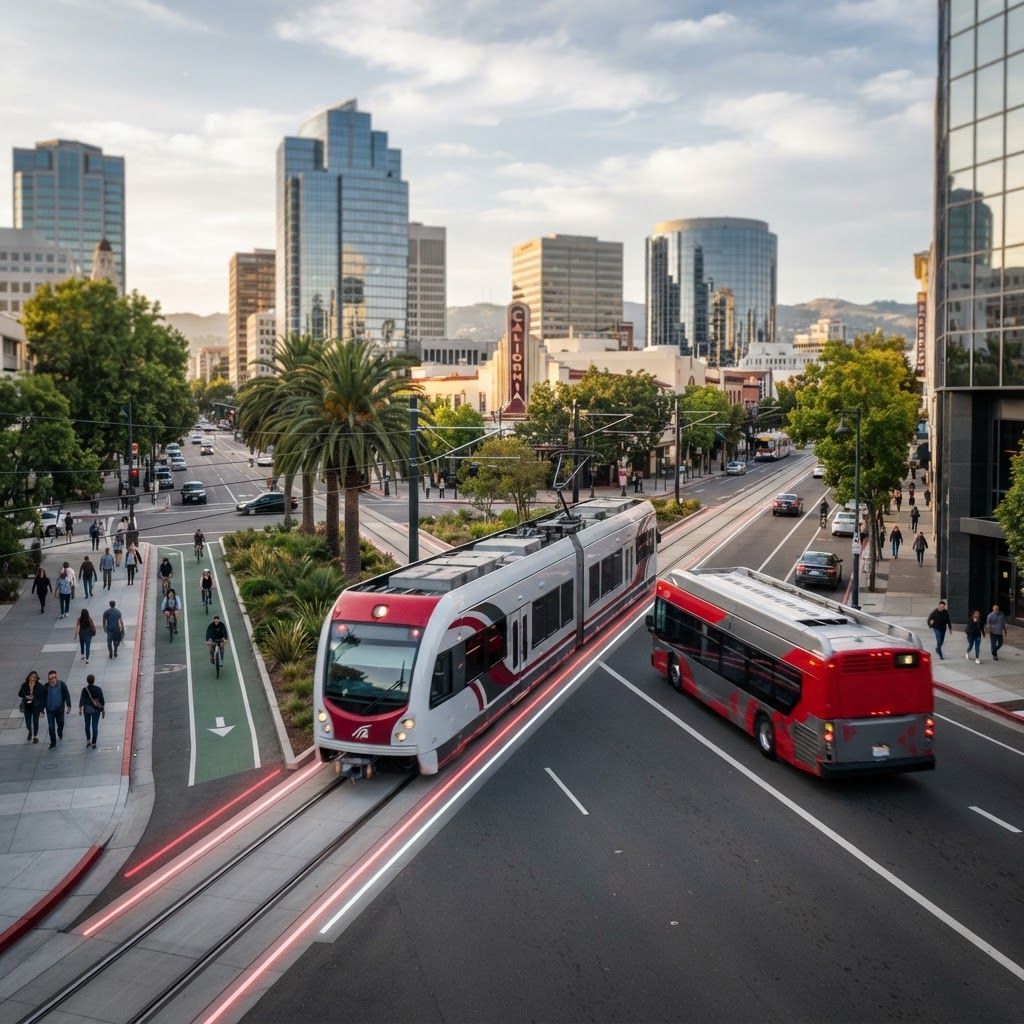
Public Transit in the Heart of Silicon Valley
San Jose is the largest city in Northern California and the beating heart of Silicon Valley, so it is no surprise that mobility sits at the center of daily life here. As the region has grown, so too has the demand for reliable, affordable, and sustainable public transit. Whether commuters are heading to a downtown office, a tech campus in North San Jose, or connecting onward to San Francisco, the city's transit ecosystem plays a vital role in reducing congestion and lowering emissions.
Public transit in San Jose has evolved beyond simple bus routes into an interconnected web of light rail, commuter rail, express services, and shared mobility. Understanding the strengths of each provider helps riders choose the option that best fits their schedule, budget, and destination.
What Makes a Transit Service Stand Out
The best transit services share several qualities: frequent and predictable schedules, clean and well-maintained vehicles, broad geographic coverage, seamless fare payment, and strong safety records. Riders increasingly value real-time arrival information, accessibility for passengers with disabilities, and integration with regional systems so a single trip can span multiple operators without friction.
Sustainability is another differentiator. Electric buses, zero-emission fleets, and rail powered by clean energy align with California's environmental goals and appeal to a community that cares deeply about climate impact.
Leading Public Transit Services in San Jose
Santa Clara Valley Transportation Authority (VTA) is the backbone of local transit, operating an extensive bus network and a light rail system that links downtown San Jose with Mountain View, Milpitas, and Santa Teresa. VTA is widely recognized for its ongoing fleet electrification and its efforts to redesign routes around ridership demand.
Caltrain provides commuter rail service along the Peninsula corridor, connecting San Jose's Diridon Station to San Francisco with stops throughout the region. Its recent electrification has improved speed, frequency, and reliability, making it a favorite for long-distance commuters.
Bay Area Rapid Transit (BART) extended service into the area with the Milpitas and Berryessa stations, giving San Jose residents a direct link to the broader East Bay and beyond. BART is prized for its high frequency and regional reach.
Amtrak serves Diridon Station through routes such as the Capitol Corridor, offering comfortable intercity travel toward Sacramento and the Central Valley for riders seeking longer journeys.
Highway 17 Express connects San Jose with Santa Cruz over the mountains, a route beloved by beachgoers and cross-county commuters who prefer to leave the driving to professionals.
Shared and Flexible Mobility Options
Beyond fixed-route rail and bus, San Jose has embraced flexible mobility. VTA Paratransit delivers essential door-to-door service for riders who cannot use standard fixed-route transit, reinforcing the region's commitment to accessibility. Microtransit and on-demand shuttle pilots have appeared in select neighborhoods, using smaller vehicles to bridge the gap between homes and major transit hubs, a concept often called solving the first-and-last-mile challenge.
Employer-sponsored shuttles, common among Silicon Valley companies, also supplement public options by carrying workers between transit stations and corporate campuses, easing pressure on parking and roads.
Trends Shaping the Future of Transit
Several trends are reshaping how San Jose moves. Fleet electrification continues to expand, with agencies committing to zero-emission buses in the coming years. Fare integration is another priority, with the regional Clipper card allowing riders to pay across multiple operators using a single account, and next-generation Clipper technology promising an even smoother experience.
The planned extension of BART deeper into downtown San Jose and Santa Clara is one of the most significant infrastructure projects in the region, expected to transform connectivity once complete. Meanwhile, the redevelopment surrounding Diridon Station aims to create a world-class multimodal hub where rail, light rail, bus, and active transportation converge.
Benefits for San Jose Residents
Choosing public transit offers tangible advantages. Riders save on fuel, parking, and vehicle maintenance while avoiding the stress of gridlock on Highway 101 and Interstate 280. Transit also supports healthier lifestyles, since most trips involve some walking or cycling to and from stations. On a community level, robust transit reduces air pollution, supports equitable access to jobs and education, and helps the city accommodate growth without adding more cars to already busy roads.
Choosing the Right Service for Your Journey
The best transit choice depends on your specific trip. For local errands and neighborhood connections, VTA buses and light rail are ideal. For Peninsula commutes toward San Francisco, Caltrain is hard to beat. Travelers heading to the East Bay benefit from BART, while those venturing farther afield can rely on Amtrak or the Highway 17 Express. Many residents combine several services in a single journey, taking advantage of the seamless transfers that regional coordination now makes possible.
Conclusion
San Jose's public transit landscape reflects the ambition and innovation of Silicon Valley itself. With continued investment in electrification, regional connectivity, and rider-focused technology, the city is building a transit network designed for a cleaner, more accessible future. Whether you are a daily commuter or an occasional traveler, the range of services available makes it easier than ever to leave the car behind and move through San Jose with confidence.
