
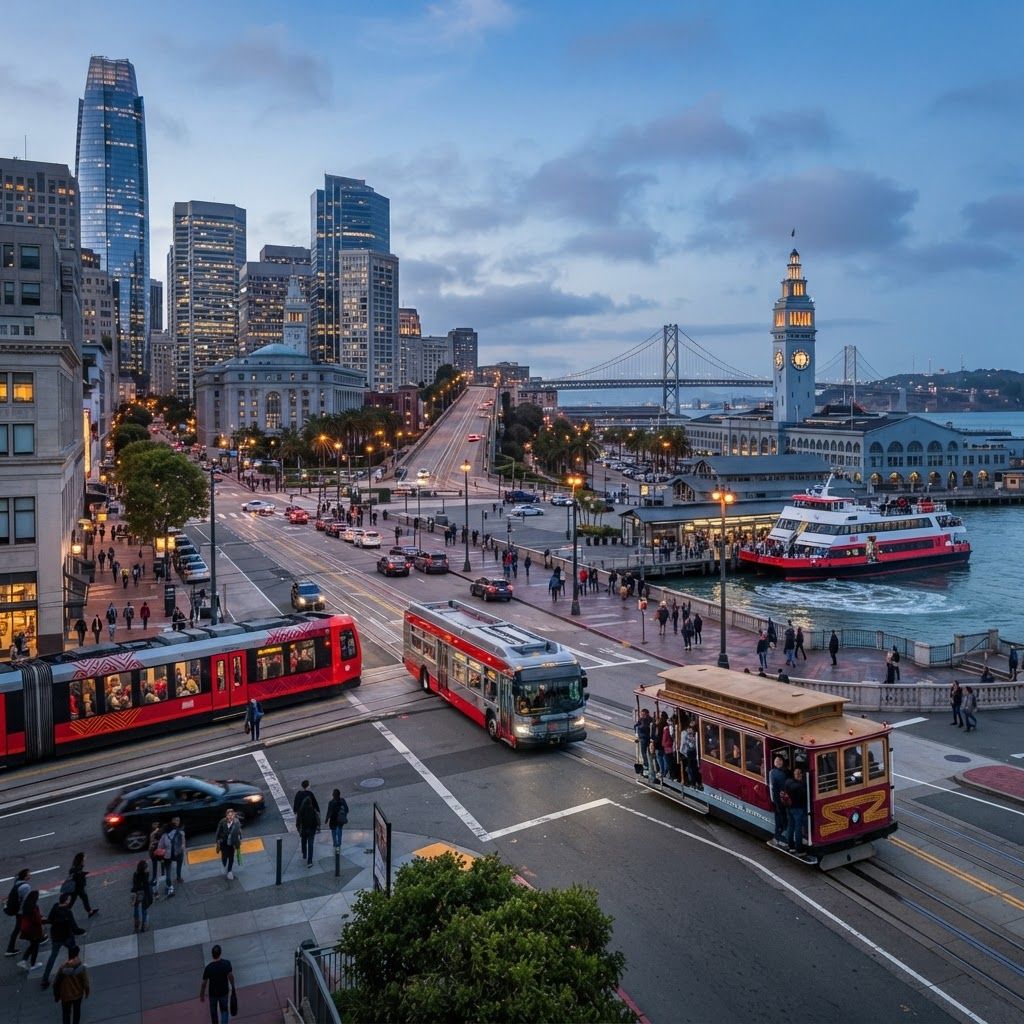
A City Built on Public Transit
San Francisco stands among the most transit-oriented cities in the United States, where public transportation is woven into the rhythm of daily life. With its dense population, limited parking, and steep terrain, the city depends on an extensive network of buses, trains, ferries, and iconic cable cars to move residents and visitors efficiently. Public transit here is more than a convenience; it is a cornerstone of the region's economy, environmental strategy, and quality of life.
Muni: The Backbone of City Transit
The San Francisco Municipal Transportation Agency, or Muni, operates the city's core transit network. Its comprehensive system of buses, electric trolley buses, and light rail reaches nearly every neighborhood, from the Marina to the Excelsior. Muni's affordability and frequency make it the default choice for city residents. Integrated fare payment through the regional Clipper card allows seamless transfers, and ongoing investments in electric vehicles and dedicated transit lanes continue to improve reliability.
BART: Rapid Regional Connections
Bay Area Rapid Transit, known as BART, provides high-speed regional rail that connects San Francisco to the East Bay, the Peninsula, and the airport. BART's ability to whisk commuters through the Transbay Tube in minutes makes it indispensable for regional travel. Frequent service, extensive coverage, and connections to other transit modes position BART as a critical link in the Bay Area's mobility network.
Caltrain and Peninsula Service
Caltrain serves the vital corridor between San Francisco and Silicon Valley, carrying commuters to major employment centers along the Peninsula. Its recent electrification has delivered faster, cleaner, and more frequent service, reinforcing its role in connecting the region's residential and tech communities. Caltrain exemplifies how modern investment can revitalize commuter rail and reduce reliance on automobiles.
Ferries and Water Transit
San Francisco Bay Ferry and Golden Gate Ferry offer scenic and efficient water-based transit, linking the city with Marin County, the East Bay, and other waterfront communities. Ferries provide a relaxing alternative to bridge traffic, complete with stunning views of the bay and skyline. As the region seeks to diversify its transit options, water transit continues to expand, offering both practical commuting and a distinctive travel experience.
Historic Cable Cars and Streetcars
No discussion of San Francisco transit is complete without its beloved cable cars and historic streetcars. While cherished by tourists, these systems also serve as functional transit, climbing the city's iconic hills and traversing the Embarcadero. The vintage F-line streetcars, featuring restored vehicles from around the world, combine heritage charm with practical service, embodying the city's unique character.
The Push Toward Sustainable Mobility
San Francisco's transit-first policy prioritizes public transportation, cycling, and walking over private vehicles. Investments in electrification, expanded service, and improved accessibility reflect a commitment to sustainability and equity. Real-time arrival information, contactless payment, and integrated regional planning continue to enhance the rider experience, making public transit an increasingly attractive choice.
How to Compare Your Options
A useful comparison begins with the details of the journey or shipment rather than a headline price alone. Consider the starting point, destination, desired schedule, volume, accessibility needs, and any special handling requirements. Then examine each operator's service area, operating hours, cancellation terms, safety practices, and ability to provide dependable status updates. Established companies should communicate clearly about what is included, where extra fees may apply, and what customers can expect if weather, congestion, or another disruption affects the plan. Reviews can reveal recurring strengths, but recent feedback and patterns across several sources are more useful than a single enthusiastic or negative comment.
San Francisco-specific experience deserves extra weight. The city's hills, loading restrictions, crowded curb space, major events, microclimates, and connections across bridges or to airports can complicate even a routine trip. Providers familiar with neighborhood access rules and regional traffic patterns are better equipped to set realistic schedules. Sustainability may also matter: efficient routing, shared capacity, electric equipment, and transparent emissions initiatives can reduce environmental impact without sacrificing service quality. Before making a decision, request a clear description of the service, confirm insurance or passenger protections where relevant, and verify how support is handled before, during, and after the job.
Making the Most of the Service
Good preparation improves almost every transportation experience. Book early during conventions, holidays, summer travel periods, and major city events, when capacity can tighten quickly. Provide accurate dimensions, passenger counts, addresses, timing, and special requirements so the operator can assign suitable equipment. Keep essential confirmation details available, allow reasonable time for San Francisco traffic, and identify backup options for truly time-sensitive plans. For recurring business needs, track punctuality, condition, communication, and total cost over several jobs rather than judging performance by price alone. A provider that consistently prevents problems and responds well when conditions change often delivers the strongest long-term value.
Conclusion
Public transit services define the way San Francisco moves. From the far-reaching network of Muni to the rapid connections of BART, the commuter efficiency of Caltrain, the scenic ferries, and the historic cable cars, the city offers a rich and diverse array of options. As the region invests in cleaner, faster, and more accessible transit, public transportation remains central to San Francisco's vision of a sustainable, connected, and vibrant urban future.
