
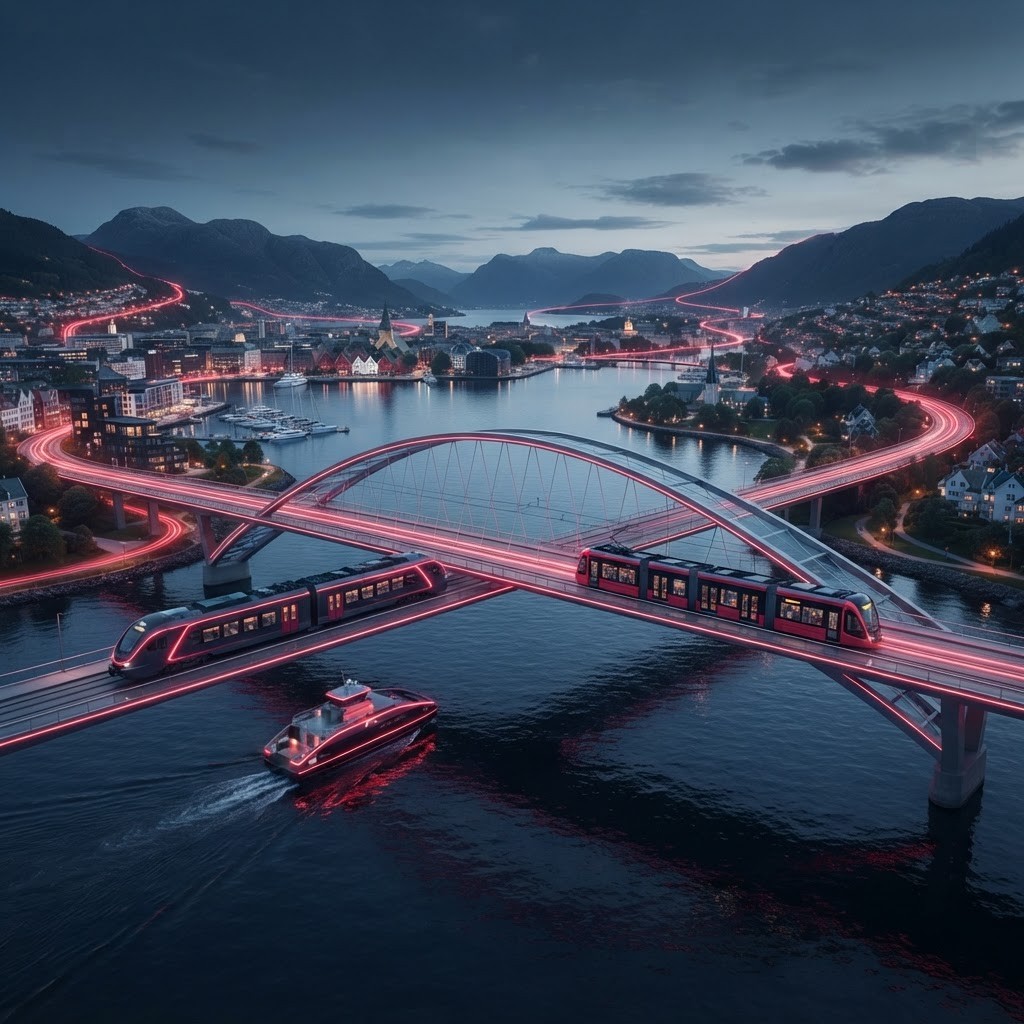
Public Transit at the Heart of Norwegian Life
Public transport in Norway is more than a way to get from place to place; it is a reflection of the country's commitment to sustainability, accessibility, and quality of life. Modern buses, electric ferries, efficient trains, and integrated ticketing systems make it easy for residents and visitors to travel without a car. Norway's ambitious environmental goals have accelerated the shift toward electric and low-emission fleets, and its transit operators are frequently cited as models of green mobility.
From the busy streets of Oslo to the fjord crossings of the west coast and the long-distance rail lines that traverse dramatic landscapes, public transit connects the nation. The following ten services represent the best of Norwegian public transport.
Urban and Regional Networks
Ruter manages public transport in Oslo and the surrounding Viken region, coordinating buses, trams, metro, and ferries under one seamless system. Its user-friendly app and integrated ticketing make it one of Europe's most convenient urban networks.
Sporveien operates Oslo's metro (T-bane) and tram services, moving hundreds of thousands of passengers daily with high frequency and reliability.
Skyss serves the Bergen area and Vestland county, running the acclaimed Bergen Light Rail (Bybanen) alongside buses and boats, and is praised for smooth connections between modes of transport.
AtB provides public transport in the Trondheim region, including an extensive bus network and ferry services, with a strong focus on electrification and passenger comfort.
Kolumbus operates in the Stavanger and Rogaland region, integrating buses, boats, and bikes into a flexible mobility offering that reflects modern transit trends.
National Rail and Long-Distance Travel
Vy is Norway's principal train operator, running long-distance, regional, and commuter services across the country. Its scenic routes are famous worldwide, and it also operates extensive bus networks under the Vy Buss brand.
Go-Ahead Nordic operates passenger rail on key southern routes, bringing competition and service innovation to the Norwegian railway market.
SJ Norge runs train services in central and northern regions, connecting cities and towns with comfortable, reliable rail travel.
Ferries and Coastal Connections
Norled is a leading ferry and express boat operator, pioneering electric and hydrogen-powered vessels that cross fjords and connect island communities with minimal environmental impact.
Torghatten operates an extensive network of ferries and coastal routes, providing essential links for communities where boats are the most practical form of transport. Its investment in battery-electric ferries underscores Norway's leadership in sustainable maritime transit.
Integration and Convenience
One of the greatest strengths of Norwegian public transit is integration. Regional authorities coordinate schedules and ticketing so that passengers can move smoothly between buses, trains, trams, and ferries. Mobile apps allow travellers to plan journeys, buy tickets, and receive real-time updates in a single interface. This seamless experience encourages more people to leave their cars at home, supporting both environmental and congestion goals.
Accessibility is another priority. Low-floor buses, step-free stations, and clear passenger information make transit usable for people of all ages and abilities. Frequent service on core routes reduces waiting times, while flexible on-demand options serve rural areas where fixed schedules would be inefficient.
Sustainability in Motion
Norway is a global frontrunner in electrifying public transport. Cities are rapidly replacing diesel buses with electric models, and the country operates some of the world's first fully electric car ferries. These initiatives not only cut emissions but also reduce noise and improve air quality in urban areas. Passengers increasingly value the quiet, smooth ride of electric vehicles, and operators promote their green credentials as a core part of their identity.
Tips for Using Public Transit
Travellers can make the most of Norwegian public transit by downloading the relevant regional app, which simplifies route planning and ticket purchase. Period passes and zone-based tickets often provide the best value for frequent users. Because ferries and some rural routes follow specific timetables, checking schedules in advance helps avoid long waits, particularly in winter. Visitors will find that even complex journeys across multiple modes are straightforward thanks to coordinated systems.
Conclusion
Public transit in Norway combines efficiency, sustainability, and breathtaking scenery in a way few countries can match. The ten services featured here, from Oslo's integrated urban network to electric fjord ferries and scenic national railways, demonstrate the nation's dedication to accessible, low-emission mobility. Whether commuting daily or exploring the country's dramatic landscapes, passengers can rely on a public transport system that is clean, connected, and continually improving.
