
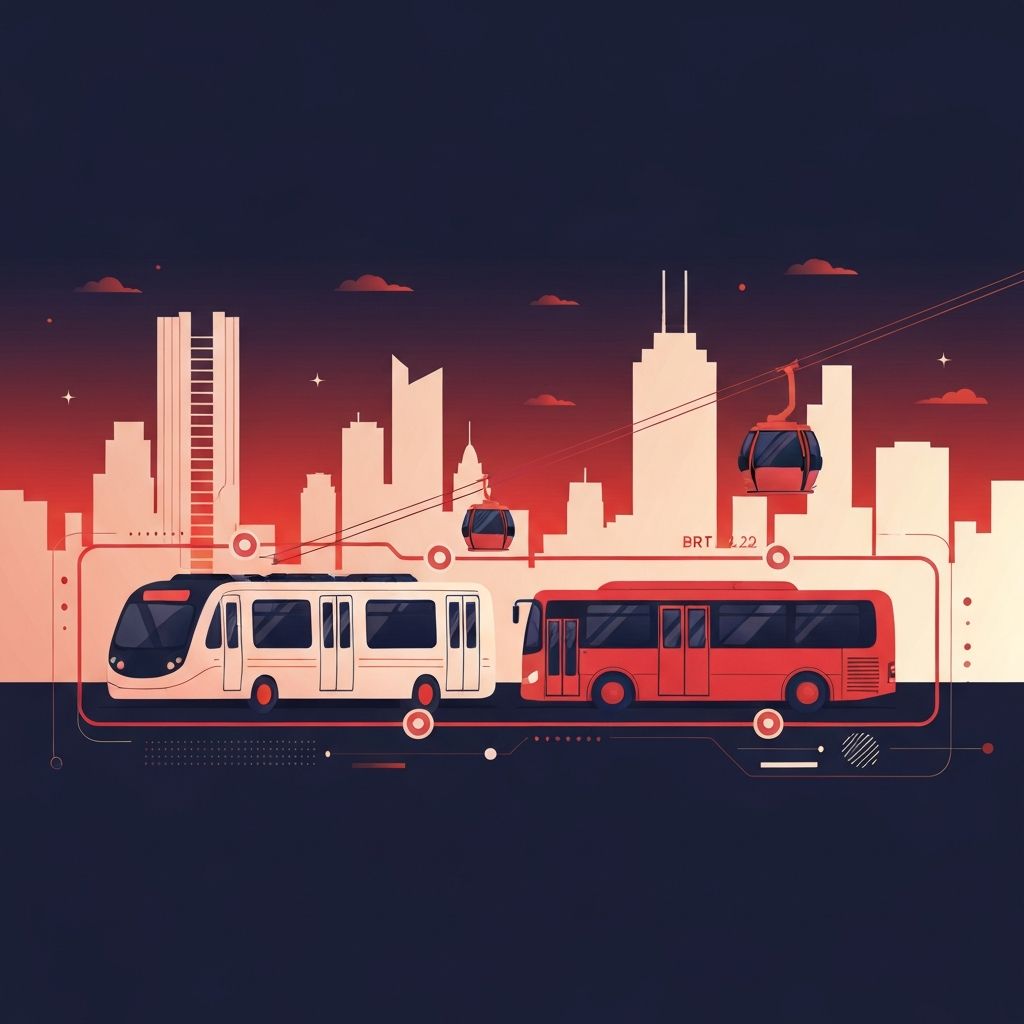
Public transportation is a critical pillar of daily life in Mexico's cities, where millions of commuters rely on buses, metros, light rail, and innovative aerial transit systems to reach work, school, and home each day. Over the past two decades, Mexican cities have invested heavily in modernizing and expanding their transit networks, making public transport more efficient, sustainable, and accessible. Here is a look at the top ten public transit services in Mexico.
The Importance of Public Transit
With several of Latin America's largest metropolitan areas, Mexico faces significant mobility challenges. Public transit reduces congestion, lowers emissions, and provides affordable mobility to people of all income levels. Well-designed transit systems also drive urban development, connecting neighborhoods and unlocking economic opportunity.
The Top 10 Public Transit Services
1. Sistema de Transporte Colectivo Metro (Mexico City Metro) is one of the largest and busiest subway systems in the Americas, moving millions of passengers daily across 12 lines that crisscross the capital.
2. Metrobús CDMX is Mexico City's bus rapid transit system, with dedicated lanes, modern stations, and articulated buses that connect major corridors at high speed.
3. Cablebús Ciudad de México is an innovative aerial cable car system that connects underserved neighborhoods in the hills around the capital, offering scenic and efficient transit for residents.
4. Tren Ligero de Guadalajara (Mi Tren) is the light rail system of the Guadalajara metropolitan area, with three lines that have transformed mobility for residents and visitors alike.
5. Metrorrey is the metro system of Monterrey, a modern, efficient network that connects the industrial city's main districts.
6. Mexicable is a pioneering aerial cable car service in the State of Mexico that connects hillside communities with the broader transit network.
7. Sistecozome and Sistema de Tren Eléctrico Urbano together provide important rail-based mobility options in Guadalajara, supporting commuters across the metropolitan area.
8. Transmetro and Transmetropolitano (Puebla) are bus rapid transit systems serving Puebla, one of Mexico's largest cities, providing fast and affordable connections across the urban area.
9. Optibus and the Ecovía system in León and Guanajuato highlight the success of mid-sized cities in deploying efficient bus rapid transit networks tailored to their specific needs.
10. Mexibús is the bus rapid transit system that operates in the State of Mexico, linking densely populated suburban areas with the metropolitan core.
Trends in Mexican Public Transit
Mexican cities are increasingly embracing integrated transit systems that combine multiple modes under a single fare and information platform. Mobility cards, mobile apps, and contactless payment have made it easier than ever for riders to plan trips and transfer between services. Electrification is another major trend, with cities introducing electric buses and exploring electric BRT corridors.
Aerial cable cars have emerged as a uniquely Mexican innovation, with Cablebús and Mexicable demonstrating how this mode can serve hillside communities that traditional buses cannot reach efficiently. These systems offer comfortable rides, scenic views, and very low operating emissions.
Integration with Urban Development
Public transit and urban development go hand in hand. Cities such as Mexico City, Guadalajara, and Monterrey have used transit investments to drive transit-oriented development, with new housing, retail, and employment centers concentrated near major stations. This approach reduces sprawl, increases ridership, and creates more vibrant neighborhoods.
Challenges and Opportunities
Despite significant progress, Mexican public transit still faces challenges, including funding constraints, fare affordability, security concerns, and the need for greater accessibility for people with disabilities. Forward-looking cities are addressing these issues through better governance, technology investments, and community engagement.
The opportunities are equally significant. Mexico's young, urban population is open to using public transit, and new technologies make it possible to offer faster, more reliable, and more comfortable service. With continued investment, Mexican cities can build world-class transit systems that improve quality of life and reduce environmental impact.
Tips for Public Transit Riders
Visitors and residents can make the most of Mexican public transit by using official transit apps, purchasing rechargeable transit cards, and planning trips during off-peak hours when possible. Many systems offer reduced fares for students, seniors, and people with disabilities, and integrated networks allow seamless transfers between different modes.
Final Thoughts
Mexico's public transit services are among the most innovative and ambitious in Latin America. The systems highlighted here showcase a range of solutions from large metros to creative cable cars, each tailored to the unique geography and needs of its city. As investment continues and technology evolves, public transit will play an even greater role in shaping the future of Mexico's urban areas.
