
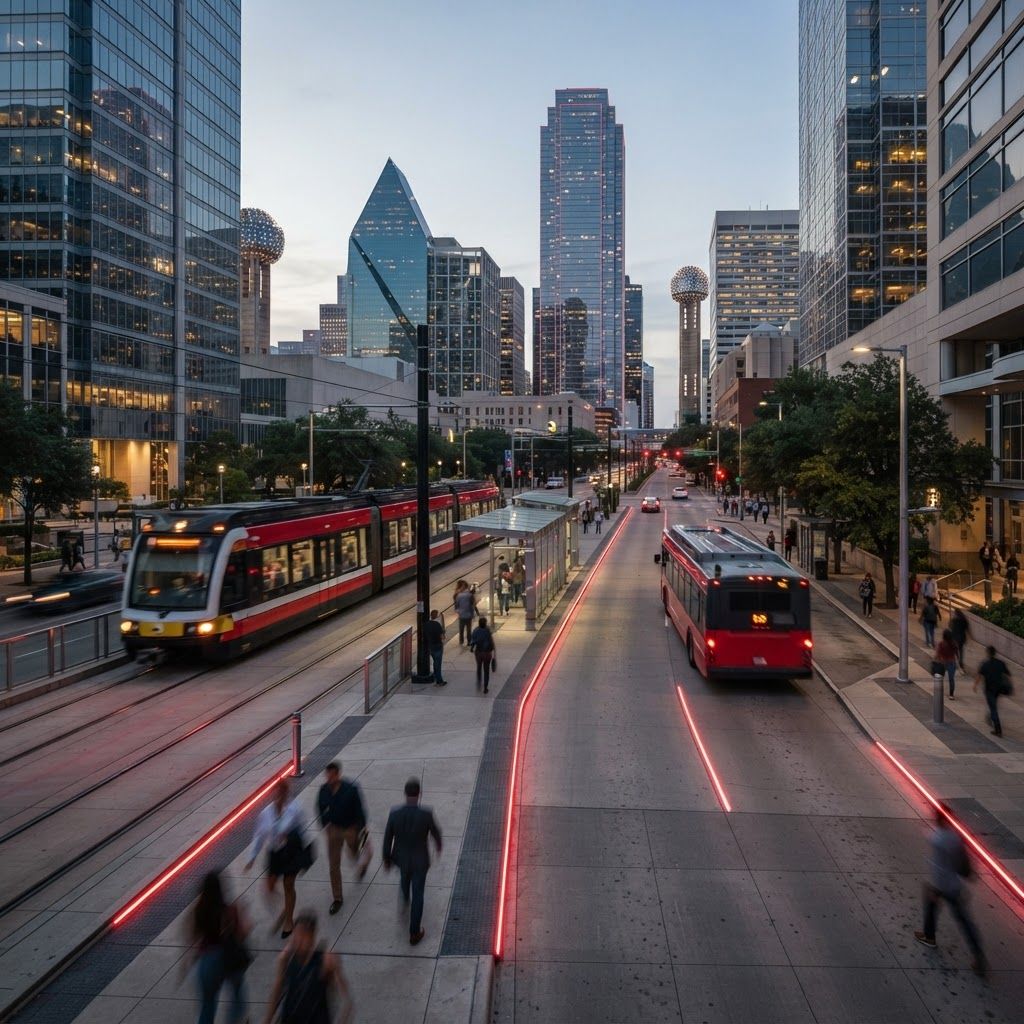
Understanding Transit in Dallas
Dallas covers a large geographic area, so effective travel often involves combining rail, bus, streetcar, walking, cycling, or a first-mile connection. The region's transit network is strongest along established corridors and around employment centers, airports, hospitals, universities, and downtown. Service frequency can vary significantly by route and time of day, making advance planning important.
This list includes transit agencies and services rather than ranking individual routes. Each has a distinct role in North Texas mobility. Riders should check current schedules, fare rules, accessibility details, and service alerts before travel because construction and operating plans change.
1. DART Light Rail
Dallas Area Rapid Transit operates one of the country's largest light-rail systems by route mileage. Its color-coded lines connect downtown Dallas with destinations including Plano, Garland, Rowlett, Carrollton, Irving, and Dallas Fort Worth International Airport. Rail is especially useful when origins and destinations are near stations, avoiding highway traffic and parking costs.
2. DART Bus
DART's bus network reaches neighborhoods and destinations beyond the rail corridors. Frequent routes on major streets form the backbone, while local routes extend coverage. Bus trips require more attention to frequency and transfers, but they can provide the closest public option for workplaces, shopping areas, medical facilities, and residential communities.
3. GoLink
GoLink is DART's on-demand service for designated zones. Riders request trips within a zone or connect to transit hubs, helping solve first-mile and last-mile gaps where fixed-route buses may be impractical. Availability, booking methods, boundaries, and operating hours vary by zone, so users should understand the local rules before relying on it.
4. Trinity Railway Express
The Trinity Railway Express links Dallas and Fort Worth, serving intermediate stations and providing an important regional commuter connection. It is valuable for travelers moving between the two downtowns or accessing destinations near the corridor. Service patterns differ on weekdays, evenings, and weekends, and airport access may require a connecting service.
5. Dallas Streetcar
The Dallas Streetcar connects downtown's Union Station area with Oak Cliff, including the Bishop Arts area. It serves shorter urban trips and links with other rail services. For visitors, it can be an appealing way to reach dining and neighborhood destinations without moving a car, though headways should be factored into plans.
6. M-Line Trolley
The M-Line Trolley travels through Uptown and into downtown Dallas using heritage-style streetcars. It is useful for short trips near popular residential, office, cultural, and dining areas. The service also adds character to the travel experience, but riders should treat it as an urban circulator and check operating hours.
7. TEXRail
Trinity Metro's TEXRail runs between downtown Fort Worth and Dallas Fort Worth International Airport through communities including Grapevine. Although centered west of Dallas, it is a significant regional option for airport and cross-metro travel when combined with other connections. It offers comfortable trains and a predictable alternative to congested highways.
8. Trinity Metro Bus
Trinity Metro buses serve Fort Worth and surrounding areas, making them relevant to Dallas residents whose trips extend west across the Metroplex. Connections with the Trinity Railway Express and TEXRail expand their usefulness. As with any large bus network, route frequency and transfer timing determine whether a trip is competitive with driving.
9. Denton County Transportation Authority A-train
The A-train connects Denton County communities with the DART system at Trinity Mills. It supports students, commuters, and regional travelers heading between Denton, Lewisville, Carrollton, and Dallas. The transfer creates broader reach, while the total journey requires careful schedule coordination.
10. STAR Transit
STAR Transit provides transportation in several communities east and southeast of Dallas through fixed-route and demand-response services. It is particularly important where large urban rail networks do not extend. Service eligibility and reservation requirements can differ, so riders should review the offering available in their community.
Planning a Better Transit Trip
Begin with the complete door-to-door journey rather than only the time aboard a train. Include walking, transfers, waiting, and the return schedule. A reloadable fare medium or mobile fare option can simplify transfers where accepted. Riders traveling late, early, or on weekends should verify that connecting services operate throughout the trip.
Most major services provide accessibility features, but passengers who need level boarding, paratransit, or assistance should confirm details in advance. During Dallas summers, bring water and minimize long outdoor waits. For events at major venues, public transportation can avoid parking congestion, though trains and platforms may be crowded after the event.
The Future of Dallas Mobility
North Texas continues to grow, increasing demand for better frequency, reliable regional connections, safer station access, and transit-oriented development. On-demand zones, improved bus corridors, and integrated fare technology are making the network more flexible. The best service is the one that aligns with a rider's corridor and schedule, and many successful Dallas trips combine two or more options.
Practical Next Steps
Before making a final decision, create a short list of priorities and compare each option using the same questions. Confirm current services, availability, policies, and costs directly, because offerings can change over time. Recent customer experiences can reveal useful patterns, but they should be considered alongside verified capabilities and personal fit. A thoughtful comparison helps Dallas residents and businesses choose confidently, avoid preventable surprises, and find a provider or program that supports both immediate needs and longer-term goals.
