
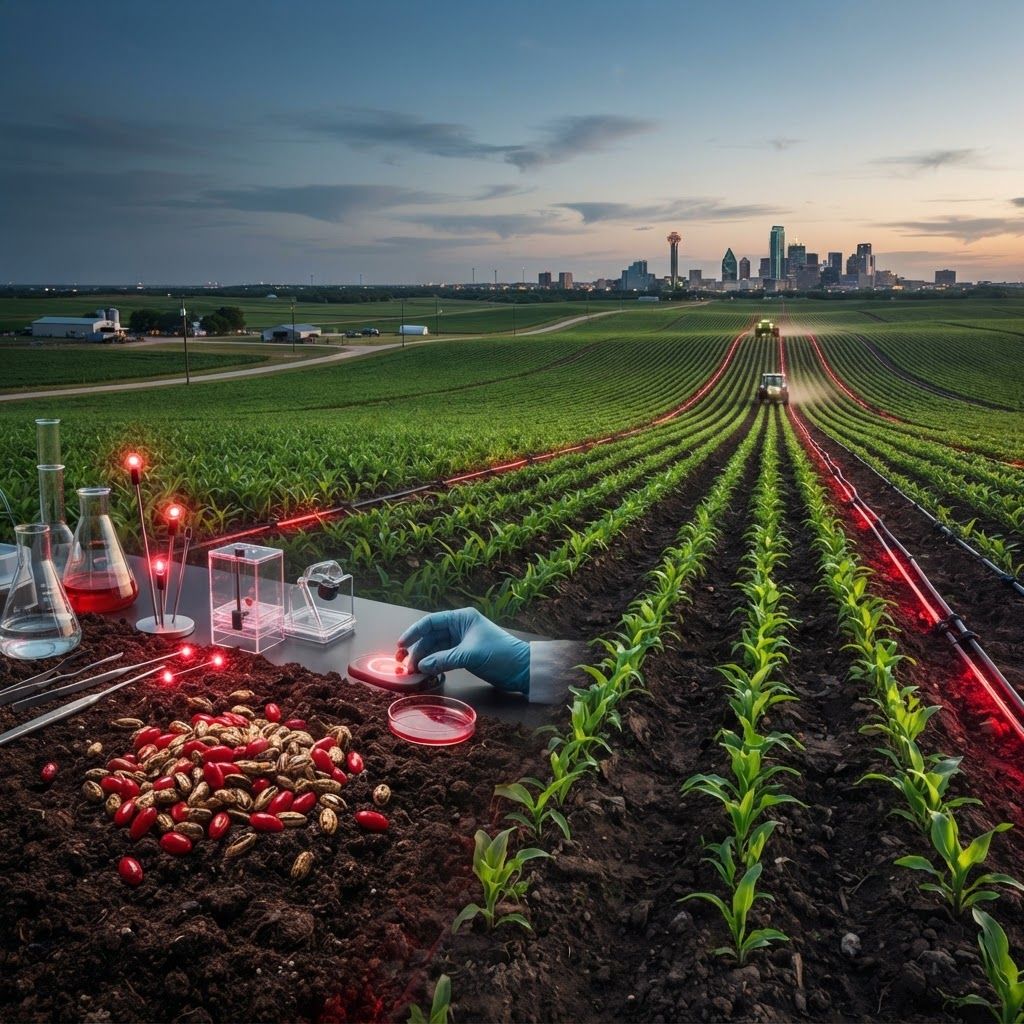
Choosing Seed for Dallas Conditions
Seed selection in Dallas requires more than choosing an appealing variety. North Texas growers contend with hot summers, variable rainfall, occasional freezes, alkaline soils, and significant pressure from insects and disease. Commercial farms need dependable yield and standability, while homeowners may prioritize heat tolerance and low maintenance. The companies below serve different segments, from field crops and forage to vegetables, flowers, and native restoration.
1. Justin Seed Company
Justin Seed Company is a North Texas supplier with strong regional relevance. Its offerings include pasture grasses, forage, cover crops, wildlife blends, grains, and turf products. Local familiarity is a meaningful advantage because recommendations can reflect area soils, rainfall patterns, grazing goals, and planting windows.
2. Turner Seed
Turner Seed serves Texas landowners with native grasses, forage seed, wildflowers, wildlife mixes, and erosion-control options. The company is well suited to ranch improvement and restoration projects where species compatibility matters. Its Texas-oriented assortment helps buyers avoid generic mixtures poorly adapted to North Texas.
3. Native American Seed
Native American Seed focuses on native grasses and wildflowers for ecological restoration, water conservation, and habitat. Dallas-area property owners increasingly use native plantings to reduce irrigation and support pollinators. The company's specialization and emphasis on regional ecology differentiate it from conventional garden-seed sellers.
4. Douglass King Seeds
Douglass King Seeds is a Texas company with experience in range, pasture, reclamation, wildlife, and conservation seed. Its mixtures support working lands as well as infrastructure projects. Technical understanding of establishment rates and species combinations is valuable when Dallas-area buyers are investing in large acreage.
5. Bayer Crop Science
Bayer's seed portfolio includes widely used corn, cotton, soybean, and vegetable genetics. Commercial producers value trait packages, agronomic research, and dealer support. When considering advanced genetics, growers should weigh local trial performance, stewardship requirements, pest pressure, and the economics of the complete crop system.
6. Corteva Agriscience
Corteva Agriscience offers Pioneer seed and other crop technologies supported by extensive breeding and field research. Its corn, sorghum, soybean, and forage options are relevant across Texas. Agronomic support and hybrid placement tools can help growers match maturity and stress tolerance to individual fields.
7. Syngenta Seeds
Syngenta provides field-crop and vegetable seeds backed by global research. Its portfolios address yield, quality, disease resistance, and environmental stress. Dallas-region commercial growers may benefit from broad genetic choices, but localized performance data should remain central to every selection.
8. WinField United
WinField United combines seed access with agronomic services, crop inputs, and decision-support tools through a cooperative network. Its approach can help producers compare hybrids and manage inputs as one system. Data from local test plots is especially useful in North Texas, where rainfall can vary sharply over short distances.
9. Johnny's Selected Seeds
Johnny's Selected Seeds is respected by market gardeners and small farms for vegetables, herbs, flowers, and growing tools. Detailed variety information and professional-grade options support succession planting and season extension. Dallas growers should focus on heat-tolerant cultivars and varieties suited to short spring and fall windows.
10. Burpee
Burpee is a familiar choice for home gardeners seeking accessible vegetable, herb, and flower seed. Its broad catalog helps beginners explore different crops without commercial-scale quantities. For Dallas gardens, careful attention to days to maturity and temperature requirements is more important than national popularity.
How to Evaluate Seed
Review germination percentage, test date, purity, origin, treatment, maturity, disease resistance, and recommended seeding rate. Commercial buyers should ask for local trial results across multiple seasons rather than relying on a single high-yield year. Native and pasture projects require good site preparation, weed control, correct planting depth, and patience during establishment.
Trends in the Seed Industry
Drought resilience, biological seed treatments, digital variety placement, and genetic diversity are receiving greater attention. Urban Dallas is also seeing stronger interest in pollinator habitats, native landscapes, and food gardening. These trends favor companies that provide clear technical information rather than selling seed as a commodity alone.
Final Thoughts
The best seed company depends on the project. Regional specialists can be ideal for pasture and restoration, global breeders bring advanced crop genetics, and garden suppliers offer manageable quantities and variety. Matching seed to Dallas conditions—and following sound establishment practices—ultimately matters more than brand recognition.
