
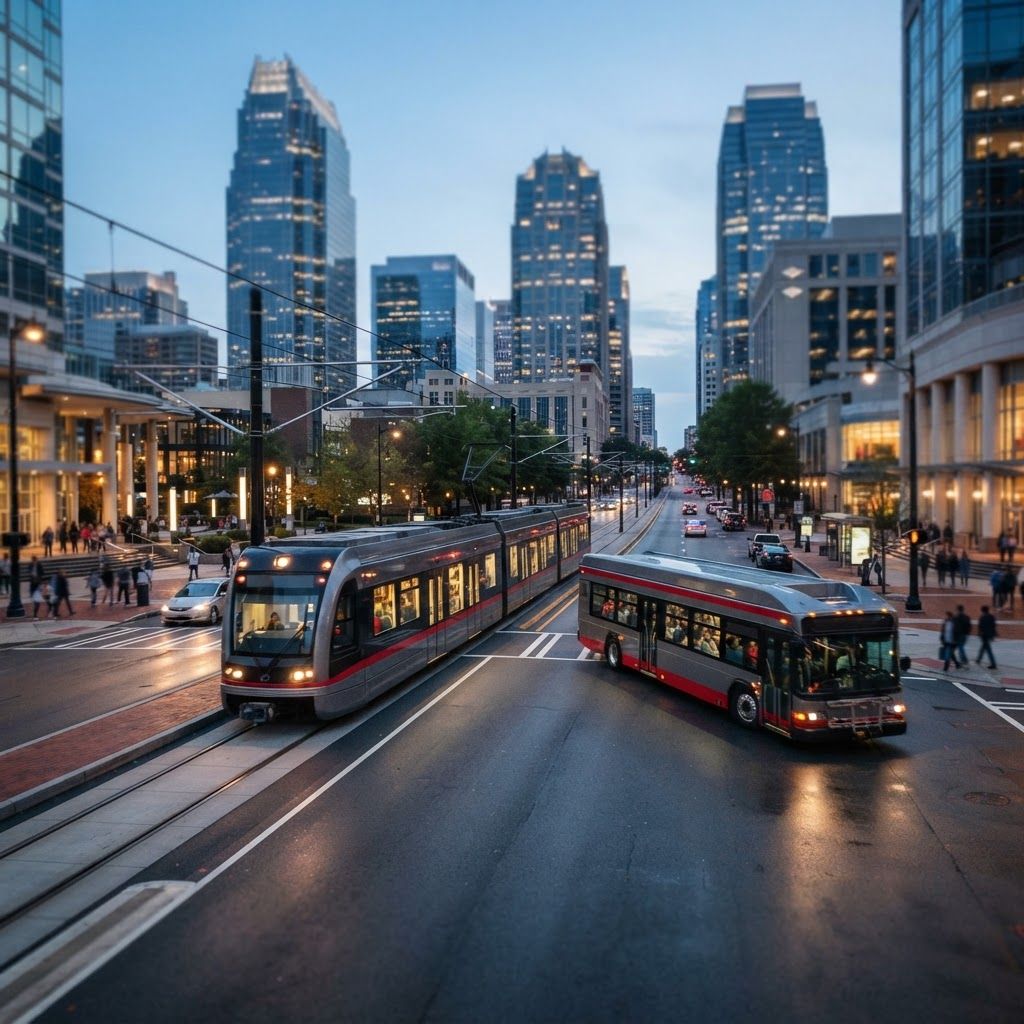
Public Transit in a Growing Metro
As Charlotte continues its rapid expansion, efficient public transit has become essential to keeping the region moving. The city has invested heavily in a multimodal network that reduces traffic congestion, lowers commuting costs, and supports sustainable growth. For residents, students, and commuters, understanding the available options makes daily travel across Mecklenburg County far more manageable.
The Charlotte Area Transit System, widely known as CATS, anchors the region's public transportation and coordinates most of the services riders depend on every day.
Light Rail and the LYNX Blue Line
The LYNX Blue Line is the centerpiece of Charlotte's transit system, offering fast, reliable light rail service that connects UNC Charlotte in the northeast to the I-485 corridor in the south, running directly through Uptown. The line has spurred significant development along its route and remains a favorite for commuters seeking to avoid highway traffic. With frequent service, comfortable stations, and convenient park-and-ride lots, the Blue Line demonstrates how rail transit can shape a modern city.
Bus Services and the CityLYNX Gold Line
CATS operates an extensive network of local and express bus routes that reach neighborhoods far beyond the reach of the rail line. Express routes serve suburban commuters, while community routes provide vital connectivity for daily errands and work trips. The CityLYNX Gold Line streetcar adds another layer, linking historic neighborhoods and Uptown with a convenient surface-level option that encourages walkable, transit-oriented living.
Specialized and Complementary Services
Beyond fixed routes, Charlotte offers services designed for specific needs. Paratransit through the STS program provides accessible transportation for riders with disabilities, ensuring the system serves everyone. Regional connections link Charlotte to surrounding communities, and partnerships with rideshare and micromobility providers help solve the first-mile and last-mile challenge. Together, these complementary options broaden the reach and flexibility of public transit.
Trends and Future Improvements
Charlotte's transit future is ambitious. Planners are advancing proposals for expanded rail corridors, including the Silver Line, and improved bus rapid transit to serve growing suburbs. Technology upgrades such as real-time arrival tracking, mobile ticketing, and contactless payment have already improved the rider experience. Sustainability is a driving force, with electric buses being introduced to reduce emissions and operating costs. These investments reflect a long-term vision of a connected, low-carbon region.
Making the Most of Charlotte Transit
Riders can maximize convenience by using mobile trip-planning tools, purchasing passes that match their travel frequency, and taking advantage of park-and-ride facilities. Combining rail and bus routes often provides the fastest door-to-door journeys, and staying informed about schedule changes helps avoid delays. For newcomers, a little planning quickly reveals how far the network can take them.
Conclusion
Public transit is a vital thread in Charlotte's urban fabric, offering affordable and sustainable ways to navigate a booming region. From the flagship LYNX Blue Line to a wide-reaching bus network and accessible paratransit, the system continues to evolve alongside the city. As Charlotte grows, its commitment to expanding and modernizing transit promises even greater mobility for residents and visitors alike.
