
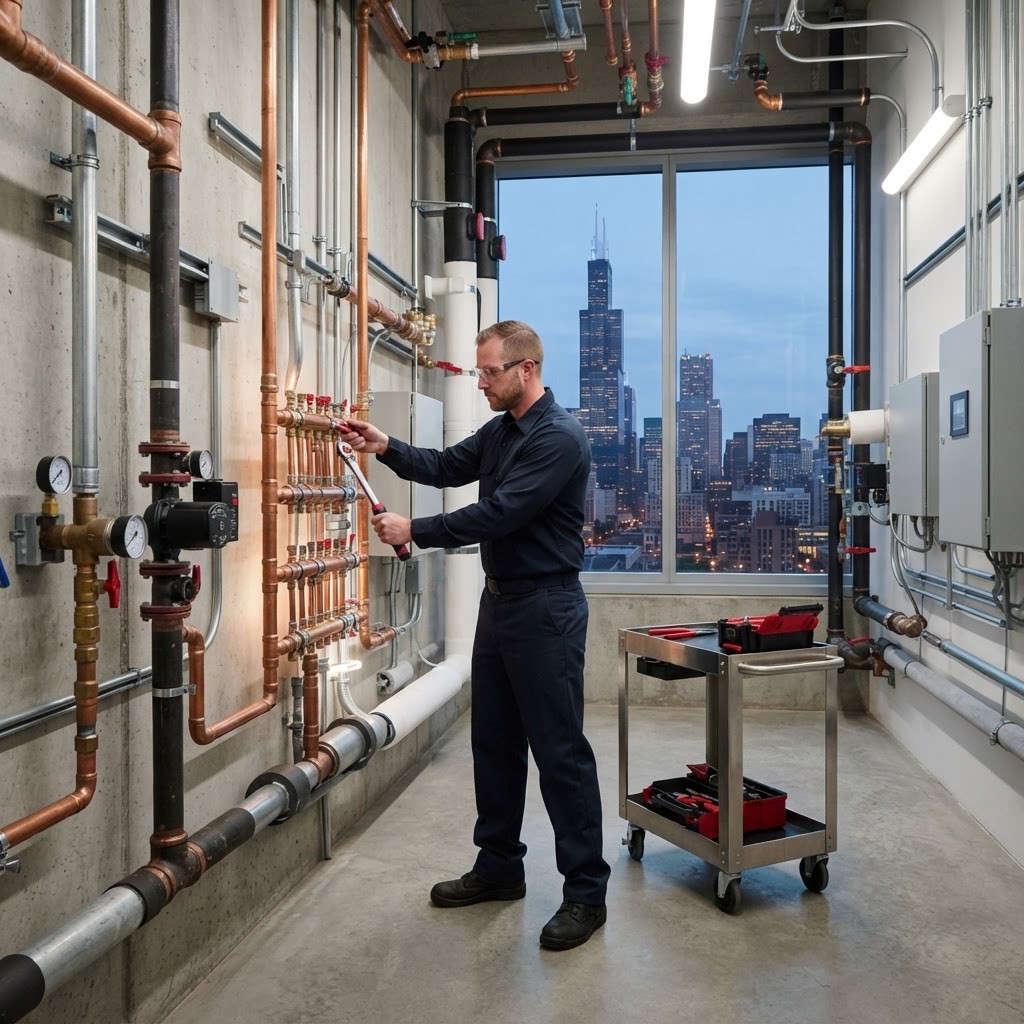
Plumbing Expertise for Chicago Buildings
Chicago’s building stock includes historic homes, courtyard apartments, restaurants, hospitals, and modern towers. Plumbing contractors may encounter aging galvanized lines, cast-iron drains, frozen pipes, sewer backups, tight chases, and strict inspection requirements. Reliable companies combine responsive service with accurate diagnosis and code-conscious workmanship. This list includes providers serving different segments of the local market.
1. J. Blanton Plumbing
J. Blanton Plumbing serves Chicago-area homeowners with repair, drain, sewer, water-heater, and repiping services. The company’s broad residential offering helps address both immediate failures and larger system upgrades. Clear diagnosis is especially important in older homes where a recurring symptom may have several possible causes.
2. Chicago Plumbing Experts
Chicago Plumbing Experts handles common residential and commercial needs, including leaks, fixtures, drains, water heaters, and piping. Its city focus supports familiarity with Chicago property types and service conditions. Customers should discuss access, restoration, and permit responsibilities when work extends behind finished surfaces.
3. Rescue Plumbing
Rescue Plumbing provides residential plumbing and emergency support throughout Chicago. Services include drain cleaning, sewer work, water heaters, sump pumps, and fixture repairs. Rapid response is valuable, but the company’s ability to explain repair alternatives and preventive measures is equally important.
4. Baethke Plumbing
Baethke Plumbing is an established residential service company known in the Chicago market. It addresses repairs, drain issues, water heating, and plumbing replacements. Homeowners may appreciate a service-oriented process that emphasizes evaluation and options before work begins.
5. Vanguard Plumbing and Sewer
Vanguard Plumbing and Sewer specializes in plumbing, sewer, drain, and water-line services. Sewer expertise is particularly relevant in Chicago, where older laterals, tree roots, settlement, and heavy storms can create recurring problems. Camera inspection and careful location of defects can prevent unnecessary excavation.
6. Goode Plumbing
Goode Plumbing serves residential and commercial clients with repair, installation, sewer, and remodeling support. Its breadth allows the company to handle both urgent calls and planned improvements. For renovation work, early coordination with cabinets, tile, and appliances helps avoid costly conflicts.
7. Rocket Plumbing
Rocket Plumbing provides plumbing and drain services in Chicago, including emergency response and sewer-related work. The company is relevant for property owners needing a prompt assessment of leaks, stoppages, or backup risks. Good service should pair immediate stabilization with an explanation of the underlying condition.
8. Almighty Plumbing
Almighty Plumbing serves Chicago and nearby areas with residential repair, installation, drain, and water-heating services. Local service experience supports familiarity with common pipe materials and housing configurations. Customers should request itemized scope details when comparing repair and replacement options.
9. Hill Mechanical
Hill Mechanical is a major Chicago mechanical contractor serving complex commercial, institutional, and industrial facilities. Its plumbing and piping capabilities suit large projects requiring engineering coordination, prefabrication, safety planning, and stringent quality control. It is distinct from residential service providers in both scale and specialization.
10. F.E. Moran
F.E. Moran delivers mechanical, plumbing, fire protection, and specialty contracting services. Its multidisciplinary capabilities are useful on commercial projects where systems interact and installation sequencing is critical. Facility owners benefit from coordinated planning and experience in demanding operational environments.
Technology and Efficiency Trends
Leak-detection sensors, smart shutoff valves, high-efficiency water heaters, touchless fixtures, and water-saving equipment are increasingly common. Trenchless sewer methods may reduce disruption in appropriate conditions, while camera inspections improve decision-making. Commercial clients are also monitoring water use and recirculation performance to control operating costs.
Hiring a Plumbing Company
Verify licensing and insurance, and ask who will perform the work. For significant projects, confirm permit and inspection responsibilities. A written estimate should describe fixtures or equipment, pipe materials, access, disposal, restoration exclusions, and warranties. For sewer problems, request visual evidence and a clear explanation of location and severity. Choosing a plumber based on diagnosis, documentation, and relevant experience is more reliable than selecting solely on the first quoted price.
Planning for a Successful Chicago Project
Before work starts, owners should document existing conditions and define who is responsible for design, permits, material selections, access, protection, inspections, and final cleanup. Chicago schedules should account for building management rules, neighborhood constraints, seasonal weather, and products with long manufacturing lead times. It is wise to keep a reasonable contingency for concealed conditions, especially in older properties. Written meeting notes, current drawings, approved samples, and a shared decision log reduce misunderstandings as work progresses.
References are most useful when they come from recent projects with a similar building type and scope. Ask those clients whether the team maintained the site, communicated upcoming decisions, handled changes fairly, and returned promptly for closeout items. Review the contract carefully and avoid relying on verbal assumptions. Payment milestones should correspond to verifiable progress, while warranties should identify both covered work and the process for requesting service. Finally, remember that a ranked list is a starting point rather than a substitute for due diligence. Availability, staffing, and company focus can change. Interview multiple qualified providers, compare equivalent scopes, verify current credentials, and choose the team that demonstrates technical competence, transparent communication, and a realistic understanding of the project.
