
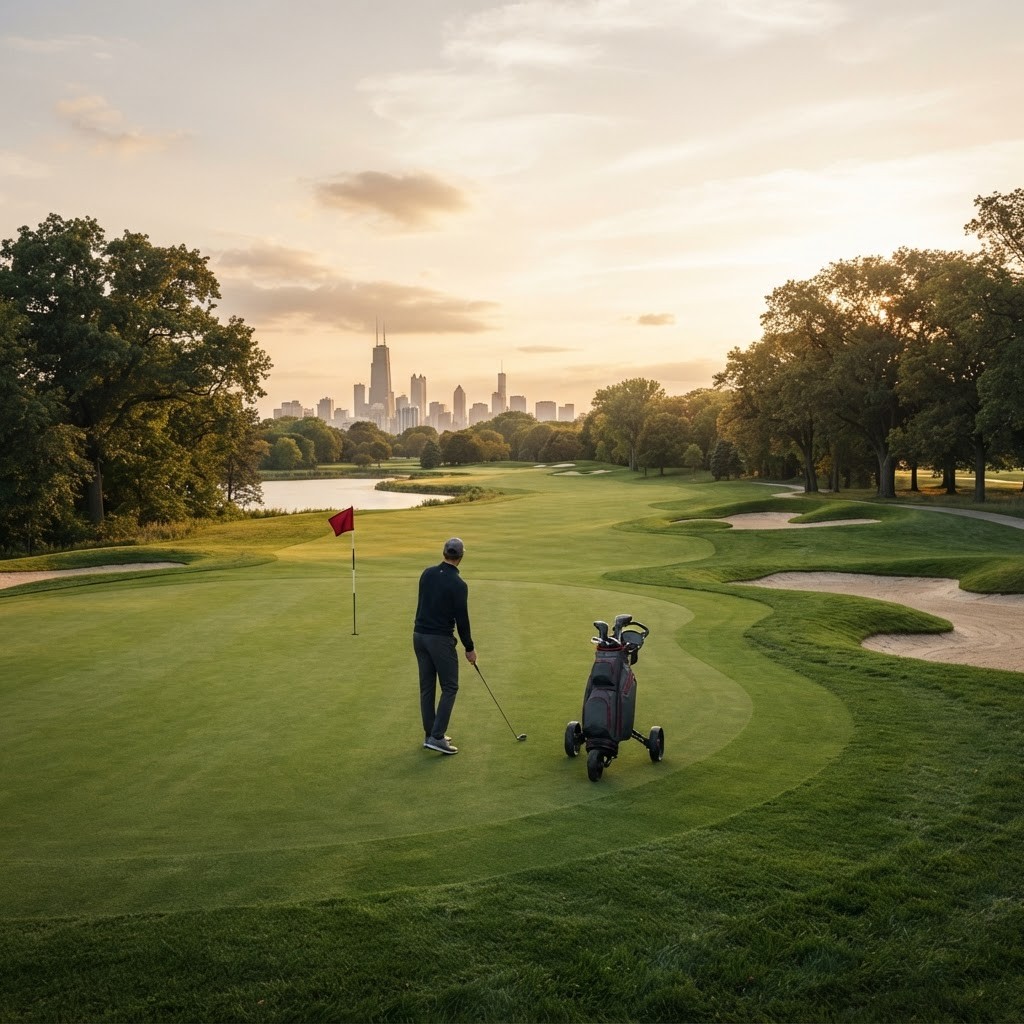
Golf Across the Chicago Region
Chicago golf ranges from compact city courses to nationally respected private clubs and ambitious public facilities. Glacial terrain, mature trees, prairie grasses, ravines, and Lake Michigan winds give the region remarkable variety. This list balances architectural significance, playing experience, conditioning, accessibility, and local influence. Private clubs generally require membership or a host, while public facilities vary in booking policies and seasonal demand.
1. Chicago Golf Club
Chicago Golf Club in Wheaton is one of the most historically important courses in the United States. Its classic architecture emphasizes strategy, angles, bold hazards, and firm playing surfaces rather than visual excess. Access is highly private, but its influence on American golf is enormous. Students of course design value how apparently simple holes reward positioning and thoughtful approach play.
2. Medinah Country Club
Medinah Country Club has hosted major championships and team competitions, earning worldwide recognition. Its grand scale, mature landscape, and demanding tournament history make it central to Chicago golf. The club’s courses provide different experiences, with the championship layout receiving the most attention. Ongoing architectural work reflects a modern trend toward restoring strategic width, varied options, and sustainable turf practices.
3. Olympia Fields Country Club
Olympia Fields Country Club is another major-championship venue with two distinguished courses. The North Course moves across rolling terrain and asks players to manage strong green complexes, elevation, and lengthy par fours. The club’s landmark clubhouse reinforces a sense of history. Its reputation rests not only on difficulty but on a complete, walkable routing that sustains interest from beginning to end.
4. Shoreacres
Shoreacres in Lake Bluff is revered for its strategic design and ravine-crossed landscape near Lake Michigan. The course uses natural features with restraint, requiring accurate placement and imaginative recovery. Its private setting and understated presentation heighten the focus on architecture. Golf enthusiasts often cite Shoreacres as evidence that great courses need not depend on extreme length.
5. Beverly Country Club
Beverly Country Club brings championship-caliber golf to Chicago’s South Side. The course’s classic bones, rolling land, bunkering, and demanding greens create a serious test. Its city location is unusual among elite clubs and contributes to its identity. The layout has hosted significant competitions and remains an important piece of the region’s architectural heritage.
6. Cog Hill Golf and Country Club
Cog Hill in Lemont offers four public courses, led by the renowned Dubsdread layout. Dubsdread has hosted professional tournaments and is known for length, bunkering, and difficult greens. The broader facility gives golfers options suited to different abilities and budgets, making Cog Hill a central public-golf destination. Practice amenities and a strong tournament culture add to its appeal.
7. The Glen Club
The Glen Club in Glenview is a premium public course built on a former naval air station. Its design uses rolling contours, water, bunkers, and tall grasses to create strategic variety on land that was extensively transformed. Convenient access from the city and North Shore, strong facilities, and consistent tournament hosting make it popular for corporate and competitive golf.
8. Harborside International Golf Center
Harborside International offers two public courses within Chicago, providing a links-inspired experience with prairie grasses, water, wind, and distant skyline views. Its location makes substantial golf unusually accessible to city residents. Both layouts reward control in exposed conditions. The facility is a reminder that urban land can support compelling recreation when design creates separation and visual scale.
9. Cantigny Golf
Cantigny Golf in Wheaton features 27 holes arranged in three nine-hole combinations. The public facility is known for polished conditioning, attractive landscaping, practice resources, and a well-regarded youth golf program. Multiple combinations keep repeat visits interesting. It is suitable for players seeking a complete day-of-golf experience without private-club access.
10. Jackson Park Golf Course
Jackson Park Golf Course is a historic public layout on Chicago’s South Side. While shorter than modern championship courses, it offers accessible urban golf and an important connection to the city’s recreational history. Its greatest strengths are location, inclusivity, and pace-friendly play. Courses like Jackson Park are essential entry points for beginners and residents who want affordable rounds close to home.
Choosing the Right Course
Match the course to ability, budget, access, and desired pace. Championship layouts can be rewarding but punishing from inappropriate tees; moving forward often improves strategy and enjoyment. Check walking policies, practice facilities, aeration schedules, dress standards, and cancellation terms. Chicago’s peak season is busy, so reserve early and account for weather. Spring conditions can be soft, while summer wind and firm turf change how holes play.
Respecting the Game and Landscape
Repair ball marks, replace divots, rake bunkers, maintain pace, and follow cart restrictions. Many local facilities are reducing water use, improving habitat, and selecting resilient turf, efforts golfers can support through responsible play. From foundational private clubs to welcoming municipal courses, Chicago offers an unusually deep golf culture. The best course is ultimately the one that presents interesting decisions, fits the player, and invites another round.
