
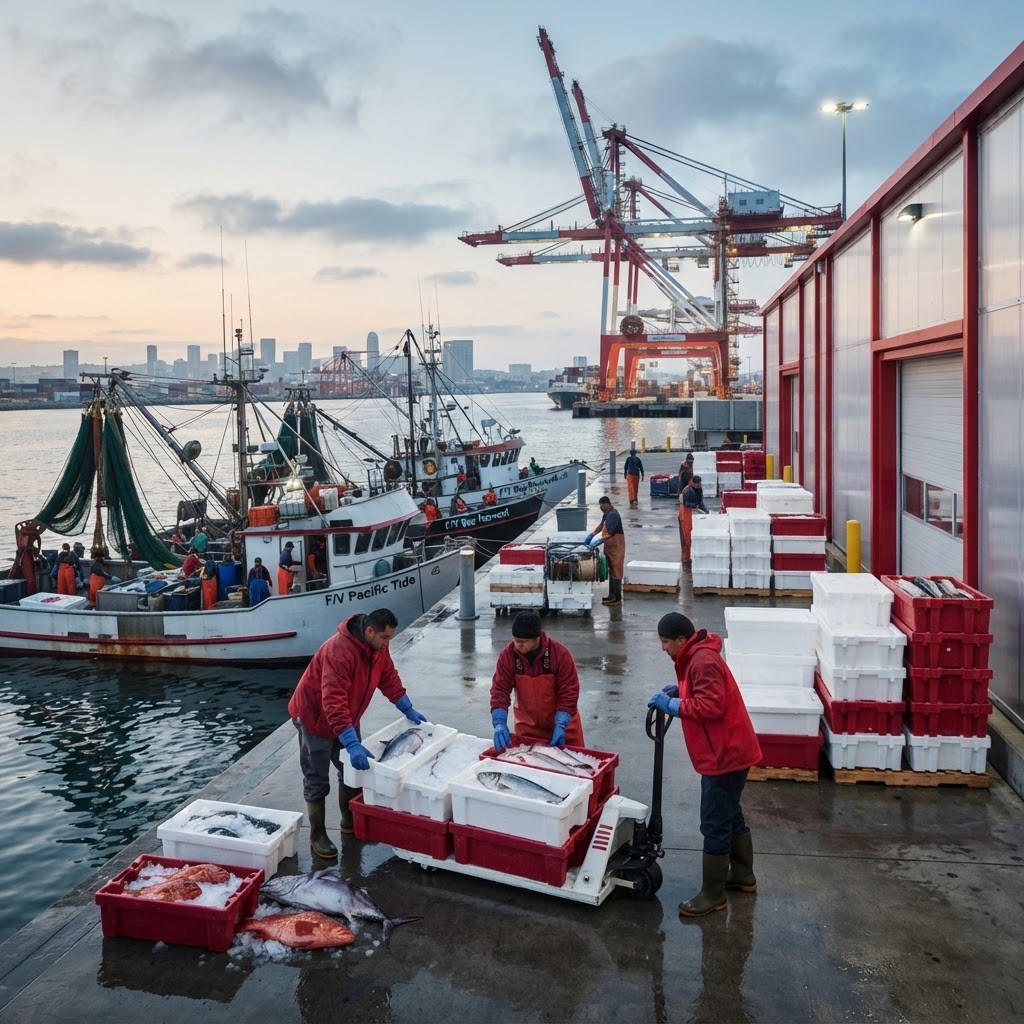
Los Angeles as a Seafood Distribution Hub
The ports, international airport, diverse dining culture, and enormous consumer base make Los Angeles a strategic seafood market. Local buyers source California species alongside tuna, salmon, shellfish, and specialty products from around the world. “Fishery company” can include harvesters, processors, importers, and distributors; each plays a different role in quality and traceability. The following businesses are notable in the regional supply chain, but buyers should verify current product availability, certifications, and service areas.
1. Santa Monica Seafood
Santa Monica Seafood is one of Southern California’s most established seafood distributors. It serves restaurants, retailers, and institutions with fresh and frozen fish, shellfish, and value-added products. A broad supplier network, processing capability, and attention to responsible sourcing make it a frequent reference point for professional buyers.
2. Pacific Fresh Fish
Pacific Fresh Fish operates in the heart of the Los Angeles seafood trade and supplies restaurants, markets, and other commercial customers. Its local processing and distribution presence can support quick turnaround and custom preparation. Buyers benefit when a supplier can communicate landing conditions, substitutions, cuts, and yields clearly.
3. International Marine Products
International Marine Products distributes fresh and frozen seafood in Southern California with strong connections to global supply. The company serves demanding culinary customers and offers a broad species range. Import expertise is valuable for maintaining continuity when weather, seasons, and fisheries management affect individual sources.
4. Los Angeles Fish Company
Los Angeles Fish Company is a long-standing wholesaler associated with downtown’s seafood market. It handles diverse products for food-service and retail customers, including specialty species important to the city’s multicultural cuisines. Local market knowledge and frequent inventory movement help buyers access both familiar staples and less common selections.
5. Luxe Seafood Company
Luxe Seafood Company supplies premium seafood to chefs and specialty buyers. Its positioning emphasizes quality, careful handling, and products suited to high-end menus. For restaurants, a premium distributor’s value includes honest grading, accurate trim, dependable delivery windows, and rapid communication when a planned species is unavailable.
6. The Fish King
The Fish King in Glendale combines seafood retail, prepared food, and market expertise. Its presence reflects the connection between wholesale procurement and consumer education. Businesses with this kind of daily retail feedback can develop a practical understanding of freshness, portion preferences, and seasonal demand in the Los Angeles area.
7. Catalina Offshore Products
San Diego-based Catalina Offshore Products serves the broader Southern California market and is known for local seafood, sushi-grade products, and relationships with fishermen. The company’s regional reach makes it relevant to Los Angeles culinary buyers seeking Pacific species and detailed handling knowledge. As always, “sushi grade” should be supported by appropriate freezing and food-safety controls rather than treated as a universal regulated label.
8. Fortune Fish & Gourmet
Fortune Fish & Gourmet is a specialty distributor with extensive seafood and gourmet categories. Its scale, sourcing programs, and value-added assortment can support hospitality groups that want consolidated purchasing. Buyers should assess local delivery schedules and whether the distributor’s account model matches their volume and receiving needs.
9. Pacific American Fish Company
Pacific American Fish Company has Southern California roots and experience in seafood importing, processing, and distribution. Vertically connected capabilities can improve consistency across common frozen and value-added products. For high-volume customers, packaging formats, case yields, production controls, and inventory planning are as important as species variety.
10. North American Marine
North American Marine participates in seafood sourcing and distribution for commercial markets. Suppliers with international networks can provide year-round options but must maintain strong documentation and cold-chain oversight. Buyers should ask detailed questions about origin, harvest method, processing location, glazing, net weight, and traceability.
How Professional Buyers Evaluate Seafood
Freshness begins before delivery. Ask about harvest or production dates, temperature controls, receiving inspections, lot codes, and recall procedures. Whole fish should show clear eyes, firm flesh, and clean aroma, while fillets need resilient texture and minimal gaping. Frozen seafood can be excellent when rapidly frozen and held consistently; inspect packaging, ice crystals, dehydration, and declared net weight.
Sustainability requires species-specific detail. Stock health, location, gear type, bycatch, habitat effects, and fishery management all matter. Farmed seafood should be evaluated for feed, water quality, disease management, and credible certification. Reputable distributors can provide source information rather than relying on vague environmental language.
Managing Cost and Menu Risk
Los Angeles chefs should plan around seasons and acceptable substitutions. A flexible menu can take advantage of strong local landings and avoid forcing purchases during low availability. Compare usable yield rather than price per pound: a precisely cut portion may cost more initially but create less labor and waste. Delivery reliability, minimums, credit terms, cut-off times, and emergency support also affect total value.
The best seafood relationship is transparent. Suppliers should flag quality concerns, explain market changes, and never obscure origin. Buyers who forecast honestly, receive products promptly, and provide useful feedback become better partners in return. Together, disciplined purchasing and responsible sourcing can protect margins while giving Los Angeles diners fresher and more diverse seafood.
