
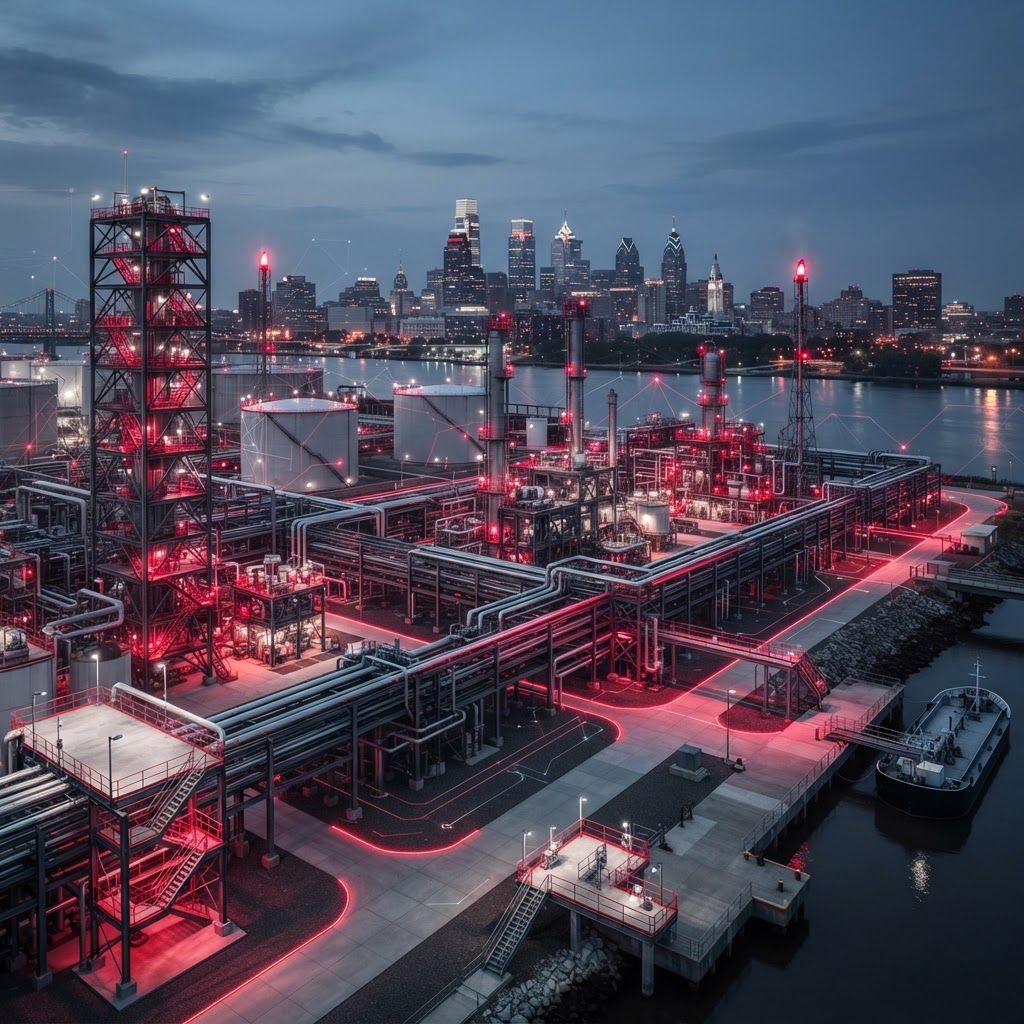
Philadelphia’s oil and gas landscape
Philadelphia’s energy history is closely tied to refining, pipelines, fuel distribution, and the Delaware River logistics corridor. The sector has changed substantially as the former South Philadelphia refinery site is redeveloped and companies respond to tighter environmental expectations, volatile commodity markets, and the energy transition. Today the regional landscape spans pipeline operators, natural-gas utilities, fuel distributors, producers, and specialized logistics businesses.
How this list was evaluated
Companies were considered for their relevance to Philadelphia and southeastern Pennsylvania, service breadth, technical capability, operating reputation, market presence, and ability to address current customer priorities. “Best” is necessarily contextual: a homeowner, manufacturer, public agency, and multinational buyer need very different partners. The names below are presented as a practical, non-sponsored research shortlist rather than a claim that one provider is ideal for every project.
1. Philadelphia Gas Works
is the city-owned natural-gas utility serving Philadelphia customers. Its responsibilities include distribution infrastructure, emergency response, customer programs, and system modernization.
2. Energy Transfer
operates major pipeline and midstream assets and maintains a significant corporate presence in the region. Its network scale makes it central to discussions of interstate energy transportation.
3. Sunoco
has deep historical ties to Philadelphia and remains a widely recognized fuel brand. Its business legacy and connection to distribution infrastructure give it enduring regional relevance.
4. Monroe Energy
operates a Pennsylvania refinery that supplies transportation fuels to the Northeast. Integration with a major airline owner creates a distinctive demand and logistics profile.
5. UGI Corporation
is a Pennsylvania-based energy distributor with utility, propane, and international operations. Its long operating history and diversified model distinguish it from a pure exploration company.
6. AmeriGas
is a major propane distributor serving residential, commercial, agricultural, and industrial customers. Broad delivery infrastructure and service reach are important strengths.
7. Buckeye Partners
owns and operates pipeline and terminal infrastructure used to transport and store liquid petroleum products. Its logistics assets support fuel movement across the broader Northeast market.
8. Wawa
is a prominent regional convenience and fuel retailer headquartered near Philadelphia. Strong customer loyalty, dense local presence, and integrated food-and-fuel operations set it apart.
9. Pennsylvania General Energy
is an independent Pennsylvania producer focused on natural gas and oil development. Its regional operating knowledge makes it relevant to the Commonwealth’s upstream sector.
10. CNX Resources
is an Appalachian natural-gas producer with operations tied to the broader Pennsylvania energy economy. The company emphasizes operational efficiency and emissions-related performance reporting.
Industry trends shaping local decisions
Safety performance, environmental compliance, asset integrity, and transparent governance should carry more weight than company size alone. Methane management and emissions measurement are increasingly material, while electrification and renewable fuels are reshaping long-term demand. Customers and partners should also understand whether a company produces fuel, transports it, distributes it locally, or sells it at retail; these are distinct businesses with different risk profiles.
How to choose the right company
Begin with a written scope and measurable outcomes. Ask each candidate which work is performed internally, which tasks are subcontracted, what licenses or certifications apply, and who will remain accountable after delivery. Request references for projects similar in size, location, and complexity. Compare total lifecycle cost, warranties, service response, reporting, safety performance, and contract risk instead of focusing on the opening price alone.
Philadelphia projects can involve dense sites, older infrastructure, union labor, historic buildings, complex permitting, and coordination with regional utilities or transportation networks. A provider that understands these conditions may deliver more value than a distant firm offering a superficially lower quote. For regulated or high-risk work, independent legal, engineering, environmental, or financial review may also be appropriate.
Questions to ask during procurement
A productive first conversation should cover schedule, budget assumptions, site constraints, insurance, safety procedures, quality control, and responsibility for permits or approvals. Ask how the provider handles change orders, supply disruptions, commissioning, training, and warranty claims. For proposals involving projected savings or performance, request the underlying methodology and a clear explanation of variables that could change the result. Strong candidates should be comfortable documenting assumptions and identifying risks rather than promising an effortless outcome.
It is also wise to compare the financial stability and local support structure of each finalist. Determine where replacement parts, technical specialists, and emergency resources are located. Review sample reports and contracts before committing, and involve operational staff who will use or maintain the finished system. Their practical input can expose access, compatibility, or workflow issues that are easy to overlook during executive review. Finally, establish baseline measurements and acceptance criteria so both parties share the same definition of successful delivery.
Final perspective
Philadelphia’s combination of industrial expertise, research institutions, infrastructure, and ambitious organizations creates a strong market for capable oil and gas companies. Use this guide to build a shortlist, then verify current service areas, capacity, credentials, and commercial terms directly during procurement. A disciplined comparison will help identify the partner whose technical strengths and operating model align with the project’s real goals.
