
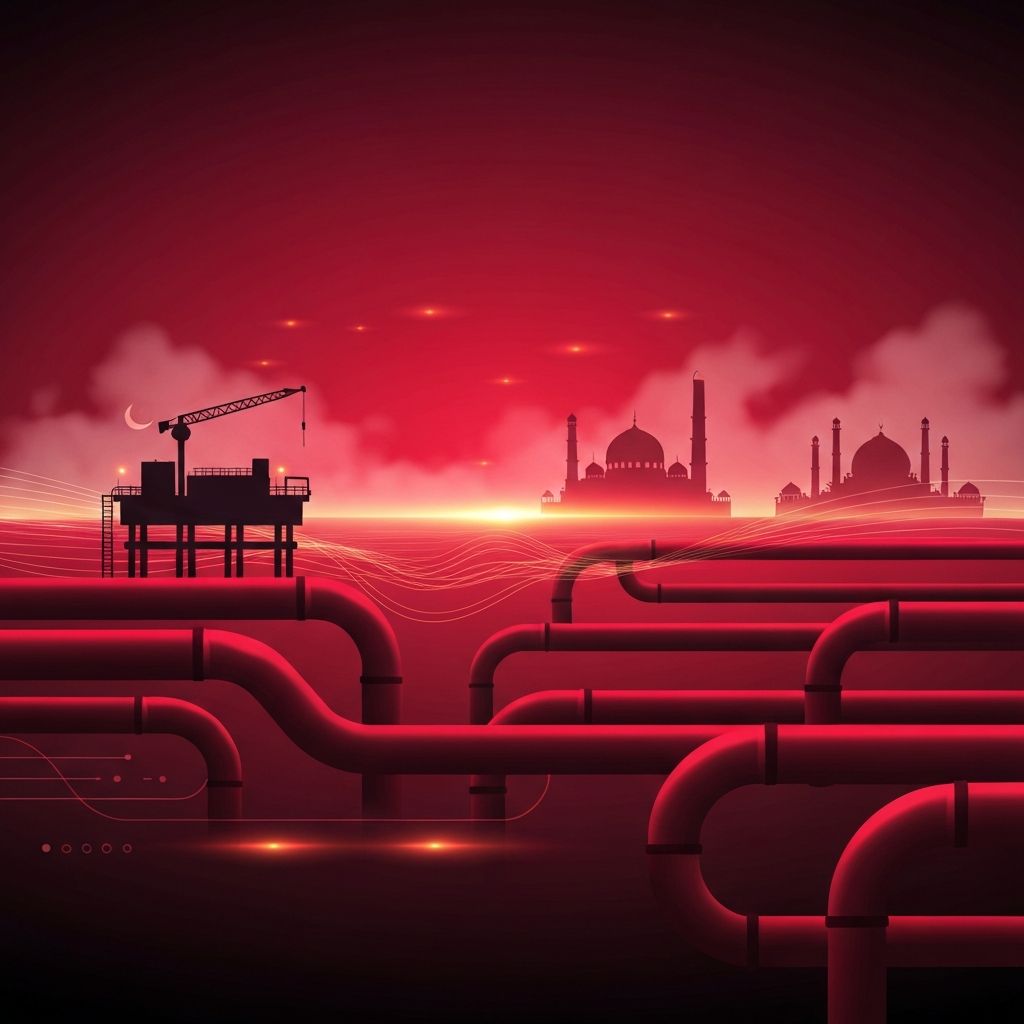
The Backbone of Pakistan's Energy Sector
The oil and gas industry plays a central role in Pakistan's economy, supplying primary energy for power generation, industry, transport, and households. Pakistan's energy mix continues to rely significantly on natural gas, refined products, and crude imports, with major companies engaged in upstream exploration, midstream transmission, and downstream marketing. The sector is regulated by OGRA and supervised by the Ministry of Energy's Petroleum Division.
The companies below are recognized as the most influential and trusted players in Pakistan's oil and gas sector.
1. Oil and Gas Development Company Limited (OGDCL)
OGDCL is Pakistan's largest exploration and production company, accounting for a significant share of the country's oil and gas output. With a wide portfolio of fields, strong technical capabilities, and government backing, OGDCL is a national champion in the upstream sector.
2. Pakistan Petroleum Limited (PPL)
PPL is one of the country's pioneering exploration and production companies. It operates major gas fields, including the historic Sui field, and continues to expand into new exploration areas across Pakistan and abroad.
3. Mari Petroleum Company Limited
Mari Petroleum operates the Mari gas field, one of the largest reserves in the country, and has expanded into exploration across multiple basins. The company is known for strong financial performance and a robust technical team.
4. Pakistan State Oil (PSO)
PSO is the largest oil marketing company in Pakistan, with an extensive network of retail outlets and a dominant share of furnace oil, diesel, motor gasoline, and aviation fuel sales. It plays a strategic role in fuel security.
5. Attock Petroleum Limited
Part of the Attock Group, APL is a leading oil marketing company with strong presence in retail fuels, lubricants, and aviation. It is recognized for operational efficiency and consistent profitability.
6. Shell Pakistan
Shell Pakistan is a long-established oil marketing company offering high-quality fuels, lubricants, and convenience retail services. The brand is known for premium products and strong safety standards.
7. Total PARCO Pakistan
A joint venture between TotalEnergies and PARCO, Total PARCO operates a wide retail network and supplies high-performance fuels and lubricants. The company combines international expertise with local market understanding.
8. Sui Northern Gas Pipelines Limited (SNGPL)
SNGPL is Pakistan's largest natural gas distribution utility, serving millions of consumers across Punjab, Khyber Pakhtunkhwa, and Azad Jammu and Kashmir. It plays a crucial role in domestic, commercial, and industrial gas supply.
9. Sui Southern Gas Company Limited (SSGC)
SSGC supplies natural gas to Sindh and Balochistan, including major industrial centers and the city of Karachi. The company is also involved in LNG operations and pipeline infrastructure.
10. Pak-Arab Refinery Limited (PARCO)
PARCO is one of Pakistan's largest refining and pipeline companies, with strategic facilities including the Mid-Country Refinery and the cross-country White Oil Pipeline. The company is critical to Pakistan's fuel logistics.
Upstream Sector Overview
Pakistan's upstream sector includes exploration and production from sedimentary basins such as the Indus, Sulaiman, Kirthar, and Potohar regions. Despite challenges including aging fields and declining domestic gas production, ongoing exploration efforts focus on offshore Indus, tight gas, and unconventional reservoirs.
Midstream and Pipeline Networks
The country has an extensive transmission and distribution pipeline network managed by SNGPL, SSGC, and PARCO. LNG terminals at Port Qasim handle imports that supplement local gas supply. Investments in additional storage and pipeline integrity programs are ongoing to ensure reliability.
Downstream and Refining
Pakistan has several refineries including PARCO, National Refinery, Attock Refinery, Pakistan Refinery, and Cnergyico. Refining capacity continues to evolve in response to fuel quality regulations such as Euro-V standards. OMCs play a critical role in fuel availability across the country, especially during peak demand and emergencies.
Challenges Facing the Sector
The industry faces challenges including circular debt, exchange rate pressures on imports, declining gas reserves, smuggling of refined products, and the need for transition to cleaner fuels. Regulatory clarity, pricing reform, and investments in upstream exploration are critical to long-term sustainability.
Future Outlook
The future of Pakistan's oil and gas sector lies in balancing energy security with the global transition toward cleaner energy. Investments in LNG infrastructure, EV-compatible retail networks, biofuel blending, and CCUS technology will become increasingly important. Major OMCs and E&P companies are gradually expanding into renewables and hybrid energy services.
Final Thoughts
Oil and gas remain indispensable to Pakistan's economic engine, fueling industries, transport, and homes nationwide. The companies listed above are the cornerstones of this critical sector, contributing to energy security, employment, and national development. As Pakistan navigates the dual goals of growth and decarbonization, these companies will continue to evolve and shape the country's energy future.
