
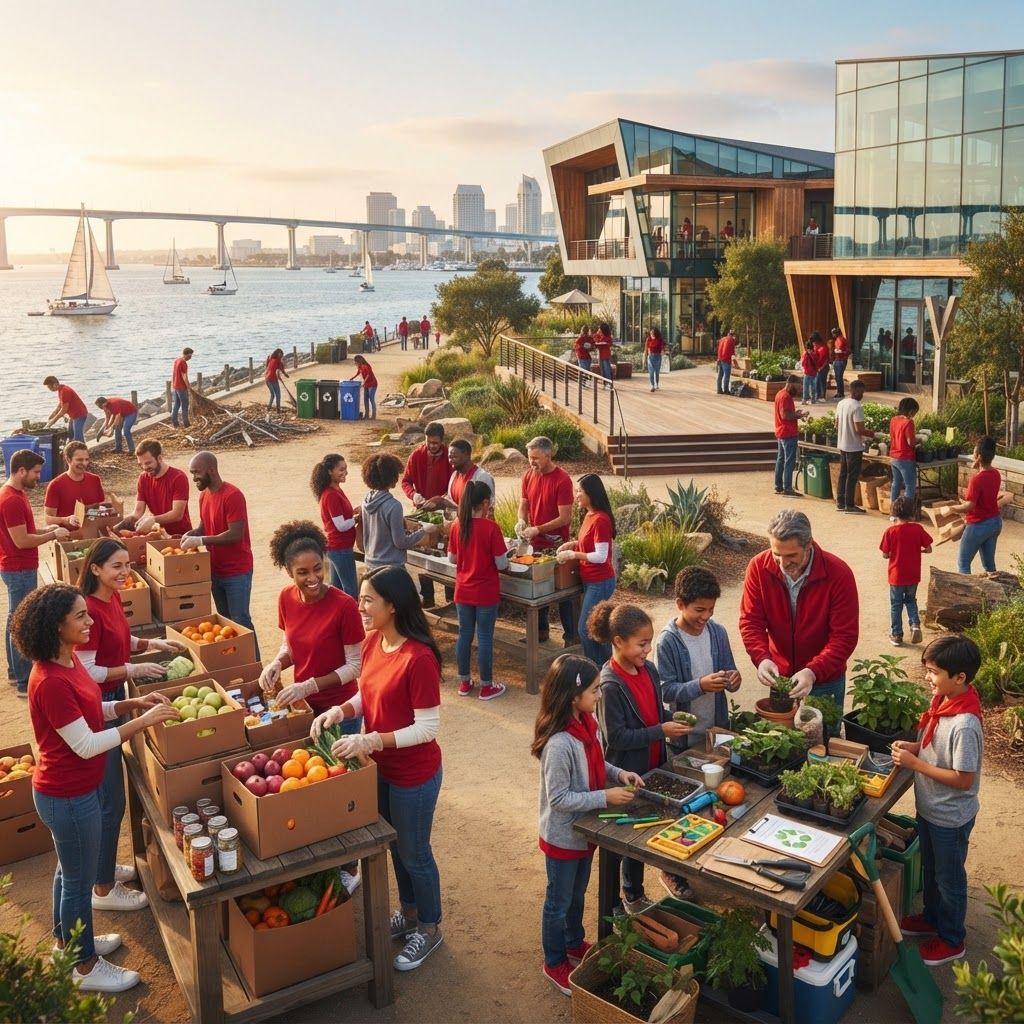
San Diego's Culture of Community Impact
San Diego is celebrated for beaches and innovation, yet the county also faces serious challenges involving housing affordability, hunger, environmental protection, and unequal access to opportunity. Local nonprofits bridge gaps through direct services, advocacy, research, and volunteer action. The organizations below are respected for their visibility, sustained work, and relevance to regional needs. Because priorities differ, readers should consider mission alignment, transparency, measurable outcomes, and community voice when deciding where to participate.
1. San Diego Food Bank
The San Diego Food Bank addresses food insecurity through large-scale distribution, partner agencies, nutrition programs, and emergency response. Its logistics network helps move groceries to families, seniors, military households, and individuals across a geographically large county. The organization stands out for combining immediate hunger relief with specialized programs. Volunteers often support sorting and packing, while donors contribute to a system capable of purchasing and distributing food efficiently.
2. Feeding San Diego
Feeding San Diego uses food rescue and distribution partnerships to connect surplus food with people experiencing hunger. Its model helps reduce waste while supplying community sites, schools, and mobile distributions. The organization's approach reflects a broader nonprofit trend toward solving linked problems simultaneously: food insecurity, environmental waste, and access barriers. Its countywide reach is especially valuable where transportation can make traditional pantry visits difficult.
3. Father Joe's Villages
Father Joe's Villages is one of the region's best-known organizations serving people experiencing homelessness. Its programs include shelter, meals, health services, employment support, and pathways toward stable housing. The breadth of services recognizes that homelessness rarely has a single cause. Coordinated care can help people address medical needs, income, documentation, and housing navigation together, making the organization a major part of San Diego's social-service landscape.
4. San Diego Rescue Mission
San Diego Rescue Mission provides shelter and recovery-oriented services for people facing homelessness. Its programs emphasize stability, supportive relationships, and steps toward independent living. The organization also participates in outreach and community education. It appeals to supporters interested in structured, longer-term transformation as well as immediate shelter. Its work is particularly relevant as the city continues searching for humane responses to unsheltered homelessness.
5. Mama's Kitchen
Mama's Kitchen delivers medically tailored meals to people living with serious illnesses. The nonprofit's model recognizes food as part of healthcare: appropriate nutrition can support treatment, recovery, and the ability to remain at home. Volunteers help prepare and deliver meals, creating direct community connections. The focus on diagnosis-sensitive nutrition distinguishes Mama's Kitchen from general food assistance and reflects growing national interest in food-as-medicine programs.
6. Jacobs & Cushman San Diego Food Bank
The Jacobs & Cushman San Diego Food Bank represents the full formal name of the regional institution commonly called the San Diego Food Bank. Its inclusion in community conversations reflects the scale of hunger-relief infrastructure required across the county. Rather than treating it as a separate service, readers should understand the name as identifying the same organization and its philanthropic legacy. Its programs remain notable for senior nutrition, family support, and disaster readiness.
7. I Love A Clean San Diego
I Love A Clean San Diego mobilizes residents around litter prevention, recycling education, waste reduction, and community cleanups. Its events make environmental stewardship accessible to families, schools, and corporate groups. The organization translates concern for beaches, canyons, and neighborhoods into practical action. Its educational work also supports behavior change, an essential complement to cleanup events because preventing waste is more sustainable than repeatedly removing it.
8. San Diego Humane Society
San Diego Humane Society provides animal sheltering, veterinary care, wildlife rehabilitation, humane law enforcement, and community support services. Its broad scope reflects the interconnected needs of animals and the people who care for them. Programs that help owners access food or resources can keep pets with families and reduce shelter intake. The organization is a major destination for adopters, fosters, volunteers, and advocates across the county.
9. Outdoor Outreach
Outdoor Outreach connects young people with outdoor experiences, leadership development, and recreation. In a region rich with ocean, mountain, and desert environments, access is not always equitable. The nonprofit helps participants build confidence, skills, and a sense of belonging through activities and mentorship. Its mission combines youth development with environmental connection, demonstrating how recreation can become a platform for education and long-term opportunity.
10. Just in Time for Foster Youth
Just in Time for Foster Youth supports young adults transitioning from foster care toward self-sufficient adulthood. Services address practical needs such as housing stability, transportation, education, employment, financial capability, and dependable relationships. The emphasis on a consistent community network is a key differentiator. Young adults leaving care often face major decisions without the family safety net many peers rely on, making individualized support especially consequential.
How to Evaluate a Nonprofit
A recognizable name is only one factor. Review whether an organization's programs clearly connect to its mission, whether results are reported meaningfully, and whether leadership listens to people directly affected. Financial transparency matters, but low overhead alone does not prove effectiveness; skilled staff, technology, facilities, and evaluation all require investment. Prospective volunteers should also consider training, accessibility, scheduling, and whether the role genuinely advances the mission.
Ways to Make a Difference
Financial gifts are valuable, but San Diegans can also volunteer, donate goods requested by an organization, offer professional expertise, foster animals, mentor young people, or advocate for sound public policy. Recurring support helps nonprofits plan, while flexible donations let leaders direct resources where needs are greatest. The strongest engagement is informed and sustained. Whether a person cares most about hunger, health, housing, conservation, animals, or youth, San Diego offers credible pathways to turn concern into practical local impact.
