
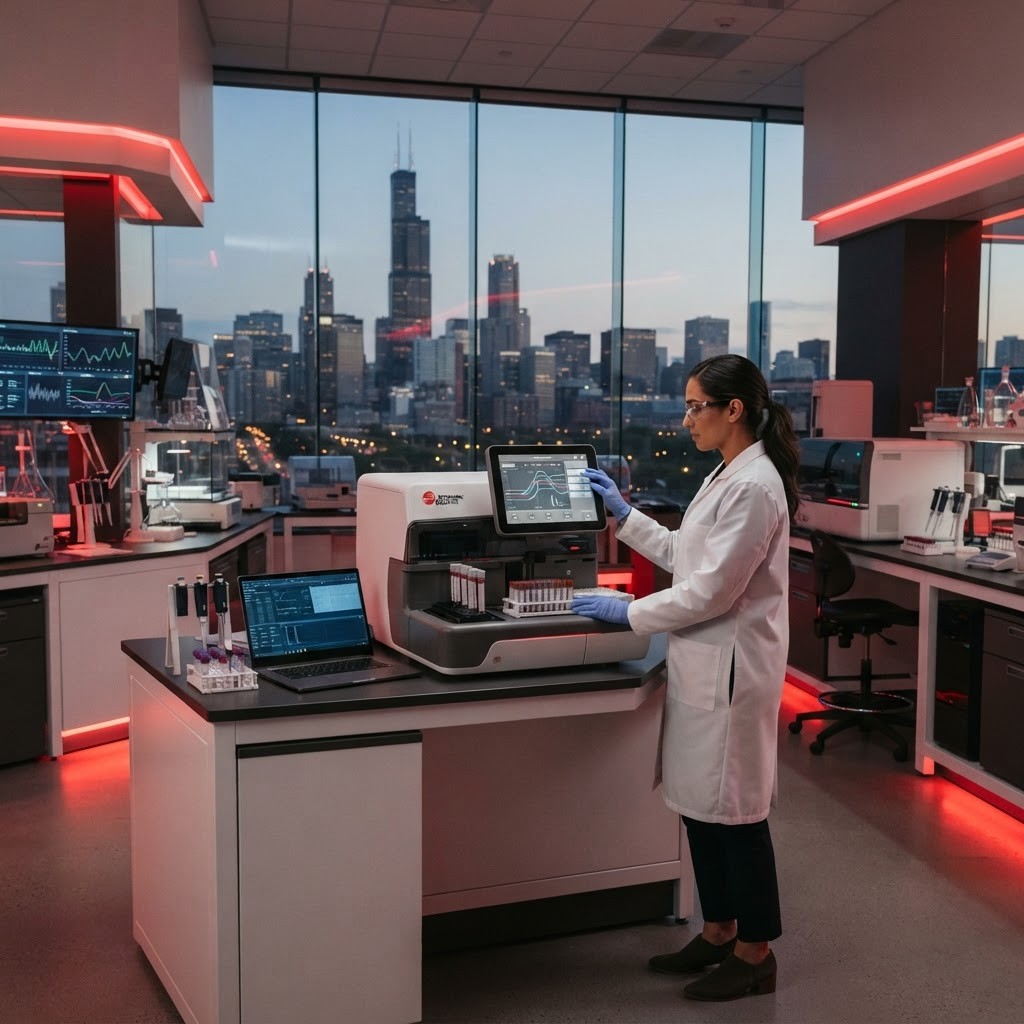
Choosing a Diagnostic Laboratory
Laboratory quality affects clinical decisions, but patients also experience labs through scheduling, specimen collection, billing, and result delivery. In Chicago, options range from national networks with neighborhood draw sites to academic laboratories that perform highly specialized testing. A physician may specify a lab because of insurance contracts or test requirements. Before visiting, verify the order, preparation instructions, insurance status, and whether an appointment is necessary.
1. Northwestern Medicine Laboratories
Northwestern Medicine offers laboratory services throughout its hospital and outpatient network. The system supports routine blood work as well as advanced testing connected to specialists. Integration with the patient record can help Northwestern clinicians see results quickly and coordinate follow-up. This is especially valuable when several departments are involved in care.
2. University of Chicago Medicine Laboratories
University of Chicago Medicine laboratories support a major academic center known for complex disease care and research. Their capabilities include pathology, molecular diagnostics, transfusion medicine, and specialized testing. Patients already receiving care in the system benefit from direct links between laboratory experts and treating physicians, reducing fragmentation for uncommon or complicated cases.
3. Rush Medical Laboratories
Rush provides inpatient and outpatient diagnostic testing across its medical network. Its laboratories support routine monitoring, microbiology, pathology, and advanced specialty care. The central campus is convenient for patients seeing Rush specialists, while outpatient locations can simplify recurring tests. Electronic integration helps clinicians track trends rather than reviewing results in isolation.
4. UI Health Pathology Laboratories
UI Health combines clinical laboratory services with academic pathology expertise. The organization serves a diverse population and handles testing associated with primary care, surgery, oncology, infectious disease, and other specialties. Its teaching mission supports multidisciplinary interpretation, an important advantage when a diagnosis depends on tissue review or unusual laboratory patterns.
5. Quest Diagnostics
Quest Diagnostics operates patient service centers throughout the Chicago region and processes a broad menu of physician-ordered tests. Online scheduling and result access can make routine testing more manageable. Its national scale supports standardized processes and extensive reference testing. Patients should select a convenient location and check whether their specific test requires special timing or handling.
6. Labcorp
Labcorp is another major national network with Chicago-area collection locations and a wide testing portfolio. It serves routine wellness, chronic disease monitoring, women’s health, genetics, and specialty diagnostics. Digital appointment tools and electronic results are useful for many patients. Insurance coverage and test pricing should be confirmed in advance, particularly for panels that may not be considered preventive.
7. Advocate Health Laboratories
Advocate Health’s laboratory network supports hospitals, clinics, and outpatient draw sites across Chicago. It is convenient for patients whose physicians already practice in the Advocate system, because orders and results can flow through shared records. Services span common blood tests, pathology, microbiology, and hospital diagnostics. Neighborhood reach is a major strength.
8. Endeavor Health Laboratories
Endeavor Health provides laboratory services through hospitals and outpatient centers across the North Side and northern suburbs. The network supports preventive testing, medication monitoring, surgical pathology, and specialty care. Patients using Swedish Hospital or other Endeavor facilities may benefit from coordinated ordering and follow-up within one system.
9. Alverno Laboratories
Alverno Laboratories is a regional clinical laboratory serving hospitals, physician offices, and patients across Illinois and neighboring states. It offers broad diagnostic capabilities and has significant experience supporting community healthcare organizations. Its regional scale can combine sophisticated processing with familiarity in local provider workflows. Availability for direct patient collection depends on location and the ordering arrangement.
10. Tempus
Chicago-based Tempus focuses on technology-enabled precision medicine, particularly molecular and genomic insights used in oncology and other complex fields. It is not a replacement for a neighborhood blood-draw laboratory. Instead, it represents the specialized end of diagnostics, where clinical data and advanced testing may help physicians personalize treatment. Such testing should be ordered and interpreted by qualified clinicians.
Quality, Preparation, and Results
Look for laboratories operating under appropriate federal certification and, where relevant, recognized accreditation. Correct preparation is equally important: fasting, medication timing, exercise, and hydration can affect some results. Bring identification, insurance information, and the test order. Afterward, avoid interpreting an isolated high or low value without context. Reference ranges, symptoms, medications, and trends all matter, so discuss findings with the ordering clinician.
Diagnostic Trends in Chicago
Chicago’s medical ecosystem is advancing molecular testing, digital pathology, automation, and precision medicine. At the same time, health systems are adding neighborhood collection sites and online scheduling to improve access. The strongest laboratory choice is the one that can perform the required test accurately, handle the specimen correctly, report promptly, and connect the result to a clinician who can act on it.
