
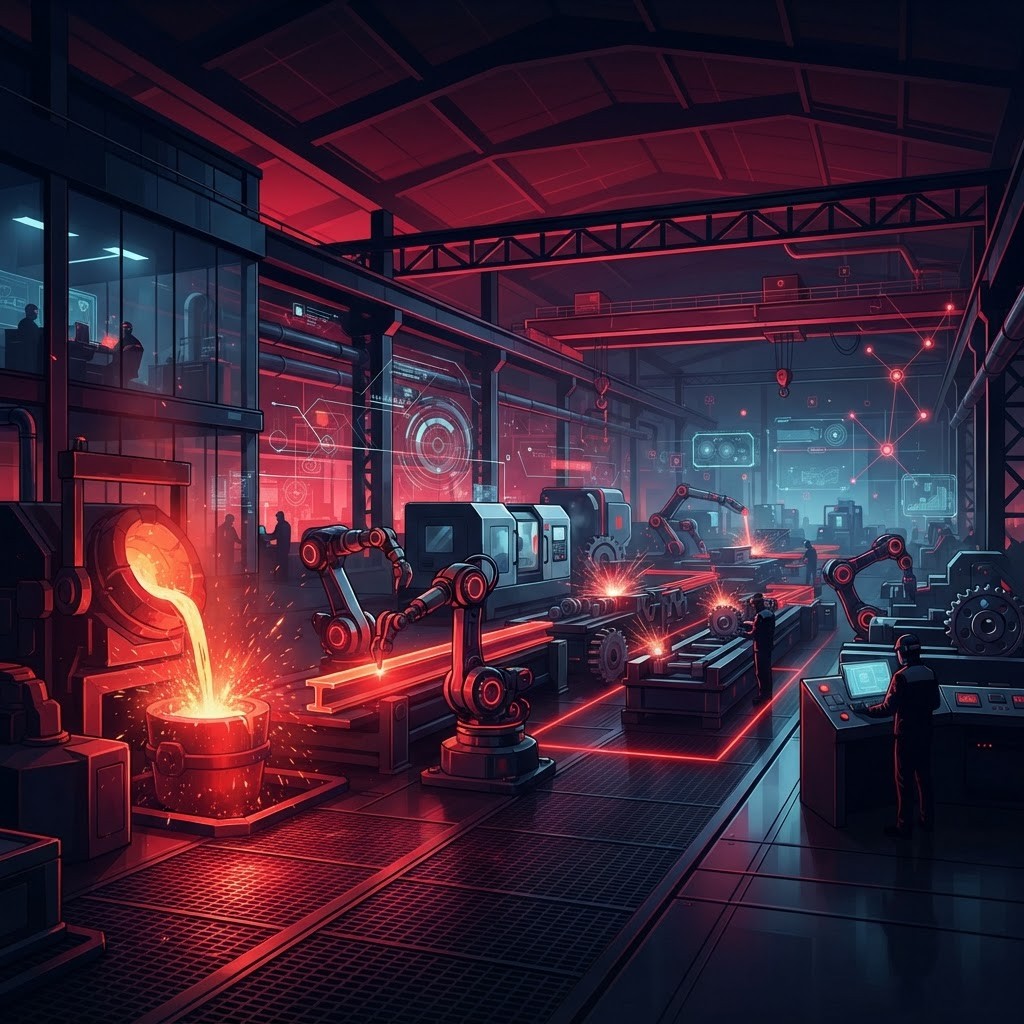
Serbia's Enduring Metalworking Tradition
Metalworking has long been a cornerstone of Serbia's industrial identity, stretching back to the manufacturing hubs that powered the region through much of the twentieth century. Today, that legacy has evolved into a modern ecosystem of foundries, fabrication shops, and precision engineering firms that serve automotive, energy, construction, and machinery markets across Europe. Serbia's competitive labor costs, skilled technical workforce, and strategic position between Central Europe and the Balkans have made it an increasingly attractive base for both domestic producers and international manufacturers seeking reliable metal components.
The companies profiled below represent the breadth of the Serbian metalworks landscape, from large integrated producers to specialized workshops focused on custom fabrication. Each has earned a reputation for quality, dependability, and technical capability.
What Defines a Leading Metalworks Company
Excellence in metalworking is measured by more than machinery. The strongest firms combine certified quality systems, investment in CNC and automation technology, experienced welders and machinists, and a willingness to take on complex, low-volume, high-precision work. Traceability of materials, adherence to European standards, and consistent on-time delivery are equally decisive for buyers who depend on these components for critical applications.
The Top 10 Metalworks Companies
1. Metalac — One of Serbia's best-known industrial names, Metalac has built decades of expertise in metal processing and household and industrial products. The company is respected for its disciplined quality culture, vertical integration, and its ability to scale production while maintaining tight tolerances.
2. Kolubara Metal — A heavyweight in heavy fabrication and mining-related equipment, Kolubara Metal specializes in large steel structures, welded assemblies, and machinery for the energy sector. Its capacity for oversized components makes it a go-to partner for infrastructure projects.
3. Fabrika Reznog Alata — Focused on cutting tools and precision tooling, this firm serves manufacturers that require durable, accurately ground tools. Its emphasis on metallurgy and heat treatment gives its products a strong reputation for longevity.
4. Goša FOM — With a history rooted in mechanical engineering, Goša FOM produces welded steel structures, pressure vessels, and equipment for the process and energy industries. The company is known for handling demanding certification requirements.
5. Livnica Kikinda — A respected foundry operation, Livnica Kikinda delivers cast components for automotive and industrial clients. Its casting expertise and machining capabilities allow it to supply finished, ready-to-install parts.
6. Utva Milan Premasunac — Specializing in metal components and assemblies, this company has developed strong competencies in sheet metal work, machining, and surface treatment, serving both domestic and export markets.
7. FMP (Fabrika Mernih Precizinih) — Known for precision engineering, FMP produces high-accuracy components where measurement and tolerance control are paramount. Its investment in metrology equipment underpins its reputation.
8. Prva Petoletka — A historic industrial group with capabilities spanning hydraulics, pneumatics, and metal fabrication, Prva Petoletka remains an important name for engineered metal products and assemblies.
9. Termovent — This company focuses on valves, fittings, and metal components for the process and energy sectors, combining machining precision with rigorous testing to meet international standards.
10. Milanović Inženjering — A modern fabrication specialist, Milanović Inženjering has grown its reputation through custom steel structures, stainless steel work, and responsive project management for construction and industrial clients.
Industry Trends Shaping Serbian Metalworks
Several forces are reshaping the sector. Automation and CNC machining are lowering error rates and enabling smaller firms to compete on precision. Demand for stainless steel and specialty alloys is rising as clients in food processing, pharmaceuticals, and energy seek corrosion-resistant components. Sustainability is also becoming central, with companies investing in energy-efficient furnaces, scrap recycling, and cleaner surface-treatment processes to meet European environmental expectations.
Export orientation is another defining trait. Many Serbian metalworks firms now derive a significant share of revenue from Western European customers, particularly in Germany, Austria, and Italy, who value the combination of quality and cost efficiency.
How to Choose the Right Partner
Buyers evaluating a Serbian metalworks company should look closely at certifications such as ISO 9001 and welding qualifications, review the firm's machine list and capacity, and request sample parts or references from comparable projects. Communication and engineering support matter greatly for custom work, so responsiveness during the quoting stage is often a reliable early indicator of how a supplier will perform in production.
The Economic Impact of Metalworking in Serbia
Beyond individual companies, the metalworks sector contributes significantly to Serbia's broader economy. It supports thousands of skilled jobs, sustains a network of vocational and technical training programs, and anchors entire regional communities where industrial employment remains vital. The sector's strong export performance brings valuable foreign revenue and strengthens Serbia's reputation as a competitive manufacturing base within Europe.
Continued foreign direct investment has accelerated technology transfer, introducing advanced machining, robotic welding, and digital quality-control systems to local operations. This modernization raises productivity and helps Serbian firms move up the value chain, taking on more complex and higher-margin work. As supply chains regionalize and buyers seek near-shoring alternatives closer to Europe, Serbia's metalworks companies stand to benefit from their combination of skill, cost efficiency, and geographic proximity to major markets.
Conclusion
Serbia's metalworks industry offers a compelling mix of heritage, technical skill, and modern capability. Whether a buyer needs large welded structures, precision machined parts, or reliable castings, the companies highlighted here demonstrate the depth and quality available in the Serbian market. As automation and export demand continue to grow, these firms are well positioned to remain trusted partners for industrial customers across Europe.
