
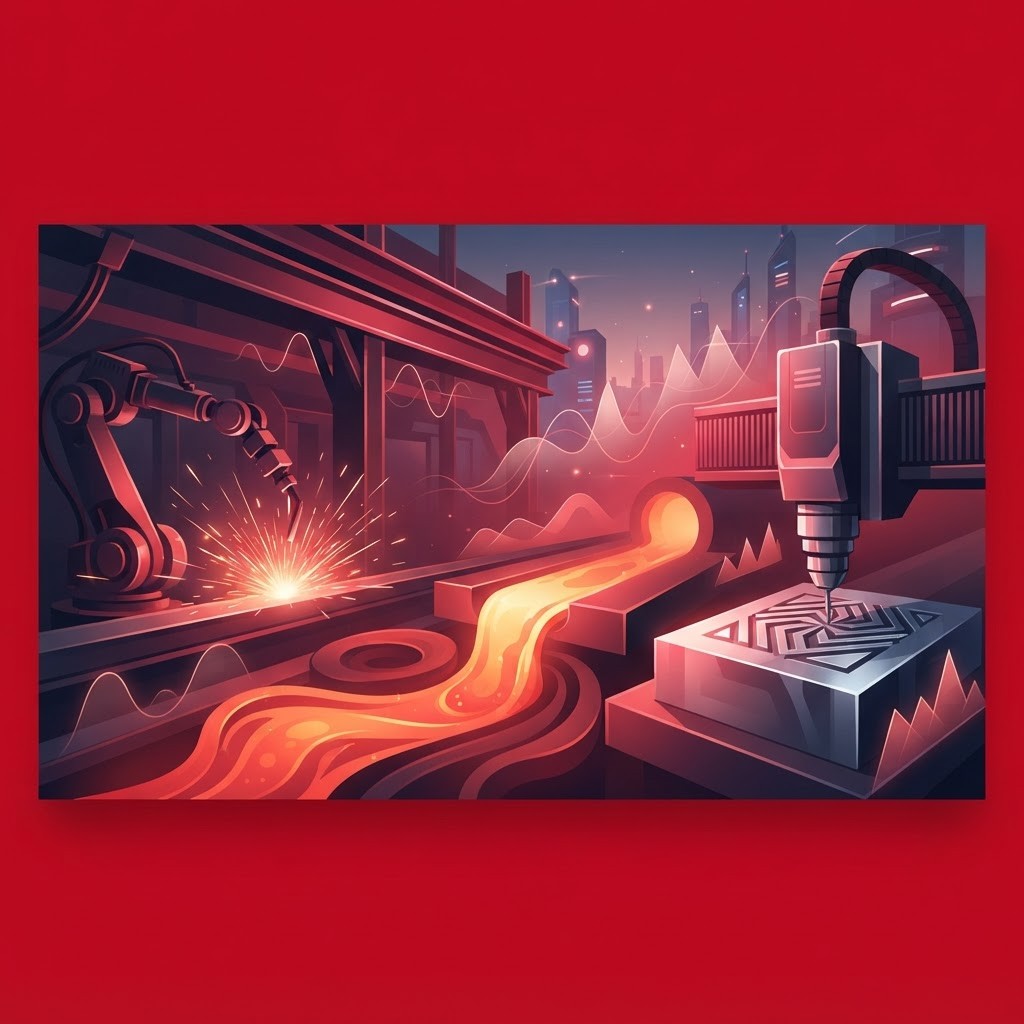
Hungary's Strong Metalworking Heritage
Metalworking is a foundational pillar of Hungary's industrial economy, deeply connected to the country's thriving automotive, machinery, and engineering sectors. Hungarian metalworks companies provide precision machining, sheet-metal fabrication, welding, casting, forging, and surface treatment, serving demanding customers across Europe. Decades of engineering tradition, combined with modern CNC technology and automation, have made Hungary a competitive location for both high-volume production and complex, low-volume specialist work.
The sector's close ties to automotive assembly and industrial machinery mean that quality, precision, and reliability are paramount. Hungarian firms have earned a reputation for meeting stringent tolerances and delivering consistent results.
Core Capabilities
Metalworks companies in Hungary typically offer a range of services: CNC turning and milling, laser and plasma cutting, press forming, tube and profile bending, robotic and manual welding, and finishing processes such as powder coating, galvanising, and anodising. Many combine these into full turnkey solutions, delivering finished assemblies rather than individual parts. Investment in measurement and inspection technology supports rigorous quality assurance.
Leading Metalworks Companies to Know
Videoton is a major Hungarian industrial group with significant metalworking and contract manufacturing capabilities, serving automotive, electronics, and machinery customers with integrated production.
Rába, with its long history in vehicle components and axles, is a cornerstone of Hungarian heavy engineering, producing robust metal components for commercial vehicles and industrial applications.
Csaba Metál specialises in aluminium casting and machining, supplying precision components primarily to the automotive industry with a focus on lightweight solutions.
Prec-Cast is a respected foundry producing aluminium castings and machined parts, valued for its technical expertise and quality systems.
Hydrocomp and hydraulics-focused firms manufacture precision hydraulic and mechanical components requiring tight tolerances and reliable performance.
Sheet-metal fabricators around Győr and Kecskemét support nearby automotive plants with laser-cut, formed, and welded assemblies delivered on just-in-time schedules.
Ganz-linked engineering workshops continue Hungary's heavy-machinery legacy, producing structural steelwork and large fabricated components for industry and infrastructure.
Contract machining specialists offer high-precision CNC work for medical, aerospace, and industrial customers who demand exacting quality.
Surface-treatment and coating providers deliver galvanising, powder coating, and anodising services essential to corrosion protection and finish quality.
Regional toolmakers and die shops complete the landscape, producing the moulds, dies, and jigs that enable efficient, repeatable metal production across the industry.
Technology and Automation
Automation is transforming Hungarian metalworking. Robotic welding cells, automated material handling, and lights-out CNC machining improve productivity, consistency, and safety. Digital manufacturing tools, from CAD/CAM integration to real-time production monitoring, help firms manage complex product mixes and shorten development cycles. These investments allow Hungarian metalworkers to compete on quality and reliability rather than labour cost alone.
Additive manufacturing and advanced simulation are also emerging, enabling faster prototyping and optimised part design, particularly for lightweight automotive and specialist components.
Quality and Certification
Given their role in automotive and engineering supply chains, leading Hungarian metalworks companies maintain rigorous certifications such as IATF 16949 and ISO 9001, alongside environmental and welding-specific standards. These credentials assure customers of consistent quality, traceability, and process discipline, essential for safety-critical applications.
Serving Diverse Industries
While automotive is the dominant customer, Hungarian metalworks companies serve a broad range of industries, each with distinct requirements. Agricultural and construction machinery makers need robust, heavy-gauge fabrications. The energy sector requires precision components for turbines, pipelines, and renewable installations. Medical device manufacturers demand ultra-precise, cleanly finished parts made from specialised alloys. Electronics and appliance producers need high-volume sheet-metal enclosures. This diversity helps metalworks firms balance their order books and build resilience against downturns in any single sector.
The ability to serve multiple industries also cross-pollinates expertise, as the rigorous standards of automotive and medical work raise overall quality capabilities that benefit all customers.
Skilled Workforce and Training
The strength of Hungary's metalworking sector rests significantly on its skilled workforce. The country's vocational and technical education system produces machinists, welders, tool-makers, and engineers who understand both traditional craft and modern digital manufacturing. Many companies invest in ongoing training to keep pace with advancing technology, from programming five-axis CNC machines to operating robotic welding systems. This human capital, combined with competitive labour costs relative to Western Europe, is a decisive factor in the sector's continued success and its appeal to international customers.
Choosing a Metalworks Partner
Buyers should evaluate a company's machining and fabrication capabilities, quality certifications, capacity, and experience in their specific industry. The ability to provide engineering support, manage surface finishing, and deliver reliably on schedule adds significant value. Reviewing sample parts and inspection reports helps verify precision and consistency.
With deep engineering heritage, modern automated facilities, and strong quality systems, Hungary's metalworks companies deliver the precision and reliability that demanding industries require, making the country a trusted partner for metal components and assemblies. As reshoring and nearshoring trends encourage European firms to source closer to home, Hungary's combination of technical depth, competitive costs, and logistical convenience positions its metalworking sector for sustained growth. Buyers who invest time in understanding each supplier's specialisation and building collaborative, long-term relationships will find dependable partners capable of supporting everything from prototype development to full-scale series production across a wide range of demanding applications.
