
Chicago's Enduring Metalworking Strength
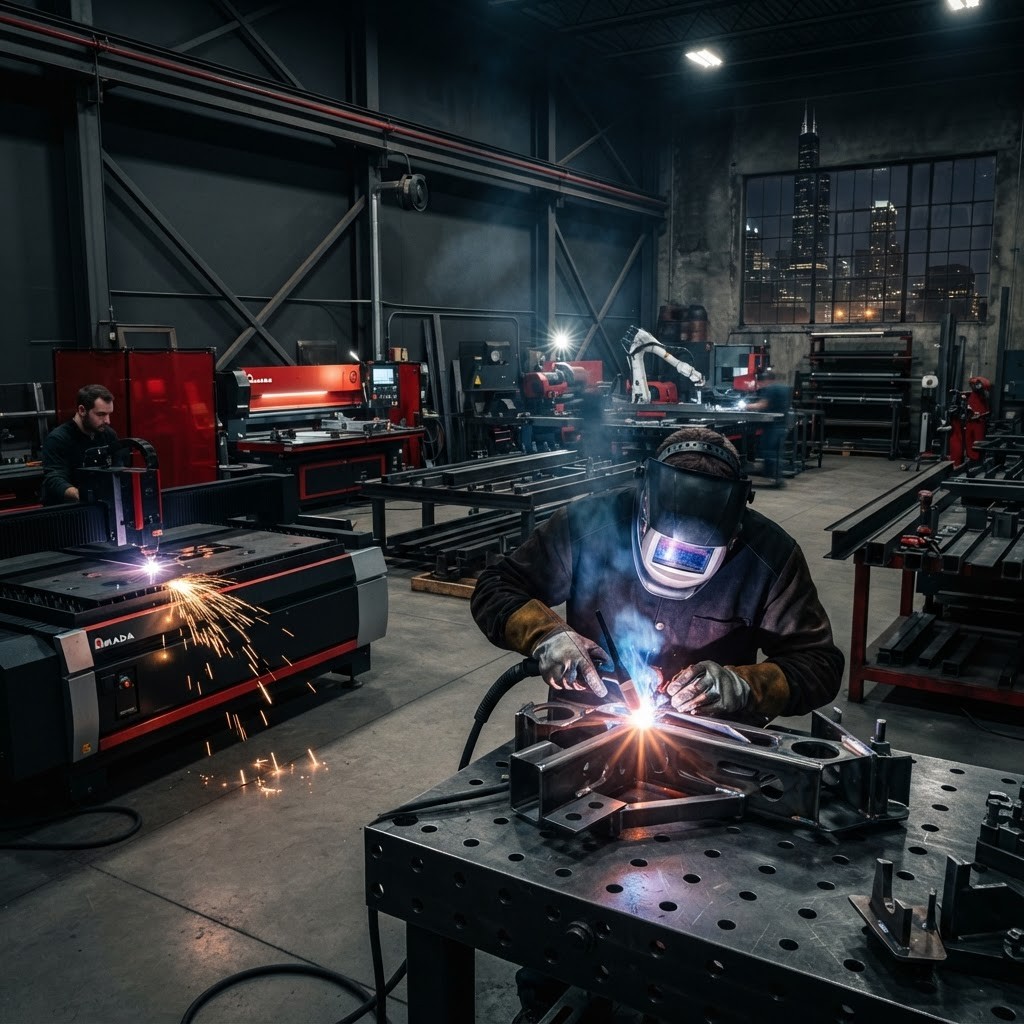
Metalworking helped build Chicago's railroads, factories, bridges, towers, and neighborhoods. The modern regional industry combines that practical heritage with laser cutting, robotic welding, CNC machining, digital inspection, and sophisticated project management. Customers range from architects and contractors to transportation, food equipment, defense, energy, and original equipment manufacturers.
Choosing a metalworks company begins with process fit. Sheet metal fabrication, structural steel, machining, casting, ornamental work, and metal stamping require different equipment and expertise. Buyers should evaluate material knowledge, tolerances, weld qualifications, finishing partners, inspection systems, engineering support, and installation capabilities. These ten businesses show the variety available across Chicagoland.
1. Chicago Metal Fabricators
Chicago Metal Fabricators is known for heavy plate and structural fabrication. Its capabilities include forming, rolling, welding, machining, and assembly for large industrial components. Heavy work demands powerful equipment, skilled operators, and careful handling as much as drawing interpretation. The company is a strong candidate for projects involving thick material, substantial weldments, or components that exceed the range of typical sheet-metal shops.
2. Accurate Metal Fabricating
Accurate Metal Fabricating provides precision sheet-metal fabrication in the Chicago area, with services such as laser cutting, punching, bending, welding, and finishing coordination. It serves customers that require repeatable enclosures, panels, brackets, and assemblies. Its value lies in converting digital designs into consistent parts while managing multiple processes. Design-for-manufacturing feedback can also reduce setup, hardware, and assembly costs.
3. G.E. Mathis Company
G.E. Mathis Company has deep Chicago roots in precision metal fabrication and long, large-part forming. Its experience with plate and sheet allows it to serve infrastructure, industrial, and equipment applications. Long bends and controlled forming can be difficult because springback, straightness, and material variation become more significant with scale. Specialized equipment and experienced planning distinguish suppliers in this category.
4. Paramount Roll & Forming
Paramount Roll & Forming specializes in bending and rolling metal for architectural and industrial projects. Curved beams, tubes, channels, and custom shapes appear in buildings, transportation systems, sculptures, and machinery. Successful bending requires understanding how each profile responds without unacceptable distortion. Paramount's focused capability makes it useful to fabricators and contractors that need formed elements beyond their in-house equipment range.
5. Chicago Ornamental Iron
Chicago Ornamental Iron creates custom stairs, railings, gates, canopies, and decorative metalwork. Architectural metal must meet structural and code requirements while maintaining clean visual details in prominent locations. Field measurement, shop drawings, finish selection, and installation coordination all influence the final result. A local specialist is particularly valuable in renovations where existing conditions differ from drawings.
6. Atlas Tool Works
Atlas Tool Works is a Chicago-area contract manufacturer offering precision machining, sheet-metal fabrication, stamping, and assembly. Its broad process mix supports customers that would otherwise coordinate several suppliers. Aerospace, defense, medical, and industrial projects often require disciplined quality systems and traceability. Atlas's long manufacturing history and integrated capabilities position it for complex, lower-to-medium-volume work.
7. Talan Products
Talan Products is known for high-volume metal stamping and aluminum extrusions serving building products, renewable energy, and other markets. Stamping becomes economical when stable demand justifies tooling and automated output. The company focuses on production engineering, material utilization, and repeatability. Customers with long-running programs can benefit from a partner able to support tool development and scaled manufacturing.
8. Cast Technologies
Cast Technologies provides aluminum, brass, and bronze castings along with machining and assembly. Casting can efficiently create complex geometry and consolidate parts, but quality depends on pattern design, alloy control, solidification, and finishing. An integrated foundry and machine shop can manage critical dimensions after casting while maintaining accountability across the process. This is valuable for pumps, hardware, machinery, and durable industrial products.
9. Scot Forge
Scot Forge, based in the greater Chicago region, produces open-die and rolled-ring forgings for energy, defense, infrastructure, and heavy industry. Forging shapes metal under force to produce strength and grain-flow characteristics suited to demanding service. The company handles components where material integrity and documentation are critical. Its scale and metallurgical knowledge make it one of the region's most significant advanced metal manufacturers.
10. A. Zahner Company
Zahner works on prominent architectural metal projects in Chicago and other major cities, engineering complex facades, surfaces, and custom systems. The company combines computational design, fabrication, finishing, and installation knowledge. It is relevant when metal serves as both a high-performance enclosure and a defining visual feature. Zahner demonstrates how advanced digital workflows can extend traditional metal craft.
Questions for a Fabrication Partner
Share complete drawings, models, material specifications, quantities, finish requirements, inspection points, and delivery expectations. Ask whether the supplier performs similar work regularly and which steps are completed in-house. Clarify tolerance assumptions because overly tight requirements can raise costs without improving function. For welded assemblies, discuss distortion control, fixture strategy, weld standards, and post-weld finishing before production.
Current trends include more automation, connected production data, additive manufacturing for tooling, lower-waste nesting, and increased demand from electrification and infrastructure. Even so, skilled judgment remains essential, particularly for forming, welding, finishing, and field installation. Chicago buyers have access to specialists ranging from ornamental shops to heavy forging operations. The best partner will combine capable equipment with transparent communication, realistic scheduling, and a demonstrated understanding of how the finished metal component will be used.
