
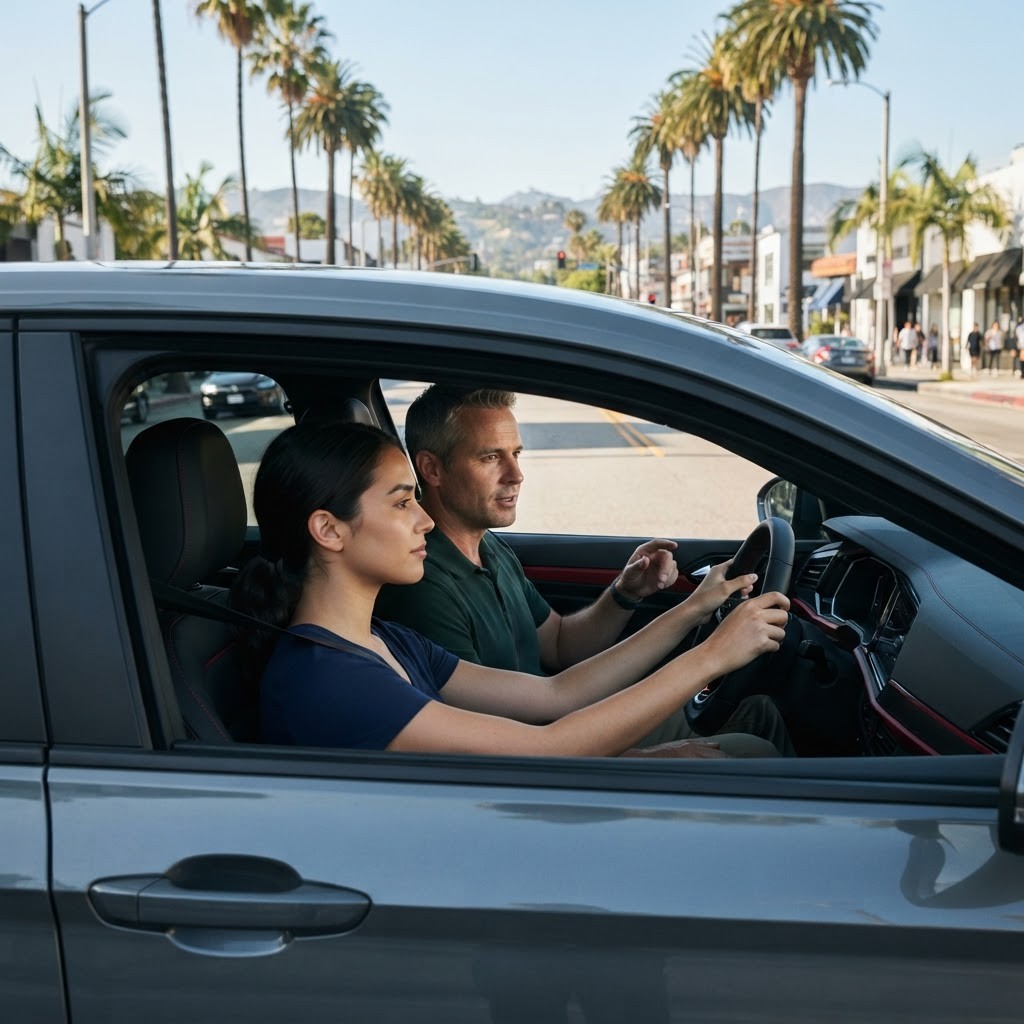
Learning to Drive in Los Angeles
Learning in Los Angeles means preparing for much more than a quiet residential street. Students must develop confidence around multilane boulevards, freeway merges, motorcycles, cyclists, pedestrians, hills, complex parking, and drivers with unpredictable habits. A good school teaches observation and judgment rather than memorizing a test route. It should employ properly credentialed instructors, maintain insured dual-control vehicles, and adapt lessons to the learner’s progress. The following schools are recognizable options across the area, though students should confirm current licensing, service boundaries, schedules, languages, and package terms.
1. Coastline Academy
Coastline Academy uses a technology-supported booking and lesson model in several markets, including Los Angeles. Structured instructor notes and scheduling convenience can help families monitor progress. Students should still seek consistency in the skills taught across sessions and ask how instructors handle freeway readiness, parking, and independent decision-making. Digital convenience works best when paired with calm, attentive coaching.
2. Primo Driving Schools
Primo Driving Schools is a regional name offering behind-the-wheel instruction and test preparation. Local experience is valuable because learners encounter different challenges in the Valley, central city, and west side. A productive lesson should include a clear objective, guided practice, and a short review identifying what to work on next. Students should resist rushing into a road test before basic scanning and control become automatic.
3. Beverly Driving School
Beverly Driving School serves learners around central and west Los Angeles. Dense traffic and busy commercial streets can provide useful practice once foundational skills are established. Nervous beginners may benefit from starting in quieter areas and progressing gradually. The instructor’s ability to explain without creating panic is often more important than the number of years a school has operated.
4. Click2Drive
Click2Drive is known for online scheduling and a range of driver-education services. Flexible administration can help students coordinate lessons around school or work. Before purchasing a package, ask about pickup boundaries, cancellation rules, instructor continuity, lesson duration, and vehicle use for the test. Clear policies make it easier to compare actual value across schools.
5. Abel’s Driving School
Abel’s Driving School is a familiar Southern California option for teen and adult learners. Schools that serve both groups should recognize their different needs: teenagers may require state-mandated education and supervised practice, while adults often bring established habits or anxiety. Personalized pacing and direct feedback help both groups progress safely.
6. E & M Economy Driving School
E & M Economy Driving School appeals to budget-conscious learners seeking practical instruction. Affordability should be evaluated alongside actual in-car minutes, instructor qualifications, and vehicle condition. A low package price has little value if scheduling is difficult or lessons repeat the same limited route. Ask how the curriculum develops from basic controls to independent city driving.
7. Gihon Driving School
Gihon Driving School serves a diverse urban student base and may offer instruction suited to different experience levels. Multilingual teaching can be a major advantage when complex safety concepts are easier to understand in a learner’s preferred language. Regardless of language, students need command of traffic signs and instructions they will encounter during the licensing process.
8. Los Angeles Driving Academy
Los Angeles Driving Academy focuses on local road skills and licensing preparation. Familiarity with Department of Motor Vehicles expectations can reduce uncertainty, but training should not become narrow route memorization. Examiners may alter directions, and safe drivers must respond anywhere. Lessons should emphasize mirror use, shoulder checks, right-of-way, speed choice, and smooth control.
9. Cantor’s Driving School
Cantor’s Driving School operates with a structured model for teens and adults. Established curricula can create consistency, particularly when a learner uses more than one instructor. Families should ask how progress is recorded and how instructors communicate practice recommendations to the supervising adult. Reinforcing the same techniques between paid lessons accelerates skill development.
10. Varsity Driving Academy
Varsity Driving Academy serves portions of Southern California with driver education and practical training. Programs that combine classroom concepts with behind-the-wheel application help students connect laws to real decisions. Learners should arrive rested, wear suitable footwear, and disclose any accommodations that could affect instruction. Preparation improves both safety and value from each session.
What High-Quality Instruction Should Cover
A complete program progresses through seating and controls, smooth steering and braking, visual scanning, lane positioning, intersections, turns, parking, lane changes, higher-speed roads, and defensive strategies. Los Angeles learners should practice unprotected turns, congested arterials, hills, bike lanes, school zones, and freeway merging when ready. Instructors should model calm behavior and intervene early without taking control unnecessarily. Feedback must be specific enough to change the next attempt.
Choosing Lessons and Preparing for the Test
Verify the school and instructor credentials through appropriate state resources, inspect the training vehicle, and read refund and cancellation policies. Ask whether lesson time includes pickup travel and whether the school provides proof required for a minor’s licensing process. Between sessions, practice legally with a qualified supervising driver and keep exposure varied. Test readiness means consistently making safe decisions without prompts, not completing a fixed number of lessons. The best Los Angeles driving school builds skills that remain useful long after the examiner leaves the passenger seat.
