
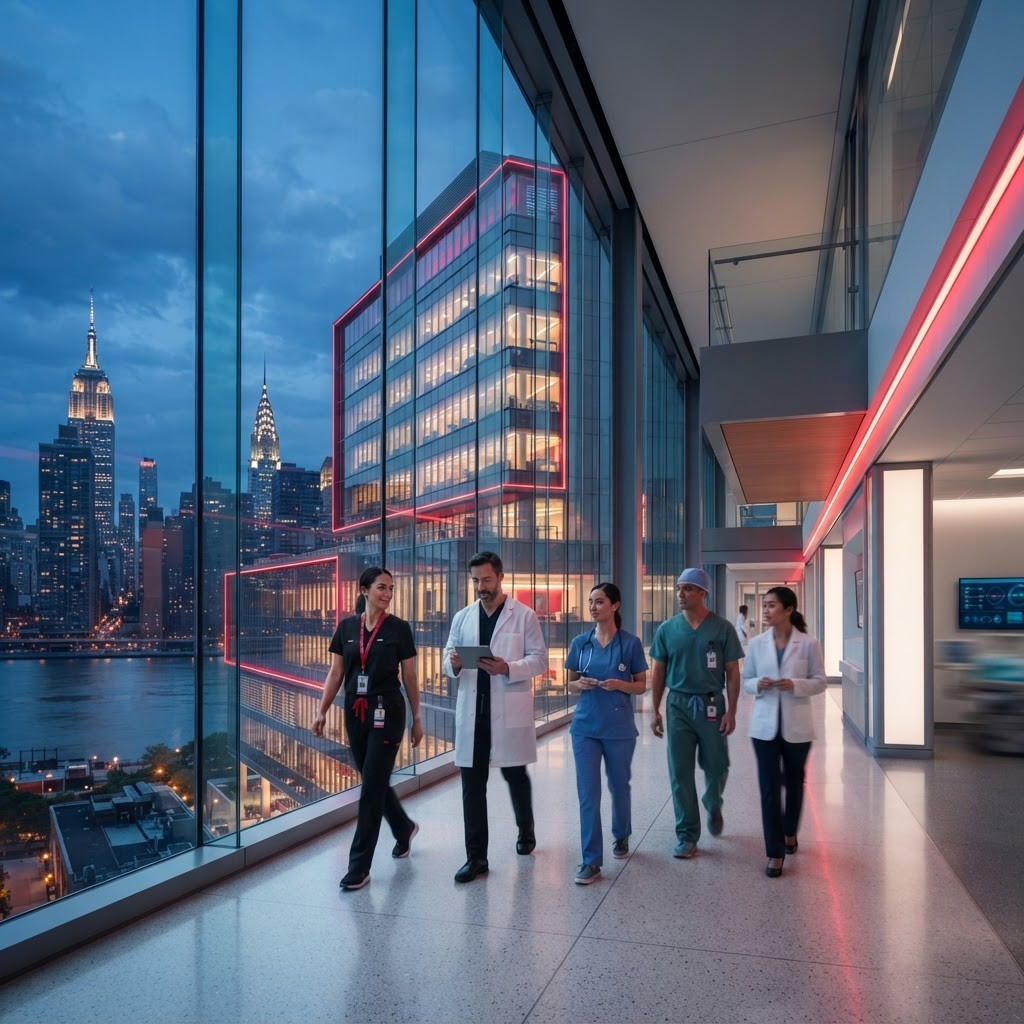
Navigating Hospital Care in New York
New York’s hospital landscape includes internationally recognized academic centers, specialized institutions, and large systems serving diverse communities. A hospital’s reputation can be useful, but patients usually benefit most from the right clinical team for a specific condition, coordinated follow-up, insurance compatibility, and safe, accessible care.
This educational list considers clinical breadth, specialist programs, research, teaching, and regional reputation. It is not medical advice or a universal ranking. Performance varies by department and procedure, and emergency symptoms require immediate emergency services rather than comparison shopping. Patients should consult qualified clinicians and verify current network participation directly with their insurer and provider.
1. NewYork-Presbyterian Hospital
NewYork-Presbyterian is a major academic health system affiliated with Columbia and Weill Cornell. It offers broad adult and pediatric services, complex surgery, cardiology, neurology, transplantation, cancer care, and emergency medicine across multiple campuses. Its scale supports multidisciplinary expertise, while patients should confirm the exact campus, physician group, and insurance arrangements involved in their care.
2. NYU Langone Health
NYU Langone operates a large integrated system with major Manhattan and Brooklyn facilities, ambulatory sites, and specialty programs. It is widely known for academic medicine, orthopedics, rehabilitation, cardiovascular care, neurosciences, and surgical services. A connected outpatient network can simplify follow-up, but appointment access and insurance status should be checked at the individual physician level.
3. Mount Sinai Hospital
The Mount Sinai Hospital anchors a broad New York health system and academic enterprise. It provides tertiary and quaternary care across cardiology, transplantation, cancer, geriatrics, neurology, surgery, and numerous specialties. Its East Harlem location and citywide network connect advanced care with diverse communities. Patients with complex conditions may value access to multidisciplinary programs and clinical research.
4. Memorial Sloan Kettering Cancer Center
Memorial Sloan Kettering is dedicated to cancer diagnosis, treatment, research, and supportive care. Disease-specific teams bring together medical oncology, surgery, radiation oncology, pathology, nursing, and other disciplines. Its specialization is a major strength for complex cancer decisions. Patients should consider treatment goals, clinical trial eligibility, travel burden, support services, and financial counseling.
5. Hospital for Special Surgery
Hospital for Special Surgery focuses on orthopedics, rheumatology, rehabilitation, and related musculoskeletal care. High procedure concentration can provide deep expertise in joint, spine, sports, hand, foot, and pediatric orthopedic conditions. Not every pain problem requires surgery, so patients should seek a complete evaluation, ask about conservative options, and understand expected recovery before proceeding.
6. Mount Sinai Morningside
Mount Sinai Morningside provides emergency, medical, surgical, cardiac, and specialty services on Manhattan’s West Side. As part of the Mount Sinai system, it can connect patients with broader tertiary resources when needed. Its role as both a community hospital and teaching institution makes it important for local access as well as advanced care.
7. Lenox Hill Hospital
Lenox Hill Hospital, part of Northwell Health, is a Manhattan institution offering emergency care, cardiovascular services, neurosurgery, obstetrics, internal medicine, and surgical specialties. Its location serves a dense residential and working population. Patients should assess the relevant department and physician team, as system-wide reputation does not replace procedure-specific experience.
8. Montefiore Medical Center
Montefiore is a leading academic health system in the Bronx and is affiliated with Albert Einstein College of Medicine. It offers major programs in cardiology, transplantation, cancer, neuroscience, pediatrics, and community health. Its commitment to the Bronx and experience with complex population health needs are central differentiators, alongside advanced specialty capabilities.
9. North Shore University Hospital
North Shore University Hospital in Manhasset is a major Northwell Health tertiary facility serving New York City and Long Island. It provides extensive medical, surgical, cardiac, neurologic, and emergency services. For patients outside Manhattan, its location and integration with a large regional network can improve access to sophisticated care without traveling into the city center.
10. NYC Health + Hospitals/Bellevue
Bellevue is a historic public hospital and major teaching center with broad emergency, trauma, medical, psychiatric, and specialty services. It plays an essential role in the city’s safety net and serves patients from many backgrounds. Its clinical breadth and public mission distinguish it within New York’s healthcare ecosystem.
How Patients Can Compare Hospitals
Start with the diagnosis or service rather than the hospital brand. Ask how often the team treats the condition, who will perform the procedure, how complications are managed, and which rehabilitation or home services are available. Review validated quality measures where relevant, but interpret them in context because hospitals treating the sickest patients may have more complex results.
Confirm insurance authorization, physician and facility network status, expected bills, records transfer, language access, disability accommodations, and travel requirements. A second opinion is reasonable for major diagnoses or elective procedures. The best New York hospital for an individual is the one that combines appropriate expertise, safe coordination, respectful communication, and a realistic plan for recovery and ongoing care. Bring a trusted advocate when complex decisions or discharge instructions may be difficult to manage alone.
