
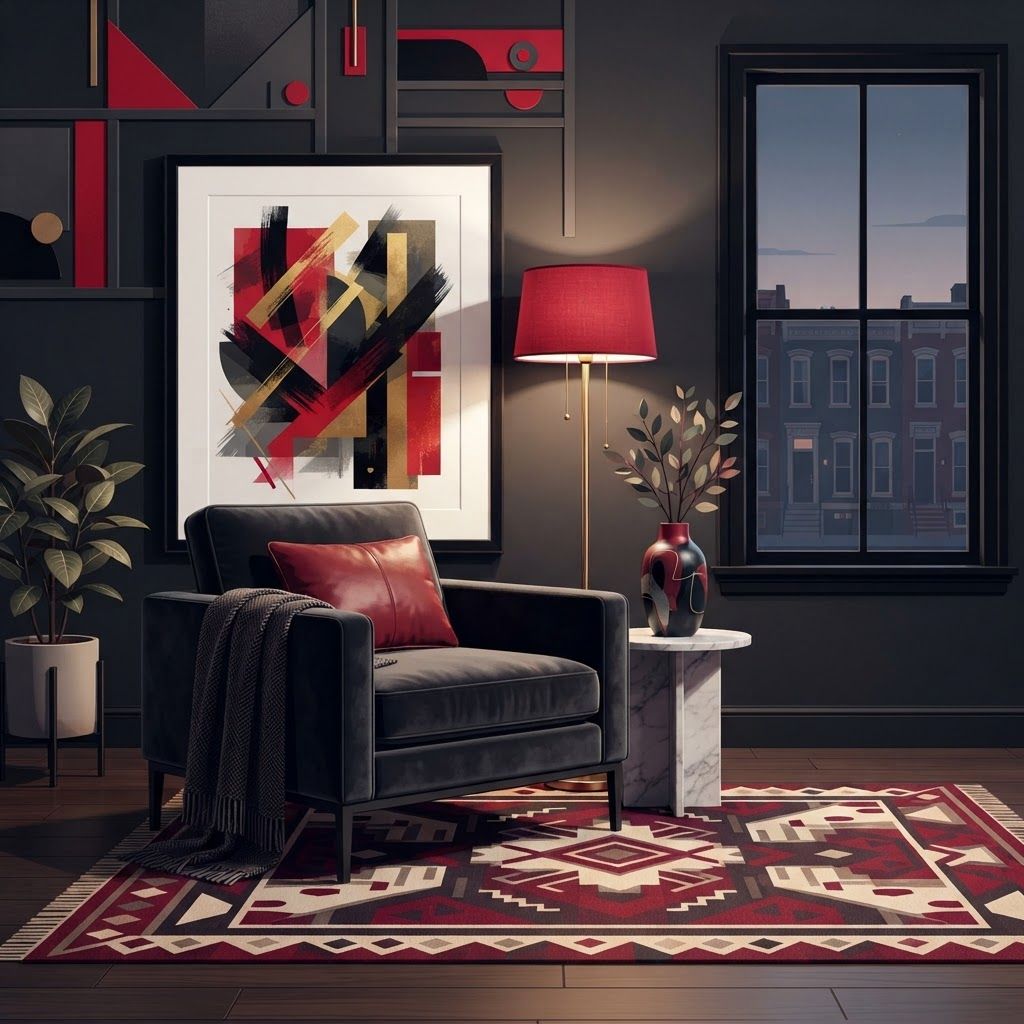
Decorating Baltimore Homes: The Design Context
Baltimore interiors present a specific and rewarding design problem. The classic rowhouse is deep and narrow, often twelve to sixteen feet wide, with rooms arranged in sequence and natural light concentrated at the front and rear. Original features are common and worth respecting: plaster medallions, marble mantels, transom windows, heart pine floors, and pocket doors. Furnishing these rooms well requires restraint and proportion rather than volume.
Elsewhere in the city, converted mill buildings in Hampden and Woodberry and waterfront developments in Harbor East offer the opposite condition: open plans, exposed brick and timber, high ceilings, and large industrial windows. These spaces need zoning through furniture placement, area rugs, and lighting rather than through walls. The decor brands that thrive in Baltimore are those whose inventory works in one or both of these contexts.
What Distinguishes a Quality Decor Source
Construction quality is the first filter. In upholstery, look for kiln-dried hardwood frames, eight-way hand-tied springs or high-quality sinuous spring systems, and cushion cores rated for durability. In case goods, look for solid wood or quality veneer over stable substrates, dovetailed drawer joinery, and finished interiors. These details determine whether a piece lasts five years or thirty.
Service capability is the second. Baltimore's stairwells and doorways defeat many large pieces, so retailers who measure access, offer sectional configurations that break down, and provide skilled delivery crews save customers considerable frustration. Retailers offering in-home design consultation, fabric and finish sampling, and custom sizing are especially valuable in older homes where standard dimensions rarely fit gracefully.
Sourcing transparency is the third. Increasingly, buyers want to know where goods are made, what materials are used, and whether wood is responsibly harvested and textiles produced under credible standards.
Ten Notable Home Decor Brands and Retailers in Baltimore
Charm City Home Collective curates a mix of contemporary furniture and locally made accessories, with a strong emphasis on scale-appropriate pieces for rowhouse living rooms and apartment-sized seating.
Patapsco Furniture Works operates as a maker as well as a retailer, producing solid hardwood tables, benches, and casegoods to custom dimensions, which solves the narrow-room proportion problem directly.
Hampden Vintage Interiors specializes in restored mid-century and antique pieces, offering the kind of one-of-a-kind items that give historic interiors character rather than a showroom uniformity.
Federal Hill Textiles & Upholstery focuses on soft goods: custom drapery, roman shades, cushions, and reupholstery, with expertise in the tall narrow windows typical of Baltimore rowhouses.
Chesapeake Coastal Home carries a light, water-influenced aesthetic with natural fibers, woven textures, painted finishes, and relaxed slipcovered upholstery, which suits waterfront properties and lighter renovations.
Locust Point Lighting Studio concentrates on decorative lighting: pendants, chandeliers, sconces, and floor lamps, with staff able to advise on scale, dimming compatibility, and color temperature consistency across a room.
Inner Harbor Modern Living serves contemporary condominium and loft interiors with modular seating, storage systems, and minimalist accessories designed for open-plan zoning.
Canton Rug & Floor Coverings offers hand-knotted, flatweave, and performance rugs, with in-home trial programs and custom binding for the unusual room dimensions common in older housing.
Mount Vernon Art & Framing combines original artwork from regional artists with conservation framing services, which matters for gallery walls in historic homes where sunlight and humidity are factors.
Green Line Sustainable Home Goods emphasizes reclaimed wood furniture, natural-fiber textiles, low-emission finishes, and durable goods designed for repair rather than replacement.
Trends in Home Decor
Warmth has returned decisively. The stark all-white interior has given way to layered neutrals, saturated accent walls, natural wood tones, and textured plaster finishes. In Baltimore this trend aligns naturally with historic interiors, where original woodwork and warm floors were always the anchor.
Multifunctional furniture continues to grow, driven by home offices in houses that were never designed to accommodate them. Desks that read as consoles, storage benches, nesting tables, and sofa beds that are genuinely comfortable are all in strong demand.
Curated vintage has become mainstream rather than niche. Mixing older pieces with new production creates depth, reduces environmental impact, and often delivers better construction quality at a lower price than comparable new furniture.
Practical Advice for Furnishing Baltimore Rooms
Measure the path, not just the room. Confirm the width of your front door, the turn at the base of the stairs, and stairwell headroom before purchasing a large sofa. Ask retailers whether a piece disassembles.
Scale down and elevate. In narrow rooms, choose seating with slimmer arms and exposed legs, which reads lighter and preserves visual floor area. Use taller, narrower storage rather than wide low pieces. Hang drapery close to the ceiling to emphasize height.
Layer lighting rather than relying on a single overhead fixture. A combination of ambient, task, and accent lighting at different heights makes a deep rowhouse room feel considered and comfortable. Invest first in the items you touch daily, particularly seating and mattresses, and build decorative layers gradually. The best Baltimore decor sources encourage that patient approach rather than selling entire rooms at once.
