
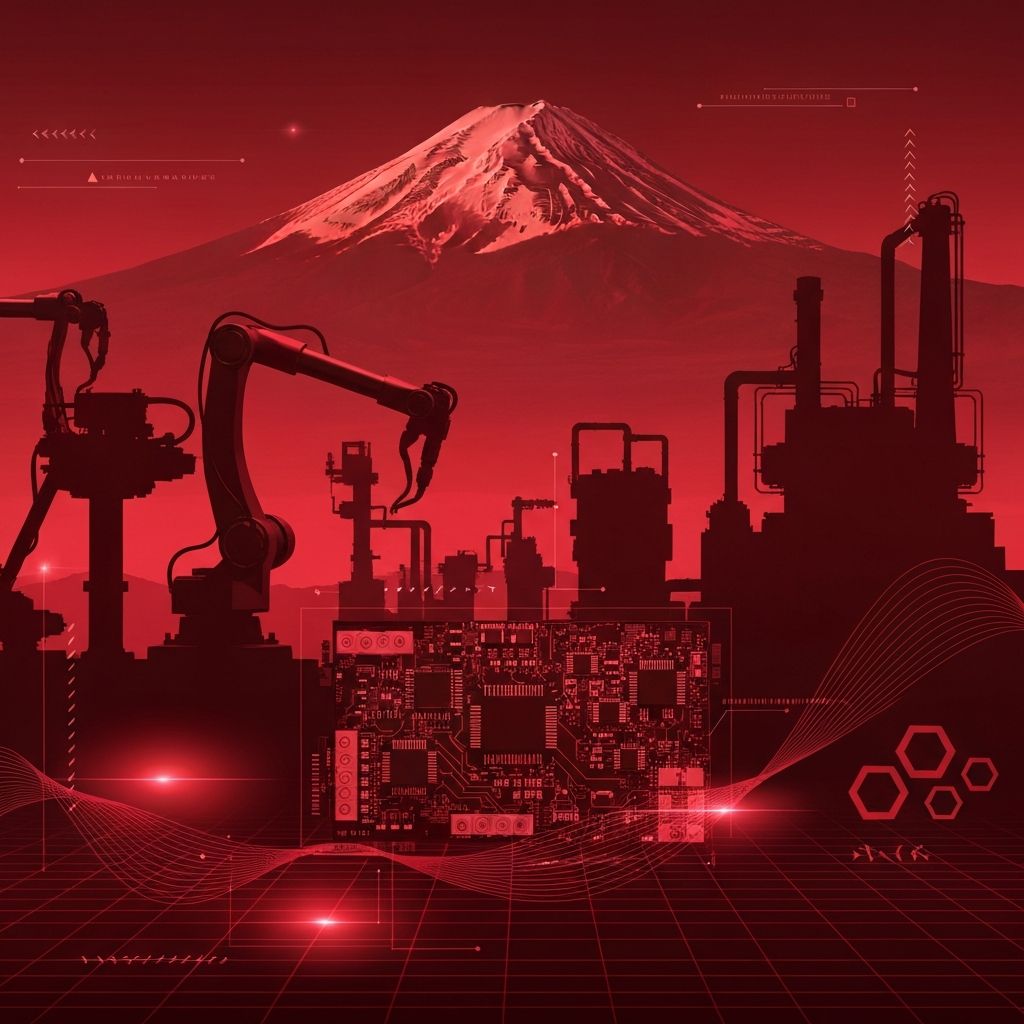
Japan's Legacy in Hardware Manufacturing
Japan has long stood at the forefront of global hardware manufacturing, combining decades of engineering discipline with a relentless pursuit of innovation. From semiconductors to consumer electronics and industrial robotics, Japanese companies have consistently set benchmarks for quality, reliability, and miniaturization. The country's manufacturing ecosystem is supported by world-class research institutions, an emphasis on kaizen (continuous improvement), and a deep culture of craftsmanship known as monozukuri.
In recent years, the industry has evolved rapidly to meet the demands of artificial intelligence, electric vehicles, renewable energy, and Industry 4.0. The following ten manufacturers represent the very best of Japan's hardware landscape, each contributing unique expertise to the global supply chain.
1. Sony Group Corporation
Sony is one of Japan's most iconic technology companies, producing imaging sensors, televisions, audio equipment, and gaming hardware. Its CMOS image sensors power a significant share of the world's smartphones, while its PlayStation consoles have shaped entertainment for generations. Sony's strength lies in its ability to merge hardware with software and content.
2. Panasonic Holdings
Panasonic is a household name in home appliances, batteries, automotive electronics, and energy solutions. The company plays a critical role in the electric vehicle ecosystem through its battery partnerships and is highly respected for its commitment to sustainability and energy-efficient products.
3. Hitachi, Ltd.
Hitachi operates across information technology, industrial systems, healthcare, and energy infrastructure. Known for its high-performance servers, railway systems, and digital transformation tools, Hitachi blends traditional heavy industry expertise with modern software-driven services.
4. Toshiba Corporation
Toshiba has a strong heritage in memory chips, power systems, and industrial automation. While the company has undergone restructuring, it remains a key supplier of semiconductors, social infrastructure, and digital solutions essential to modern industries.
5. Canon Inc.
Canon is renowned for its imaging and optical technology, producing professional cameras, printers, medical imaging systems, and semiconductor lithography equipment. Its precision engineering capabilities make it indispensable to industries ranging from healthcare to chip manufacturing.
6. Fujitsu Limited
Fujitsu specializes in IT services, supercomputing, and networking hardware. Its Fugaku supercomputer has been recognized as one of the most powerful systems in the world, and the company continues to invest heavily in quantum computing and AI infrastructure.
7. Mitsubishi Electric
Mitsubishi Electric manufactures factory automation systems, elevators, air conditioning units, power equipment, and satellite technology. Its industrial robots and programmable logic controllers are trusted by manufacturers worldwide for their durability and precision.
8. Murata Manufacturing
Murata is a leading producer of electronic components, including ceramic capacitors, sensors, and wireless modules. Its components are found inside nearly every smartphone, vehicle, and IoT device on the planet, reflecting its quiet but vital role in the global tech supply chain.
9. Keyence Corporation
Keyence is celebrated for its sensors, vision systems, measuring instruments, and laser markers used in factory automation. Known for its high profit margins and direct sales model, Keyence delivers cutting-edge solutions that help manufacturers improve productivity and quality control.
10. Fanuc Corporation
Fanuc is one of the world's largest manufacturers of industrial robots and CNC systems. Its iconic yellow robots are deployed in automotive plants, electronics factories, and logistics centers across the globe, making it a cornerstone of modern automation.
Industry Trends Shaping Japanese Hardware
Several trends are reshaping the Japanese hardware sector. The shift toward electrification of vehicles is creating massive demand for batteries, power semiconductors, and sensors. The rise of generative AI is increasing the need for advanced chips, cooling systems, and high-performance computing hardware. Additionally, Japan's government has been actively investing in domestic semiconductor production to strengthen supply chain resilience.
Robotics and automation remain core strengths, with Japanese firms leading in collaborative robots, precision motors, and machine vision. Sustainability is also a major theme, as manufacturers integrate renewable energy, recyclable materials, and circular economy principles into their operations.
Why Japanese Manufacturers Stand Out
Japanese hardware manufacturers are widely respected for their attention to detail, long-term thinking, and willingness to invest in research and development over many years. Their products are often associated with longevity, low defect rates, and outstanding after-sales support. This reputation has helped them secure long-standing partnerships with global brands across automotive, aerospace, healthcare, and consumer electronics.
For businesses sourcing components or industrial equipment, working with Japanese manufacturers often means access to highly engineered solutions, strict quality assurance, and a collaborative approach to product development. As technology continues to evolve, these ten companies are well positioned to maintain Japan's status as a global hardware powerhouse.
