
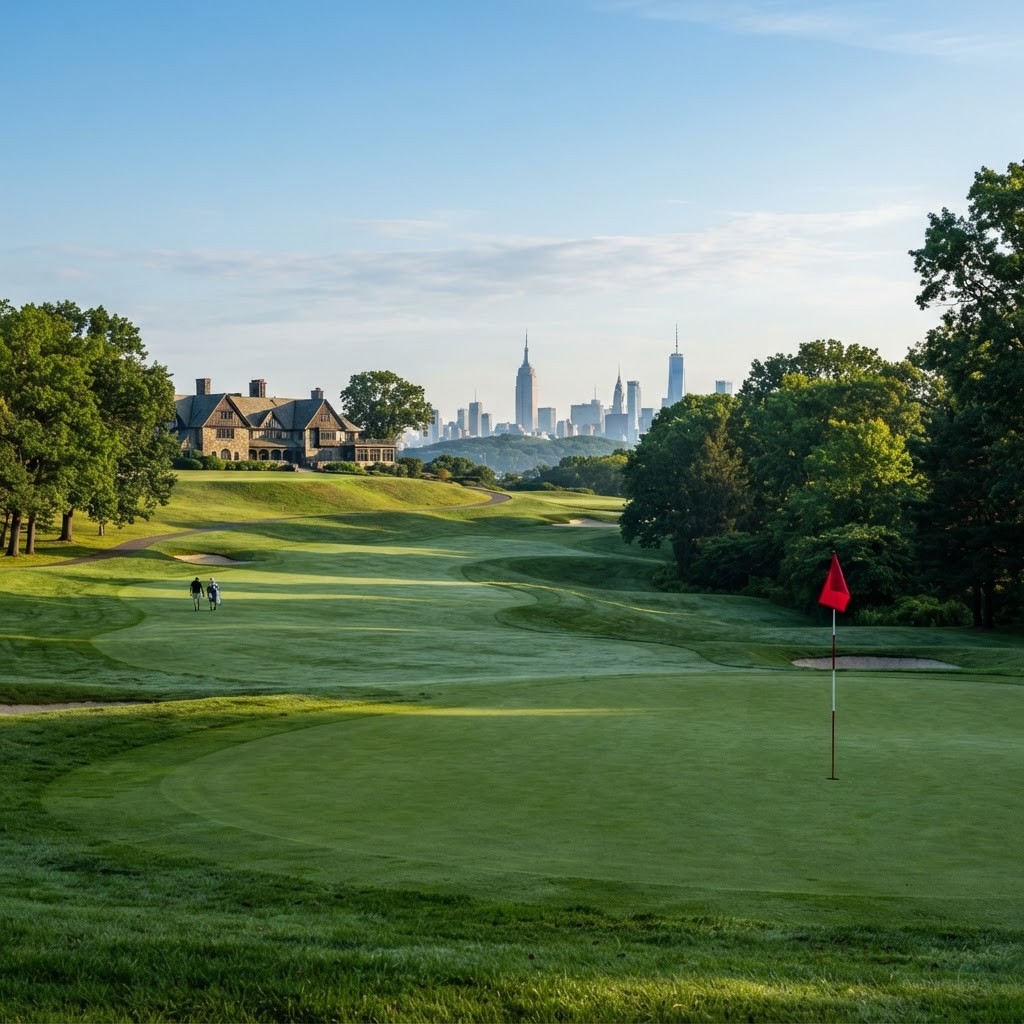
A Remarkably Diverse Golf Destination
New York golf is defined by variety. Players can tee off beneath distant skyline views, walk courses shaped by foundational architects, or test demanding championship venues on Long Island and in Westchester. Access varies significantly: municipal layouts welcome the public, resort and daily-fee courses accept bookings, and private clubs generally require membership or a host. The selections below balance architectural character, conditioning, history, setting, and importance to the region.
1. Bethpage Black Course
Bethpage Black in Farmingdale is one of America’s most celebrated public courses. Designed by A. W. Tillinghast, it has hosted major championships and is famous for length, deep bunkers, demanding angles, and thick rough. The walking-only experience can be physically taxing, and the course’s warning sign is part of golf lore. Skilled players value the rare chance to experience a true championship test at a public facility.
2. Winged Foot Golf Club West Course
Winged Foot’s West Course in Mamaroneck is a private Tillinghast masterpiece known for exacting green complexes and major-championship history. Fairways offer reasonable width in places, but approach shots must find precise sections of heavily contoured greens. Deep bunkers and penal misses reward strategic discipline. Its traditional clubhouse and two-course property reinforce the sense of historic American golf.
3. Shinnecock Hills Golf Club
Shinnecock Hills in Southampton is among the oldest and most influential clubs in the United States. The private course’s exposed, rolling terrain produces firm conditions and wind-dependent strategy reminiscent of links golf. William Flynn’s routing uses natural contours rather than excessive ornament. Multiple US Opens have established its championship pedigree, but its enduring appeal comes from balance, variety, and an unmistakable landscape.
4. National Golf Links of America
National Golf Links of America, also in Southampton, is a private C. B. Macdonald design that interprets famous strategic holes from Britain and Europe. Broad fairways, bold contours, and alternate routes encourage players to think from the tee onward. The windmill and Peconic Bay setting are iconic, yet the course’s real importance lies in how it rewards angles, imagination, and ground play.
5. Friar’s Head
Friar’s Head in Baiting Hollow combines dramatic dunes beside Long Island Sound with quieter inland terrain. Designed by Bill Coore and Ben Crenshaw, the private course feels natural despite its spectacular scale. Wide playing corridors offer options, while firm surfaces and artistic bunkering create strategic questions for golfers of different abilities. The transitions between landscapes make the round especially memorable.
6. Trump Golf Links at Ferry Point
Ferry Point in the Bronx is a public Jack Nicklaus design built on links-inspired terrain with expansive views of the Manhattan skyline and East River crossings. Broad fairways, sculpted mounds, large greens, and persistent wind define the experience. Its accessibility from the city and quality practice facilities make it a distinctive option for residents and visitors seeking upscale public golf.
7. Van Cortlandt Park Golf Course
Van Cortlandt in the Bronx is recognized as the oldest public golf course in the United States. Known affectionately as Vanny, it offers wooded holes, elevation changes, and a democratic connection to city golf history. The layout is less polished than elite private clubs but rich in character. Public transit access and relatively affordable play make it important to New York’s golfing community.
8. Pelham Bay and Split Rock Golf Courses
This 36-hole public complex in the Bronx gives golfers two contrasting options. Pelham Bay is generally more open and forgiving, while Split Rock moves through denser woodland and asks for greater accuracy. Together they support leagues, outings, beginners, and regular city players. Their scale and accessibility make the facility one of the most useful public golf assets within the five boroughs.
9. Marine Park Golf Course
Marine Park in Brooklyn is a public links-style course associated with architect Robert Trent Jones Sr. Wide views, coastal breezes, tall grasses, and relatively open terrain give it a different feel from the city’s wooded layouts. Wind can transform club selection and scoring. The course is a practical destination for Brooklyn golfers and visitors who prefer a straightforward municipal setting.
10. Pound Ridge Golf Club
Pound Ridge in Westchester County is a public Pete Dye design characterized by rock outcroppings, wetlands, dramatic bunkering, and visual challenge. Accuracy and careful course management matter, particularly when firm targets and hazards narrow preferred landing zones. It provides a high-end daily-fee experience for golfers willing to travel north of the city.
Choosing and Booking a Course
Match the course to your ability and goals. Bethpage Black and Pound Ridge can be punishing, while Pelham Bay or Van Cortlandt may provide a more relaxed day. Confirm walking and cart policies, resident rates, handicap requirements, aeration schedules, and cancellation rules. Prime weekend tee times disappear quickly, especially in spring and fall. Private venues should be approached only through legitimate membership, invitation, or organized event channels.
New York’s golf season is strongest from late spring through autumn, with shoulder-season conditions varying. Sustainable maintenance, water management, habitat restoration, and shorter-format play are increasingly important across the industry. Above all, respect pace, repair ball marks, replace divots, and follow local rules. The region’s best courses reward not only strong shots but curiosity about architecture, landscape, and the traditions that make each round distinctive.
