
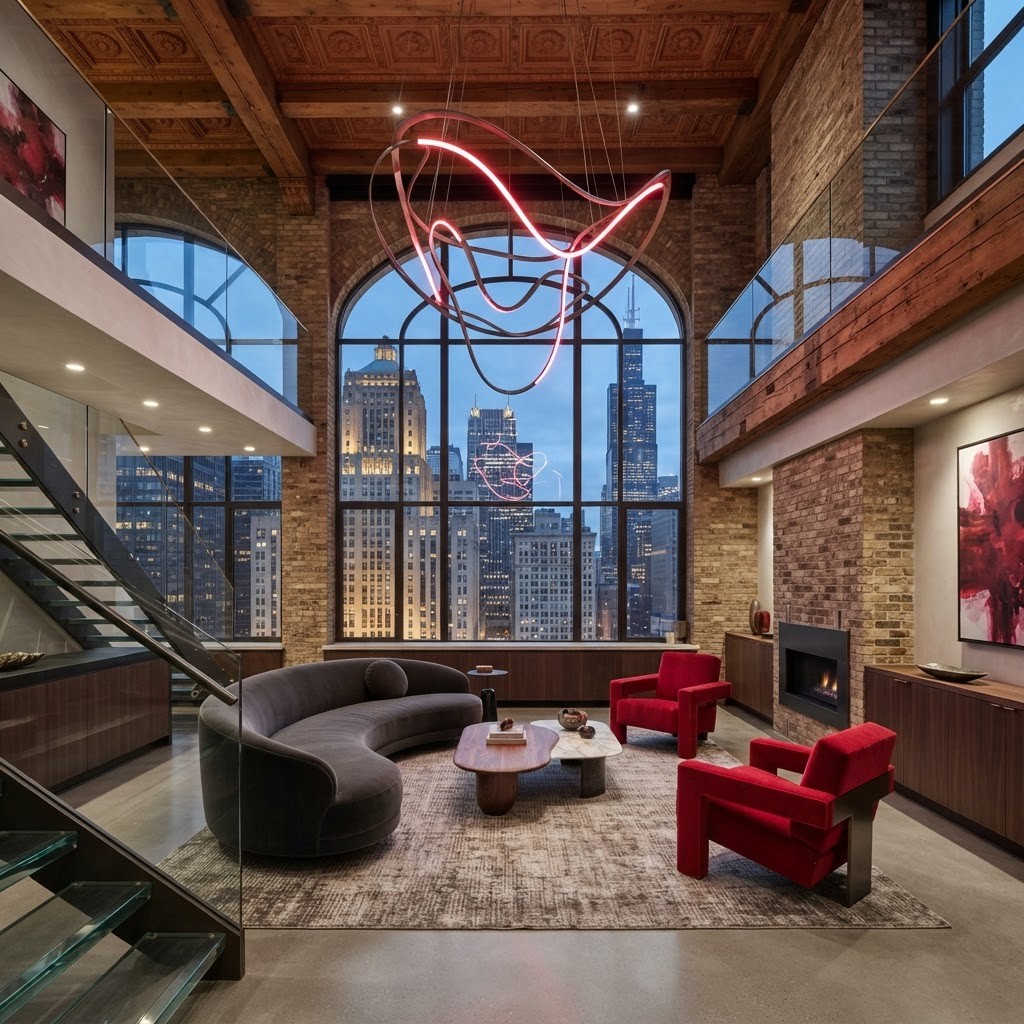
Chicago’s Distinctive Interior Design Landscape
Chicago’s interior designers work in a city where architectural history is part of everyday life. A successful project may need to respect a vintage Gold Coast apartment, animate a West Loop hospitality space, modernize a Lincoln Park home, or create a high-performing workplace inside a landmark tower. The best interior design firms in Chicago pair visual judgment with planning, documentation, procurement, and construction coordination. The ten firms below are recognized for different strengths and project types. Because design is deeply personal, prospective clients should treat this list as a curated field for further evaluation rather than a rigid ranking.
1. Studio Gang
Studio Gang is internationally known for architecture, yet its integrated approach extends naturally into interiors. The firm’s work is driven by research, environmental performance, community, and the relationship between a building’s exterior and interior experience. Clients undertaking complex cultural, institutional, workplace, or residential projects may value a unified design vision. The firm is particularly relevant when interior decisions cannot be separated from architecture, structure, or public realm.
2. Perkins&Will
Perkins&Will has a major Chicago presence and broad expertise in workplace, healthcare, education, civic, and commercial design. Research and performance are central to its process, including wellness, sustainability, inclusion, and user experience. Large organizations may benefit from its multidisciplinary resources and ability to manage technically demanding environments. Its portfolio demonstrates how interior design can support operational goals as well as brand identity.
3. Gensler Chicago
Gensler’s Chicago office works across workplace, retail, hospitality, aviation, and mixed-use environments. The global firm combines local market knowledge with extensive research and specialized practice areas. Its scale is a differentiator for clients managing multiple locations or complicated stakeholder groups. The firm often focuses on experience, flexibility, and how spaces support changing patterns of work and commerce.
4. Solomon Cordwell Buenz
Solomon Cordwell Buenz is a Chicago architecture and design firm strongly associated with urban residential, mixed-use, hospitality, and commercial projects. Its interior work benefits from expertise in high-rise living and large-scale development. Developers may appreciate the continuity between building planning, amenity strategy, unit design, and public spaces. That coordination can create a more consistent resident experience and reduce disconnects between architecture and furnishings.
5. Simeone Deary Design Group
Simeone Deary Design Group has built a strong reputation in hospitality interiors. Hotels, restaurants, and resorts require memorable concepts alongside durability, operations, and guest comfort. The firm’s narrative-driven approach helps spaces establish a distinct sense of place rather than following a generic luxury formula. Chicago’s hospitality market provides an ideal setting for this blend of storytelling, material detail, and commercial practicality.
6. Kara Mann
Kara Mann’s Chicago-rooted studio is known for sophisticated residential, hospitality, and product design. Its interiors often combine tailored restraint with expressive art, texture, and sculptural forms. Clients seeking a fashion-aware, collected atmosphere may find the studio especially compelling. The work illustrates how neutral palettes can still feel layered and individual when proportion, material, and custom detailing are carefully controlled.
7. Soucie Horner Design Collective
Soucie Horner Design Collective creates high-end residential interiors and related lifestyle products. The firm is known for personalized environments, craftsmanship, and a polished approach that can move between traditional and contemporary references. Its depth in custom residences is valuable for clients who need support with architecture, furniture, art, and decorative details over a long project timeline.
8. Centaur Interiors
Centaur Interiors offers architecture and interior design for luxury residences and select commercial projects. Its integrated model can streamline decision-making when renovations involve substantial spatial changes, millwork, lighting, and construction. The firm’s modern work often emphasizes clean lines, refined materials, and precise execution. Clients should discuss how architectural and interior scopes are coordinated from concept through installation.
9. Jessica Lagrange Interiors
Jessica Lagrange Interiors is a longstanding Chicago studio recognized for luxury residential work and elegant, highly customized rooms. The firm’s portfolio spans different architectural styles while maintaining attention to comfort, art, and fine materials. It may be a strong fit for clients who want a full-service process and a home that feels composed rather than trend-driven.
10. Mary Cook Associates
Mary Cook Associates specializes in commercial interior design, particularly multifamily, senior living, student housing, and model merchandising. Its approach connects design decisions with target-market research and business performance. Developers can benefit from a team that understands how amenities, model units, and shared spaces influence leasing, resident satisfaction, and property positioning.
Comparing Chicago Design Firms
Review projects similar in scale and type to your own, then ask who will lead daily work. Understand the firm’s fee model, procurement markup, construction administration, minimum budget, and expected decision schedule. Full-service firms may manage everything from space planning to final installation, while others focus on architecture, decoration, or a particular commercial sector. Check how the team documents approvals and handles substitutions, delays, and budget reporting.
Design Priorities for 2026
Chicago clients increasingly seek adaptable rooms, healthier materials, lower energy use, acoustic comfort, and spaces that work across seasons. In offices and residential towers, hospitality-inspired shared areas remain influential, but they must deliver genuine utility. Residential clients are moving toward personal collections, durable natural materials, and fewer disposable trends. The strongest designer is not necessarily the one with the most dramatic portfolio; it is the team whose process, communication, and expertise align with the client’s building, budget, and ambitions.
