
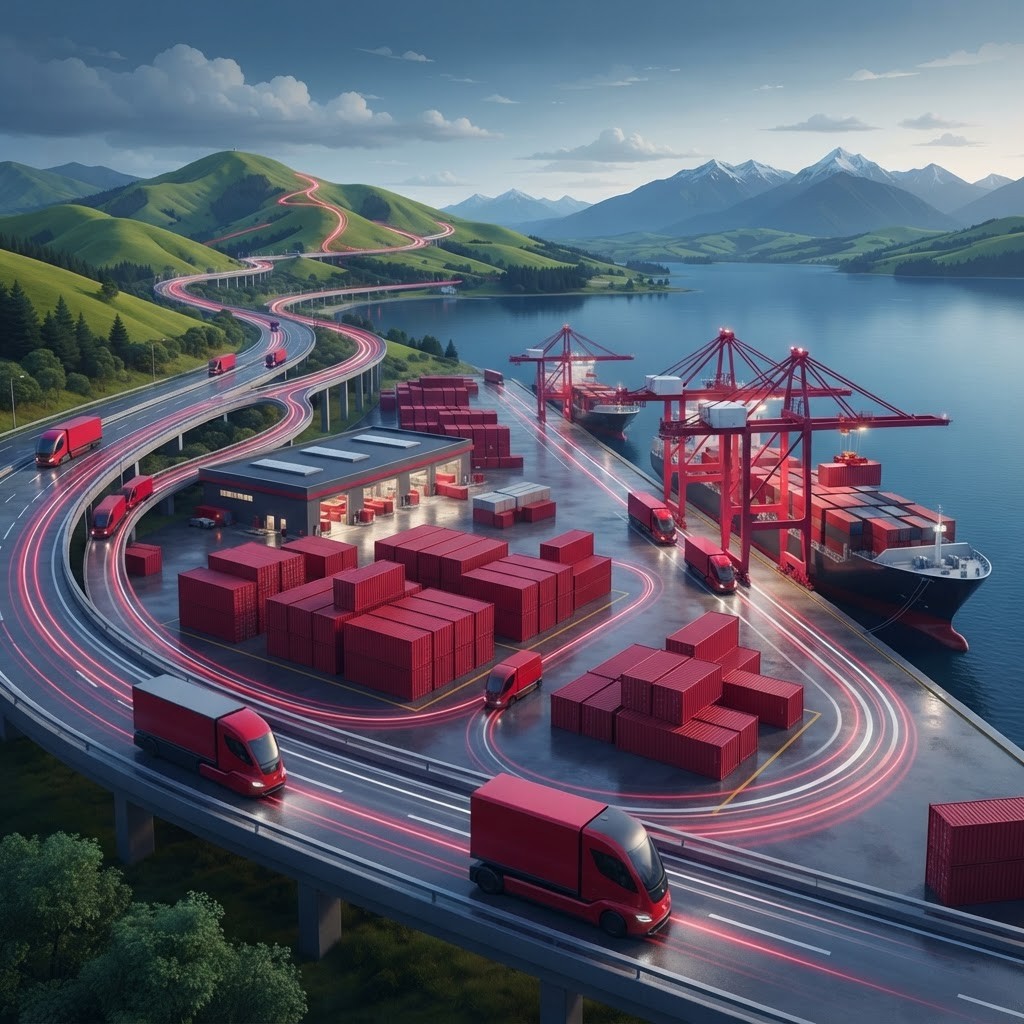
The Backbone of New Zealand's Economy
Freight companies form the essential foundation of New Zealand's economy, ensuring that goods move efficiently across the country and beyond. As an island nation with a strong reliance on exports such as dairy, meat, and horticulture, New Zealand depends heavily on well-organised freight networks spanning road, rail, sea, and air. From delivering everyday consumer products to transporting bulk commodities for international markets, freight operators keep supply chains running smoothly. Their reliability and efficiency directly impact businesses, consumers, and the nation's overall economic performance.
Major Road Freight Operators
Road freight is the most widely used method of transporting goods within New Zealand, and several companies lead this sector. Mainfreight is arguably the most prominent, a homegrown success story that has grown into a global logistics powerhouse while maintaining strong domestic operations. TIL Freight and Freightways are also key players, offering extensive networks and dependable service across the country. These operators handle everything from small parcels to large industrial loads, providing the flexibility and reach that businesses require to serve customers efficiently throughout both islands.
Rail and Sea Freight
Rail and sea freight play a crucial role in moving large volumes of goods over long distances. KiwiRail operates the national rail freight network, transporting bulk products such as timber, coal, and dairy while also managing the vital Interislander ferry service that links the North and South Islands. Coastal shipping services further support the movement of freight between ports. These modes are particularly valued for their efficiency and lower environmental impact when handling heavy or bulky cargo, complementing the flexibility of road transport within an integrated logistics system.
Air Freight Services
For time-sensitive and high-value goods, air freight provides the fastest option. Air New Zealand Cargo offers domestic and international freight services, connecting the country to global markets with speed and reliability. International carriers and specialist freight forwarders also facilitate the rapid movement of perishable exports such as seafood and premium produce, which must reach overseas customers quickly. While more expensive than other methods, air freight is indispensable for industries where speed and freshness are critical, reinforcing New Zealand's reputation as a supplier of high-quality goods.
Specialised and Temperature-Controlled Freight
New Zealand's economy relies heavily on perishable exports, making temperature-controlled freight a vital specialisation. Many leading operators offer refrigerated transport and cold-chain logistics to ensure products such as dairy, meat, and fresh produce maintain quality from farm to destination. Other specialised services include hazardous goods handling, oversized load transport, and bespoke supply-chain solutions for specific industries. This ability to manage complex and sensitive freight requirements distinguishes the most capable operators and adds significant value for businesses with demanding logistics needs.
Technology and Efficiency
The freight industry in New Zealand is increasingly driven by technology aimed at improving efficiency and transparency. Advanced tracking systems allow customers to monitor shipments in real time, while route optimisation and warehouse automation help reduce costs and delivery times. Data-driven logistics management enables companies to respond quickly to changing demand and disruptions. These innovations enhance reliability and customer satisfaction, allowing freight operators to deliver faster, more predictable service in an increasingly competitive and fast-paced business environment.
Sustainability in Freight
Sustainability has become a major priority for New Zealand's freight sector. Companies are investing in fuel-efficient vehicles, exploring electric and low-emission technologies, and optimising logistics to reduce environmental impact. Shifting more freight to rail and coastal shipping also supports lower emissions for suitable cargo. As businesses and consumers increasingly value environmentally responsible practices, freight operators that demonstrate genuine commitment to sustainability are gaining a competitive advantage while contributing to the country's broader climate goals.
Overcoming Geographic Challenges
New Zealand's geography presents unique challenges for the freight industry that leading operators have learned to master. The country's long, narrow shape, mountainous terrain, and separation into two main islands require carefully coordinated multimodal solutions combining road, rail, and sea. Weather events, remote delivery locations, and the need to serve both densely populated cities and isolated rural communities add further complexity. Successful freight companies invest in resilient networks, contingency planning, and local expertise to ensure goods keep moving even when conditions are difficult. This ability to navigate demanding logistics conditions is a hallmark of the country's top operators and a key reason businesses trust them with time-sensitive and valuable cargo across the entire nation.
Final Thoughts
Freight companies are indispensable to New Zealand's economy, connecting producers, businesses, and consumers across land, sea, and air. From dominant road operators and the national rail network to specialised temperature-controlled and air freight services, the industry offers comprehensive solutions for diverse needs. With ongoing investment in technology and sustainability, freight providers continue to improve efficiency and reliability. For businesses seeking dependable movement of goods, New Zealand's leading freight companies deliver the expertise and infrastructure essential for success in both domestic and international markets.
