
Baltimore's Position in North American Freight
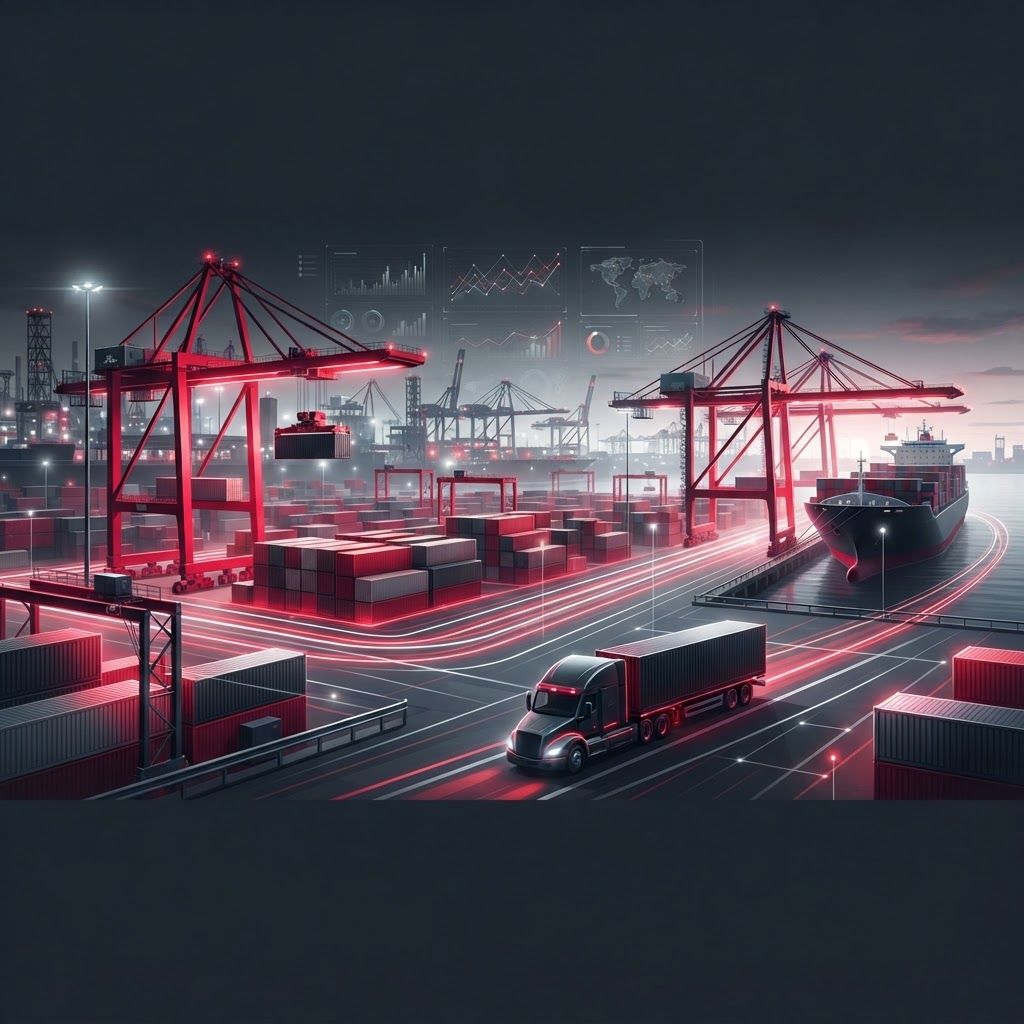
Baltimore is a freight city in a way that few American metros are. The Port of Baltimore sits farther inland than any other major East Coast port, which shortens the truck and rail leg to the Midwest and gives it a genuine cost advantage for cargo destined for Ohio, Indiana, and beyond. Its deep berths and modern container cranes allow it to handle the largest vessels transiting the Panama Canal, and it consistently ranks first or near first nationally for automobile and light truck volume, roll-on roll-off cargo, and specialized heavy equipment such as farm and construction machinery.
Around that maritime core sits a full freight ecosystem. Interstate corridors connect the port north toward Philadelphia and New York, south toward Washington and the Carolinas, and west across the Appalachians. Two Class I railroads provide intermodal service. A large warehousing and distribution belt has developed along the beltway and the Interstate 95 corridor, driven by the region's ability to reach a third of the United States population within an overnight truck run. For shippers, that combination means Baltimore offers unusually broad carrier choice.
Understanding the Types of Freight Service
Choosing a provider begins with identifying what kind of freight you actually have. Parcel carriers handle small packages under roughly one hundred and fifty pounds with dense residential and commercial coverage. Less-than-truckload service consolidates palletized shipments from multiple customers, making it the standard choice for freight between one and ten pallets. Full truckload dedicates an entire trailer to one shipment, which suits high-volume moves and reduces handling damage. Drayage moves containers between the port, rail ramps, and nearby warehouses. Intermodal combines rail line-haul with truck pickup and delivery, cutting cost and emissions on long distances. Freight forwarding and customs brokerage manage international movements, documentation, and clearance.
Beyond mode, evaluate carriers on transit reliability rather than advertised speed, on damage and claims performance, on technology including tracking visibility and system integration, and on capacity during peak periods. A carrier that performs well in November and December, when capacity tightens, is worth more than one that is marginally cheaper in quiet months.
The Top 10 Freight Companies Serving Baltimore
1. UPS. A comprehensive provider spanning parcel, freight, and supply chain services, with substantial sorting and distribution infrastructure in the Baltimore region. Its strengths are network density, guaranteed time-definite delivery options, deep tracking visibility, and integrated international capability including customs brokerage. For businesses shipping a mix of parcels and palletized freight, its single-vendor breadth simplifies management considerably.
2. FedEx. A direct competitor with equally broad capability across express parcel, ground, and freight divisions. FedEx is particularly strong in time-critical air freight and international express, and its technology platform and returns management tools are widely used by regional e-commerce operations.
3. XPO Logistics. One of the largest less-than-truckload carriers in North America with significant Northeast coverage, XPO is a common choice for palletized regional and national freight. Its investment in linehaul network design and shipment visibility tools has improved transit consistency, and it handles accessorial requirements such as liftgate and limited access delivery reliably.
4. Old Dominion Freight Line. Consistently regarded as the benchmark for service quality in the less-than-truckload sector, with industry-leading on-time performance and among the lowest claims ratios. Shippers with fragile, high-value, or time-sensitive palletized freight often accept a modest rate premium for that reliability.
5. Estes Express Lines. A large privately held less-than-truckload carrier with strong Mid-Atlantic and Southeast coverage from Baltimore. Its regional density produces short transit times within its core footprint, and it is well regarded for handling oversized and irregular freight that other carriers decline.
6. Saia LTL Freight. A growing national less-than-truckload operator that has expanded its Northeast presence considerably, competing on rate and on customer service responsiveness. It is often a strong option for shippers seeking an alternative quote to the established incumbents.
7. CSX Transportation. A Class I railroad with major operations serving Baltimore, providing intermodal and carload service that connects the port to the Midwest and Southeast. Rail line-haul delivers substantially lower cost per ton mile and lower emissions than trucking on long distances, making it the backbone of high-volume supply chains.
8. Norfolk Southern. The second Class I railroad serving the region, offering intermodal and bulk carload service with strong westward connectivity. Competition between the two railroads benefits shippers through pricing and service options that single-railroad markets lack.
9. Ports America Chesapeake. The marine terminal operator at Baltimore's principal container facility, responsible for vessel loading and discharge, container yard operations, and gate throughput. While not a carrier in the conventional sense, its performance directly determines drayage turn times and cargo velocity, and it has invested heavily in cranes and yard capacity to handle the largest vessels calling the East Coast.
10. Kuehne and Nagel. A global freight forwarder and customs broker with Baltimore-area operations, arranging ocean and air freight, consolidation, customs clearance, and contract logistics. For importers and exporters, a forwarder of this scale provides documentation expertise, carrier relationships, and multi-country coordination that direct carrier contracting cannot easily replicate.
Trends Reshaping Freight in the Region
Port infrastructure investment is the dominant local story, with dredging, berth deepening, crane acquisition, and landside access improvements expanding the range of vessels and cargo volumes Baltimore can handle. Nearshoring and supply chain diversification have increased East Coast and Gulf volumes relative to historical West Coast concentration, benefiting Baltimore's inland position.
Technology adoption is accelerating. Digital freight matching, automated rating and booking, appointment scheduling systems at terminals, and predictive analytics for transit times have reduced friction and improved planning accuracy. Sustainability has become a procurement criterion rather than a talking point, with shippers actively shifting long-haul volume to intermodal rail and requesting emissions reporting from carriers. Warehouse automation continues to expand across the regional distribution belt, and the persistent shortage of experienced drivers keeps upward pressure on truckload rates while reinforcing the case for rail on long distances.
How to Select the Right Freight Partner
Define your requirements precisely before requesting quotes: commodity, weight, dimensions, packaging, origin and destination pairs, required transit, and any accessorial needs such as appointment delivery or liftgate service. Vague requests produce vague pricing and unpleasant invoice adjustments later. Compare total landed cost rather than base rate, including fuel surcharges and accessorials, which frequently represent a substantial share of the final bill.
Ask for performance data. Reputable carriers will discuss on-time percentages and claims ratios for lanes similar to yours. Test with a modest volume before committing to a large contract, and evaluate customer service responsiveness during that trial, since exception handling separates good carriers from adequate ones. For international freight, verify customs brokerage capability and cargo insurance terms explicitly.
Baltimore's depth of carrier options is a genuine competitive asset. Shippers who understand the modes available and build relationships with two or three complementary providers, typically one parcel carrier, one less-than-truckload specialist, and one forwarder or intermodal partner, consistently achieve better cost and reliability than those relying on a single vendor for everything.
