
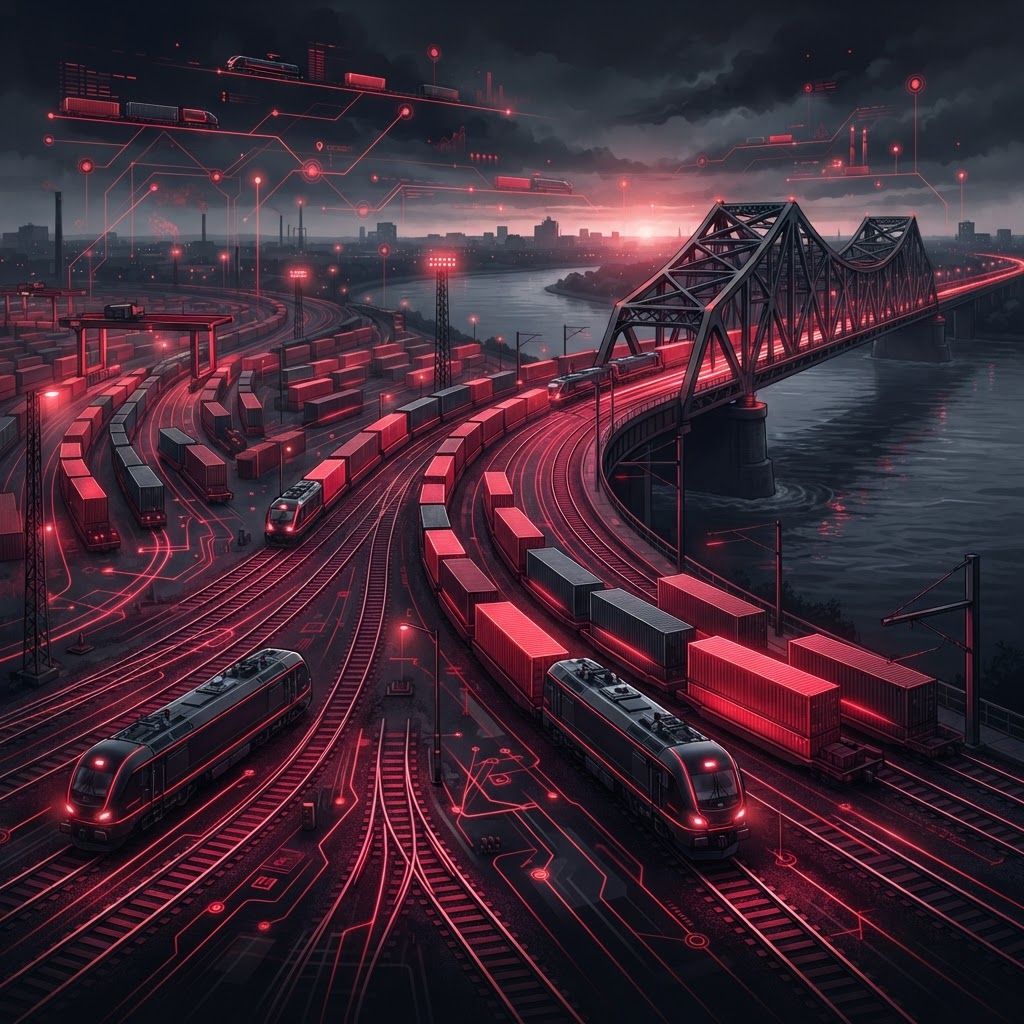
Memphis as a Rail Convergence Point
Rail built Memphis into a commercial center, and it remains fundamental to the city's economy. Memphis is one of a very small group of North American cities where five Class I railroads meet, giving shippers direct access to networks spanning the eastern United States, the western United States, the Gulf Coast, Canada, and Mexico. That convergence, combined with the Mississippi River crossing and extensive intermodal terminal capacity, makes the metro one of the most consequential rail gateways on the continent.
The rail sector locally involves more participants than the major carriers alone. Short line and switching railroads move cars between industries and mainline yards. Passenger service connects the city to the national network. Intermodal marketing companies and drayage operators translate rail capacity into door-to-door service. Terminal operators handle transloading between rail, truck, and barge. A complete picture requires all of them.
The 10 Best Railway Operators and Rail Service Providers in Memphis
1. BNSF Railway. One of the two western giants, BNSF operates a major Memphis intermodal facility connecting the city with West Coast ports and the Pacific Northwest. Its strength is transcontinental intermodal service for import containers moving inland.
2. Union Pacific Railroad. The other western Class I, with substantial Memphis operations linking the metro to Texas, the Gulf, the Southwest, and Mexican gateways. It is central to nearshoring flows and to bulk commodity movement.
3. CSX Transportation. A dominant eastern carrier providing access to the Atlantic seaboard, the Southeast, and the industrial Northeast. Manufacturers shipping east from Memphis rely heavily on its network and its intermodal terminal capacity.
4. Norfolk Southern Railway. The second major eastern network, offering routes through the Appalachian corridor and to eastern ports. Its automotive and intermodal franchises are particularly relevant to regional manufacturing.
5. Canadian National Railway. Successor to the historic Illinois Central line that shaped Memphis, CN provides the north-south spine from the Gulf of Mexico through Memphis and Chicago into Canada. That single-line reach across three countries is a distinctive advantage for shippers avoiding interchange delays.
6. Amtrak. The national passenger operator serving Memphis Central Station on the route linking Chicago and New Orleans. It provides the city's only intercity rail passenger service and remains a meaningful travel option through the Mississippi Delta corridor.
7. Memphis area switching and terminal railroads. Short line and switching operators perform the essential work of moving cars between industrial spurs, warehouses, and Class I yards. Their efficiency directly determines transit reliability for local shippers, and industrial park tenants depend on their responsiveness.
8. Intermodal terminal and drayage operators. The companies running container lift operations and local trucking between rail ramps and warehouses are the practical interface between rail and the customer's dock. Terminal turn times and chassis availability are their key performance measures.
9. Transload and bulk terminal operators. Facilities that transfer commodities between railcar, truck, and barge allow shippers without rail spurs to access rail economics. In Memphis, the ability to combine rail and river at the same site is unusual and valuable for steel, grain, and aggregates.
10. Rail-served industrial park operators. Developers and operators of rail-served logistics parks around the metro provide the real estate infrastructure that makes rail usable, including spur access, storage tracks, and warehouse configurations designed for railcar handling.
Why Rail Matters for Shippers
Rail's economics are compelling on long hauls. A single train can replace hundreds of truckloads, and fuel efficiency per ton-mile is several times better than highway transport, which produces both cost and emissions advantages. Intermodal service typically becomes competitive above roughly seven hundred miles, trading a day or two of additional transit for substantial savings. For bulk commodities, rail is often the only viable mode at scale.
The trade-offs are equally clear. Rail requires more planning, offers less schedule flexibility than trucking, and depends on terminal and drayage performance at both ends. Shippers who succeed with rail design their inventory positions and order cycles around it rather than treating it as a drop-in substitute for truckload.
Trends in Rail Freight
Precision scheduled operating models have reshaped how the Class I carriers run trains, emphasizing asset utilization and fixed schedules. The effect for shippers is greater consistency on core lanes but less tolerance for irregular or low-volume traffic. Intermodal growth continues as shippers pursue cost and emissions reduction, and domestic container capacity has expanded accordingly. Technology adoption is accelerating, with automated gate systems, appointment scheduling, and predictive arrival data improving terminal throughput. Finally, nearshoring has increased north-south volumes, strengthening the strategic value of the Memphis interchange.
Practical Guidance
Evaluate rail options by modeling total transit including drayage and terminal dwell, not just line-haul time. Confirm terminal cutoff times, chassis supply arrangements, and container availability before committing volume, as these frequently constrain service more than the railroad itself. If you are siting a facility, rail-served industrial space commands a premium but can pay back quickly for high-volume bulk or container flows. For passenger travel, book Amtrak well in advance for the best fares and check schedule reliability for the route, since long-distance services can be affected by freight congestion.
Final Thoughts
The rail sector in Memphis is a genuine strategic asset, offering shippers a combination of network reach and modal choice available in only a few places in North America. Understanding the roles of the Class I carriers, the switching railroads, the terminal operators, and the drayage providers is what allows a business to convert that infrastructure into lower costs and a more resilient supply chain.
