
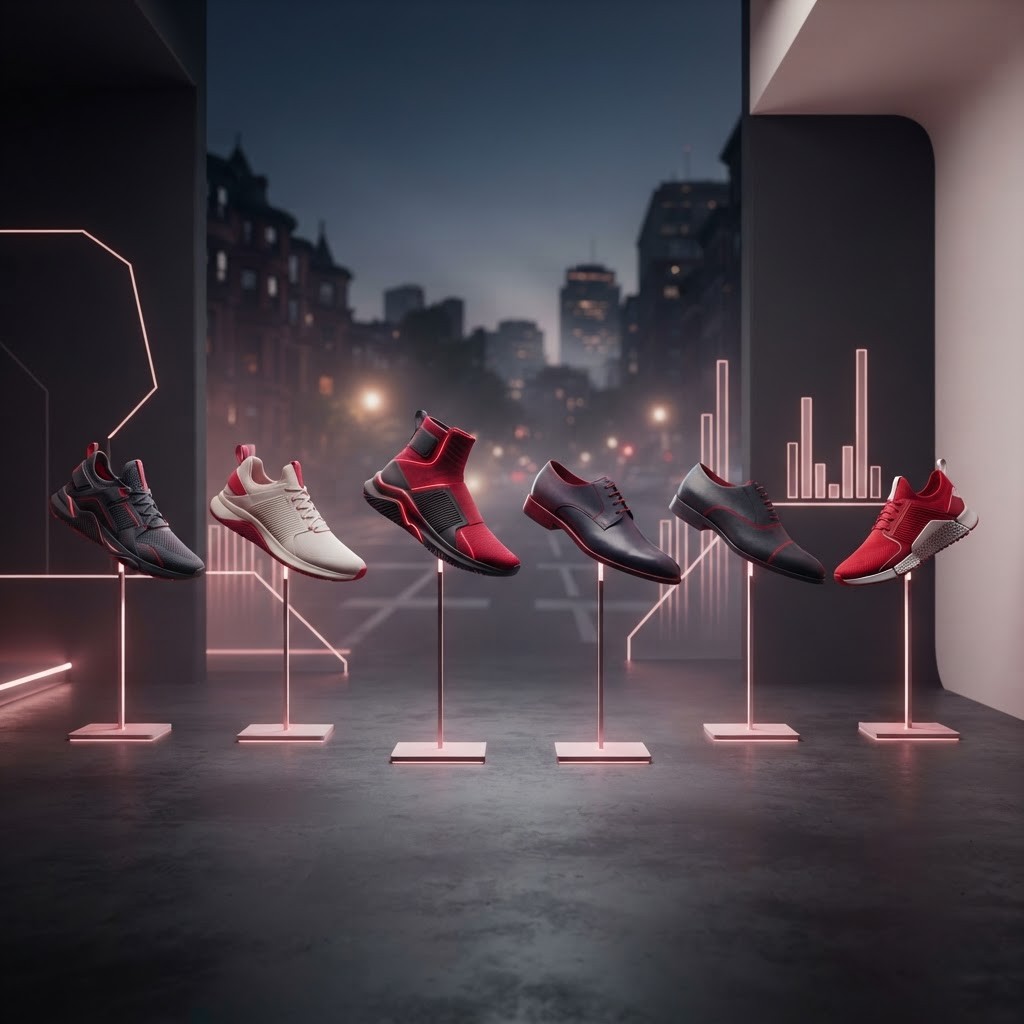
Boston Is a Walking City, and Its Footwear Market Proves It
Boston consistently ranks among the most walkable major cities in the United States, and that single fact explains almost everything about its footwear market. Residents cross cobblestones in the North End, climb Beacon Hill's brick sidewalks, navigate slush in February, and log significant daily mileage between transit stops and offices. Shoes are not accessories here. They are equipment. The brands that thrive in this market are the ones that combine durability, weather resistance, and genuine comfort without abandoning style.
The region also carries real shoemaking heritage. New England was once the center of American footwear manufacturing, and several companies born from that tradition still operate with the same emphasis on leather quality, resoleable construction, and lasts refined over decades. That legacy sits alongside a growing wave of comfort-technology brands and specialty running retailers, creating a market with unusual depth for a city of Boston's size.
1. Alden Shoe Company
Alden is arguably the most respected name in American footwear, and it has been making shoes in Massachusetts since the nineteenth century. The company built its reputation on Goodyear welted construction, shell cordovan leather, and lasts that flatter a wide range of foot shapes. What makes Alden significant for Boston shoppers is longevity. A well-maintained pair can be resoled repeatedly, making the cost per wear remarkably low over a decade. The brand's boots, loafers, and longwings have become staples in the city's professional wardrobes precisely because they improve with age.
2. New Balance
Headquartered in Boston, New Balance is woven into the fabric of the city. Its Brighton campus, its long association with the Boston Marathon, and its continued domestic manufacturing give it a hometown authority no competitor can replicate. The brand's strength lies in width sizing, a detail that matters enormously for runners and walkers with feet that standard sizing ignores. Its lifestyle lines have also become globally fashionable, but locally the appeal remains practical: shoes that fit properly and hold up across long training cycles and long commutes.
3. Saucony
Another brand with deep Massachusetts roots, Saucony has built a loyal following among distance runners who value responsive cushioning and a natural ride. The company's performance lines are engineered around biomechanics research, with attention to heel-to-toe drop, midsole geometry, and outsole grip. In a city that produces thousands of marathon hopefuls each year, Saucony's credibility comes from athletes who train through New England winters and want shoes that perform on wet pavement as reliably as on dry track.
4. Rockport
Rockport pioneered the idea that dress shoes could use athletic footwear technology, and that concept resonates strongly in Boston. Cushioned footbeds, flexible outsoles, and shock-absorbing midsoles wrapped in leather uppers appeal to professionals who walk considerable distances in business attire. The brand's ongoing relevance rests on solving a specific local problem: looking appropriate in a downtown office while still being able to walk from South Station without discomfort.
5. Marathon Sports and Specialty Run Retailers
Boston's specialty running retailers deserve recognition as brands in their own right. Their differentiator is expertise. Gait analysis, treadmill fittings, arch assessment, and honest recommendations across multiple manufacturers deliver value that online shopping cannot match. These shops also anchor local running communities through group runs, race support, and injury-prevention clinics. For first-time marathon trainees, the guidance is often more valuable than the shoes themselves.
6. Timberland
Founded in nearby New Hampshire, Timberland is a natural fit for New England conditions. Waterproof leather, sealed seams, and aggressive lug outsoles make its boots practical from November through March. The brand has also invested heavily in recycled materials and regenerative leather sourcing, aligning with a regional customer base that increasingly scrutinizes supply chains. Its boots function as genuine winter footwear rather than seasonal styling exercises.
7. Comfort and Orthopedic Specialists
Boston's world-class medical community has created strong demand for footwear that accommodates orthotics, plantar fasciitis, diabetic foot care, and post-surgical recovery. Specialist retailers and brands in this category focus on removable footbeds, generous toe boxes, seamless linings, and stability features validated by podiatrists. Many work directly with clinicians on referrals, and their fitting processes are considerably more rigorous than mainstream retail. For anyone managing a foot condition, this segment is the most important part of the local market.
8. Independent Cobblers and Restoration Shops
A repair culture supports Boston's premium footwear market. Independent cobblers resole welted shoes, replace heels, recondition leather, and stretch problem areas, extending the life of quality pairs by years. Their presence changes the buying calculation entirely, making a higher initial investment rational because the shoe is a long-term asset. Several shops also offer custom dyeing and refinishing, turning restoration into a form of personalization.
9. Sustainable Footwear Newcomers
A newer cohort of brands competes on materials transparency, using natural wool, plant-based foams, recycled polyester, and carbon-accounted supply chains. Boston's environmentally conscious and student-heavy population has made the city a strong test market for these products. The most credible entrants publish material breakdowns and offer recycling or resale programs, and their machine-washable knit uppers have proven genuinely practical for daily commuting.
10. Kids and Family Footwear Specialists
Growing feet need frequent, accurate fitting, and Boston's family-focused footwear retailers have built lasting businesses on that need. Trained staff measure length, width, and arch development, advise on growth allowance, and stock brands with reinforced toes and washable materials. Trade-in and exchange programs help families manage the cost of rapid size changes, and school-season fitting events have become community fixtures in many neighborhoods.
What to Look for When Buying Shoes in Boston
Prioritize four things. First, weather performance, including waterproofing and outsole traction for ice and wet brick. Second, width and volume fit, since length alone is a poor predictor of comfort. Third, resoleability, because welted construction transforms an expensive shoe into an economical one. Fourth, purpose separation. A shoe that tries to serve as running trainer, work shoe, and winter boot will underperform at all three. Most experienced Boston residents maintain a small rotation instead.
Industry Trends Worth Watching
Several developments are reshaping local footwear retail. In-store three-dimensional foot scanning is improving fit accuracy and reducing returns. Supercritical foam midsoles are delivering lighter, more resilient cushioning across price tiers. Resale of premium welted shoes is expanding as buyers recognize residual value. And manufacturers are paying closer attention to regional climate data, tuning traction compounds for cold-weather flexibility rather than relying on a single global specification.
Final Thoughts
The best footwear brands in Boston earn their standing by respecting how the city actually moves. Heritage shoemakers deliver decades of wear, hometown athletic brands solve real fit problems, specialty retailers provide expertise that prevents injury, and comfort specialists serve genuine medical needs. Whether you are training for a spring marathon, dressing for a downtown office, or simply preparing for another New England winter, this market offers well-made options for every mile.
