
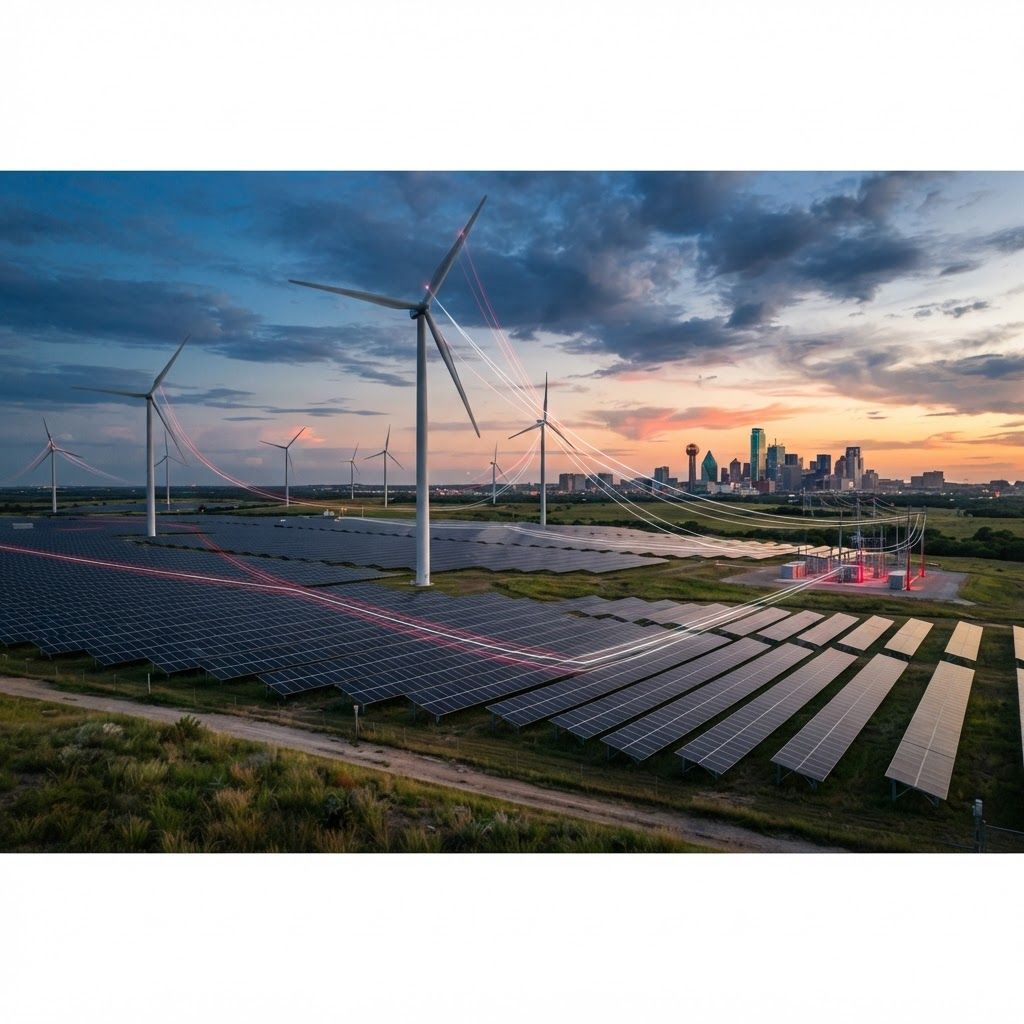
Renewable Energy in the Dallas Market
Dallas sits within one of the world’s most dynamic power markets. Texas combines abundant wind and solar resources, significant electricity demand, a competitive retail market, and a large transmission system. Dallas-based companies, regional developers, and national operators all contribute to projects serving North Texas. This editorial list emphasizes market relevance, operating experience, technology breadth, and development capability rather than a rigid ranking.
1. Leeward Renewable Energy
Dallas-headquartered Leeward Renewable Energy develops, owns, and operates wind, solar, and energy storage projects. Its established operating portfolio and active development pipeline make it a major local renewable platform. The company’s lifecycle capabilities span origination, construction oversight, operations, and long-term asset management.
2. Vesper Energy
Vesper Energy, based in the Dallas area, develops utility-scale solar and storage projects. It works with landowners, communities, utilities, and corporate buyers to move projects from early development toward operation. Its focus on large projects and battery storage aligns with growing demand for flexible, dispatchable clean power.
3. Recurrent Energy
Recurrent Energy develops and operates large solar and energy storage assets across major markets, including Texas. The company brings experience in project finance, power contracting, construction, and asset operations. Dallas-area energy buyers may encounter Recurrent through utility procurement and corporate clean-energy agreements.
4. NextEra Energy Resources
NextEra Energy Resources is one of North America’s largest renewable developers and operators, with extensive wind, solar, and storage activity. Its scale supports sophisticated financing and long-term operational capabilities. In Texas, the company participates in a market where weather, congestion, and price volatility require strong commercial and technical management.
5. Invenergy
Invenergy develops and operates wind, solar, storage, transmission, and other energy infrastructure. Its diversified portfolio and engineering expertise make it relevant to Texas’s evolving grid. Businesses exploring power purchase agreements may value developers that can combine project development with market and risk-management experience.
6. RWE Clean Energy
RWE is a major renewable energy operator with significant U.S. wind, solar, and battery interests. Texas is an important market within its portfolio. The company’s global capabilities and operating scale support large projects, while local execution remains essential for interconnection, land, construction, and community engagement.
7. Enel North America
Enel North America develops and operates renewable generation and storage and provides energy services to commercial customers. Its Texas activity includes large-scale assets and customer-focused solutions. The combination of generation and energy management can be useful for organizations seeking measurable progress toward sustainability goals.
8. Pattern Energy
Pattern Energy develops, owns, and operates renewable energy and transmission infrastructure. It has extensive experience with large wind projects and increasingly diversified clean-energy systems. The company’s approach highlights the importance of transmission and stakeholder engagement in bringing remote Texas resources to demand centers.
9. Clearway Energy Group
Clearway develops and operates wind, solar, and storage projects and serves utility and corporate customers. Its broad portfolio provides experience across technologies and contract structures. Buyers should examine project location, delivery profile, congestion exposure, and credit terms when comparing proposals.
10. EDF Renewables North America
EDF Renewables works across utility-scale wind, solar, storage, distributed energy, and asset optimization. Its long operating history and technical resources make it a notable participant in Texas renewables. The company can support projects from development through long-term operations.
What Differentiates Renewable Developers
A strong developer needs more than a project pipeline. Interconnection position, site control, permitting progress, equipment strategy, financing capability, construction partners, and community relationships determine whether a project can reach operation. In ERCOT, buyers should also examine settlement location, curtailment, congestion, shape risk, and how a contract behaves during extreme weather.
Choosing a Renewable Energy Partner
Dallas businesses should begin with clear objectives: cost stability, emissions reduction, additional renewable capacity, resilience, or a combination. Compare physical supply, virtual power purchase agreements, retail products, renewable energy certificates, and onsite generation. Independent legal, tax, engineering, and market advice can help buyers understand long-term obligations and avoid treating every renewable claim as equivalent.
Editorial Selection Methodology
This guide weighs market presence, range of capabilities, professional reputation, practical relevance to Dallas customers, and evidence of sustained activity in the field. Inclusion does not mean that one provider is best for every reader, and the order should not replace project-specific research. Company services, ownership, staffing, product availability, and commercial terms can change, so readers should verify current details directly before making a commitment.
A useful comparison begins with a written statement of needs, budget, schedule, risk tolerance, and desired outcomes. Ask each candidate to explain its relevant experience, the people responsible for delivery, quality controls, communication process, pricing assumptions, and approach when conditions change. Request references or representative examples where appropriate, and compare proposals on equivalent scope rather than headline price alone. Dallas is a large, fast-changing market, so local knowledge can be valuable, but it should be considered alongside technical depth, transparency, capacity, and long-term support. Independent legal, financial, engineering, or other professional advice may also be appropriate for consequential decisions.
