
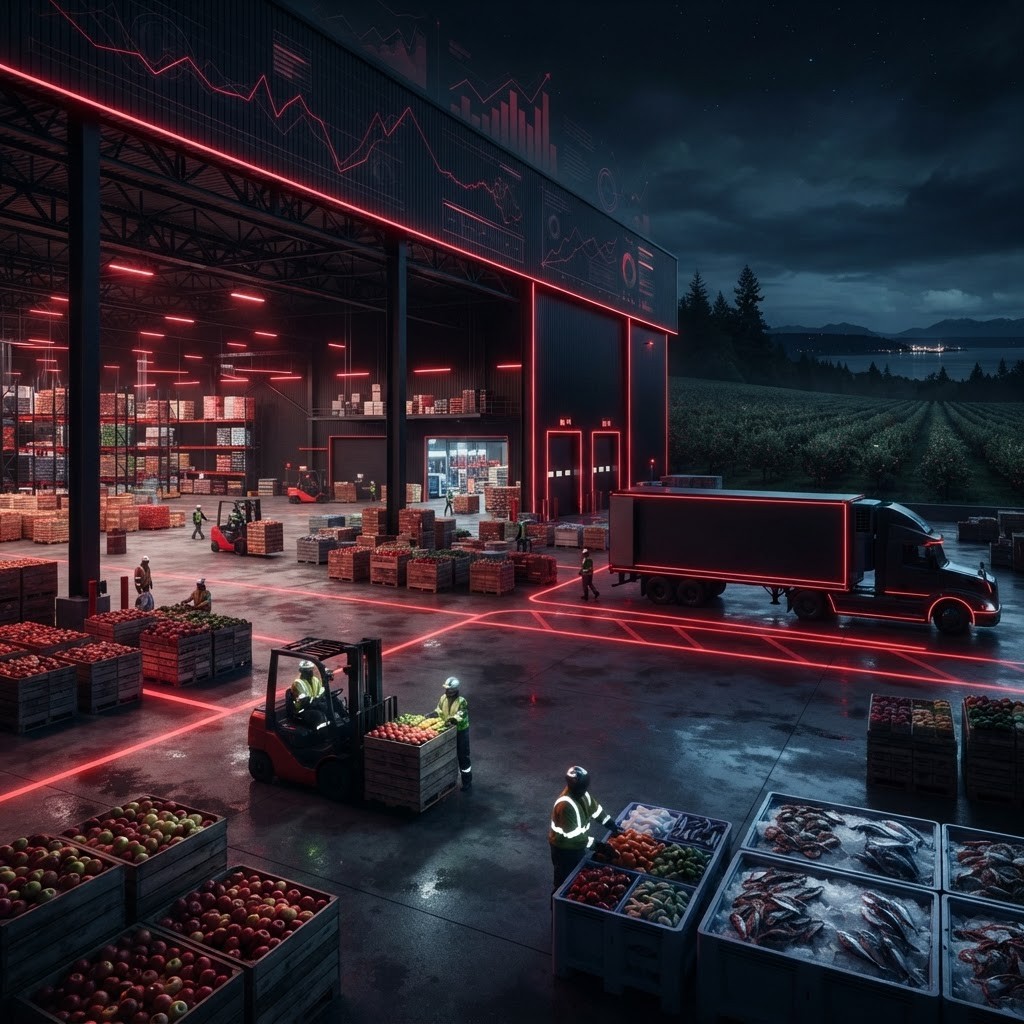
Food Distribution in One of America's Richest Agricultural States
Washington is an agricultural powerhouse. It leads the nation in apples, sweet cherries, hops, and pears, produces enormous volumes of potatoes, wheat, berries, and dairy, and supports a seafood industry spanning Puget Sound shellfish to Alaska-caught fish landed and processed locally. Food wholesalers are the connective tissue of that economy, moving product from growers and processors to the restaurants, grocery stores, schools, hospitals, and food service operations that feed the state.
The wholesale landscape includes broadline distributors carrying thousands of items across categories, produce specialists focused on fresh quality and rapid turns, protein and seafood houses with cutting and portioning capability, specialty and natural foods distributors serving independent grocers, and cash-and-carry operations supporting small restaurants and caterers. Most successful operators use a primary broadline supplier supplemented by two or three specialists.
Top 10 Best Food Wholesalers in Washington
1. Charlie's Produce — A Seattle-based produce distributor with a strong reputation across the Pacific Northwest, Charlie's is known for quality control, grower relationships, and chef-focused service. Its differentiator is freshness discipline: fast inventory turns and cold chain management that preserve shelf life for restaurants where produce quality is visible on every plate.
2. Food Services of America and Broadline Distributors — Broadline distributors with Washington operations supply the full spectrum of dry goods, frozen items, refrigerated products, and non-food supplies. Their strength is consolidation, allowing an operator to receive most of what they need on a small number of scheduled deliveries.
3. Peterson Company — A specialty food distributor serving Northwest chefs with cheese, charcuterie, and hard-to-find ingredients. Peterson's value lies in curation and product knowledge, helping restaurants differentiate menus with items broadline suppliers rarely carry.
4. Pacific Seafood and Regional Seafood Wholesalers — Seafood wholesalers with Washington operations supply fresh and frozen fish and shellfish with the handling expertise that seafood demands. Traceability and species verification are central to their credibility, alongside cutting services that reduce labor in restaurant kitchens.
5. Sysco Seattle and Spokane Operations — As one of the largest food service distributors nationally, Sysco's Washington operations offer extensive product breadth, business consulting services, and menu development support. For multi-unit operators, systemwide consistency and reporting capability are meaningful advantages.
6. Unified Grocers and Grocery Wholesale Cooperatives — Grocery wholesalers supply independent supermarkets across Washington with center store, fresh, and private label programs. Their contribution is enabling independent grocers to compete on price and assortment against national chains.
7. Cash and Carry Smart Foodservice Warehouses — Warehouse-format wholesalers with locations throughout Washington serve small restaurants, food trucks, caterers, and community organizations. The model provides no-minimum purchasing and immediate availability, which suits operators managing tight cash cycles.
8. Organically Grown Company and Natural Foods Distributors — Organic and natural distributors connect Washington and regional organic farms with grocers and co-ops. Their strength is grower partnership and certification integrity, supported by transparent sourcing information that natural foods shoppers expect.
9. Yakima Valley Produce Packers and Shippers — Packing houses and shippers in the Yakima Valley and Wenatchee area move tree fruit and row crops into national and export channels. Their differentiators are storage technology such as controlled atmosphere rooms, grading precision, and the logistics capability to serve distant markets while maintaining quality.
10. Local Food Hubs and Farm-to-Institution Aggregators — Food hubs aggregate product from small and mid-sized Washington farms to supply schools, hospitals, and restaurants that want local sourcing but cannot manage dozens of individual grower relationships. They have become an important channel as institutional local purchasing commitments expand.
Cold Chain and Food Safety Expectations
Food distribution succeeds or fails on temperature control and documentation. Reputable wholesalers operate under food safety plans consistent with modern preventive controls requirements, maintain refrigerated fleets with temperature monitoring, and can produce records on request. Buyers should ask about third-party audit results, recall procedures, and traceability capability, particularly for high-risk categories such as leafy greens, seafood, and ready-to-eat items. Verifying temperature on receipt and refusing product outside specification should be standard practice at every operation.
How Operators Should Choose a Distributor
Start with delivery schedule and geography, because a distributor that cannot serve your location on the days you need is disqualified regardless of price. Compare product breadth against your actual menu rather than a catalog count. Evaluate order accuracy and fill rate, since substitutions and shortages disrupt kitchens far more than a slightly higher case price. Understand pricing structure, including whether you are on cost-plus or market pricing, and review it periodically. Finally, weigh the value of the sales representative: a knowledgeable rep who anticipates seasonal shifts and flags upcoming shortages is a genuine operational asset.
Trends Shaping Washington Food Wholesale
Local sourcing continues to strengthen, driven by consumer interest and institutional purchasing policies. Labor constraints have increased demand for value-added products such as pre-cut produce and portioned proteins that reduce kitchen labor. Technology adoption is accelerating, with online ordering platforms, usage analytics, and inventory integration becoming standard expectations. Sustainability efforts focus on packaging reduction, route efficiency, and food waste diversion through donation and composting partnerships.
Washington operators are fortunate to sit close to exceptional raw ingredients. The wholesalers who serve them best are those who understand seasonality, communicate honestly about availability, and treat quality as a shared responsibility rather than a line item.
