
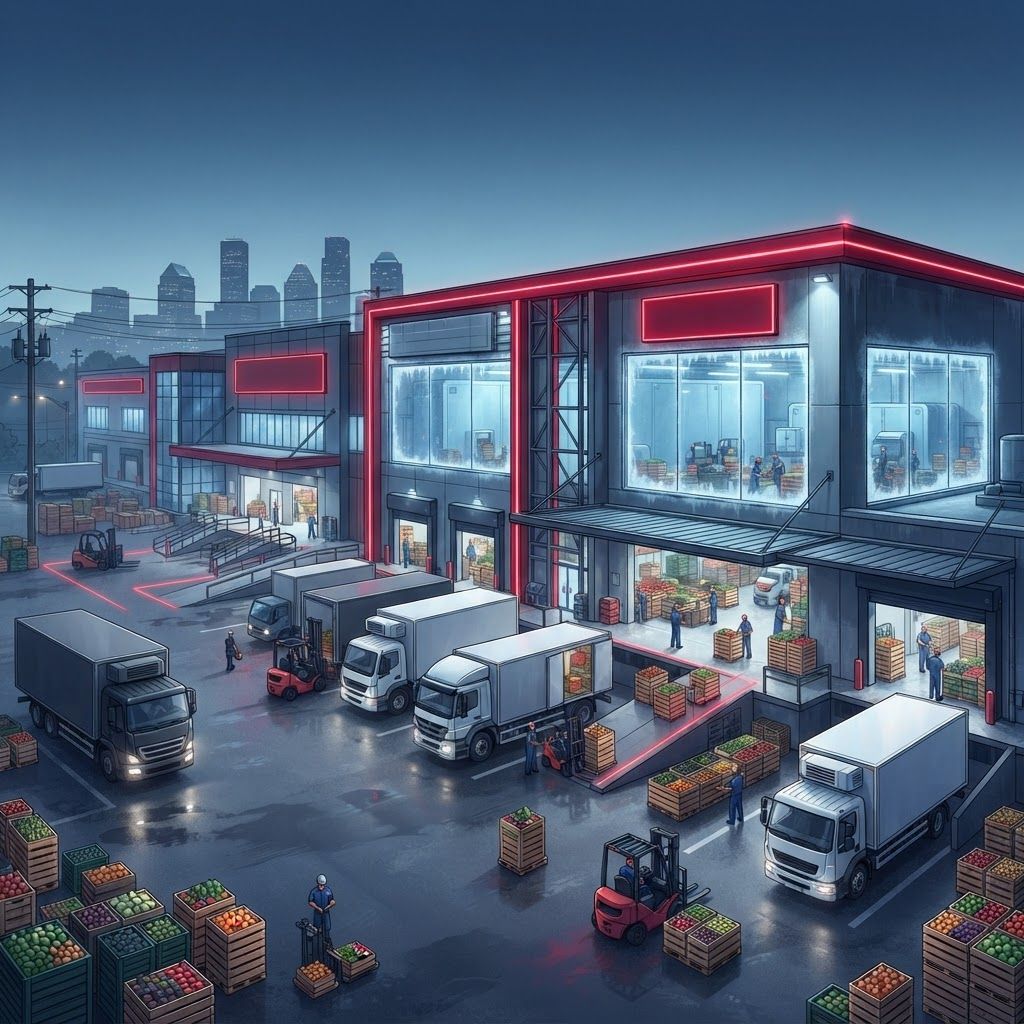
Feeding a Food City
Louisville has earned a genuine culinary reputation, built on independent restaurants, an inventive chef community, bourbon-driven hospitality, and long-standing regional food traditions. Behind every one of those kitchens sits a distribution network moving proteins, produce, dairy, dry goods, and specialty ingredients through the city every day. The quality of that network directly shapes what appears on local menus.
Geography helps considerably. Louisville sits within a day's drive of a large share of the American population, and its highway and rail access make it efficient for both inbound consolidation and outbound distribution. Kentucky agriculture supplies produce, beef, poultry, and dairy regionally, while the city's cold storage capacity supports frozen and refrigerated inventory at scale.
The Top 10 Best Food Wholesalers in Louisville
1. Creation Gardens
Founded in Louisville, Creation Gardens has grown from a produce specialist into a broadline distributor with a strong chef-focused identity. It is known for high-quality produce, specialty items, local sourcing relationships, and account representatives who understand kitchen operations rather than just order forms. Independent restaurants frequently cite its willingness to source unusual ingredients.
2. Sysco Louisville
As one of the largest foodservice distributors in the world, Sysco offers enormous breadth across proteins, produce, frozen goods, dry storage, disposables, and equipment. Business review support, menu costing tools, and consistent delivery scheduling are significant advantages for operators managing tight margins. Scale also provides pricing stability during commodity volatility.
3. US Foods Louisville Division
US Foods serves restaurants, healthcare facilities, schools, and hospitality customers with a broadline portfolio plus strong exclusive brands. Its digital ordering platform, inventory tools, and culinary support resources help operators streamline back-of-house administration. Chef-developed product programs assist restaurants refreshing menus without adding labor complexity.
4. Piazza Produce and Specialty Foods
Serving the Ohio Valley including Louisville, this distributor focuses on fresh produce alongside specialty cheeses, charcuterie, and imported ingredients. Produce distribution demands rigorous temperature control and rapid turns, and this company's cold chain discipline supports quality on delicate items. Culinary specialists help chefs plan around seasonality.
5. Falls City Meats and Seafood
This wholesaler specializes in custom-cut proteins, dry-aged beef, portion control cuts, and fresh seafood delivered to restaurant specifications. Working with a protein specialist rather than a broadline supplier gives chefs control over grade, trim, and portion consistency. Traceability documentation supports both quality assurance and menu storytelling.
6. Bluegrass Local Food Distribution
Aggregating output from Kentucky farms, this distributor supplies seasonal vegetables, pasture-raised meats, eggs, honey, and artisan dairy to restaurants, groceries, and institutions. Aggregation solves the core problem of local sourcing, which is that individual farms cannot economically deliver small quantities to many buyers. Farm identification allows operators to credit producers on menus.
7. Ohio Valley Restaurant Supply and Dry Goods
Focused on shelf-stable inventory, this wholesaler stocks flour, oils, canned goods, rice, spices, sauces, and paper products in bulk formats. Predictable pricing agreements on high-volume staples help operators forecast food cost accurately. Warehouse pickup options benefit small operators managing minimum order thresholds.
8. Kentuckiana Bakery and Dairy Wholesale
Supplying breads, rolls, pastries, butter, cheese, cream, and frozen dough to restaurants, cafes, and retailers, this distributor operates on tight daily delivery cycles. Freshness in this category is measured in hours, so route reliability is the defining performance metric. Frozen dough programs allow smaller kitchens to bake without a full bakery operation.
9. Riverport International and Ethnic Food Wholesale
Louisville's growing immigrant and refugee communities have created strong demand for authentic ingredients, and this wholesaler imports and distributes Asian, Latin American, African, Middle Eastern, and European specialty foods. Restaurants and independent grocers depend on it for products broadline distributors do not carry. Bulk formats and consumer-size packaging are both available.
10. Portland Beverage and Snack Distribution
Supplying coffee, tea, juices, bottled beverages, syrups, and packaged snacks to offices, convenience retailers, and hospitality customers, this distributor also services brewing and dispensing equipment. Bundling equipment service with product supply removes a maintenance headache for operators. Route-based replenishment keeps break rooms and coolers consistently stocked.
Cold Chain and Food Safety Fundamentals
Temperature control is the backbone of food distribution. Refrigerated products must remain within safe ranges continuously from processor to walk-in cooler, and frozen goods must avoid partial thaw cycles that degrade texture and safety. Reputable wholesalers monitor trailer temperatures, document delivery temperatures, and train drivers on proper handling during unloading.
Receiving practices matter equally on the buyer side. Check delivery temperatures with a calibrated thermometer, inspect packaging integrity, verify date codes, and reject questionable product immediately rather than accepting it and hoping. Document these checks; they are among the first things a health inspector or third-party auditor reviews.
Traceability has also become essential. Modern requirements emphasize the ability to trace food items forward and backward through the supply chain quickly during a recall. Ask prospective distributors how their lot tracking works and how rapidly they can notify you of an affected item.
Trends in Food Wholesale
Local and transparent sourcing continues to grow, driven by consumer interest in provenance and by operators seeking menu differentiation. Second, labor scarcity in kitchens has increased demand for value-added products such as pre-cut produce, portioned proteins, and prepared components that reduce prep hours without sacrificing quality.
Technology adoption is accelerating as well, with online ordering, usage analytics, automated par level suggestions, and integration into restaurant inventory systems becoming standard expectations. Finally, sustainability is influencing packaging choices, food waste reduction programs, and route efficiency, with many operators now tracking waste as closely as food cost.
How to Choose and Negotiate with a Food Wholesaler
Begin by mapping your actual purchase mix. Most successful operations use a primary broadline distributor for breadth plus one or two specialists for produce, protein, or specialty items. Consolidating too aggressively can sacrifice quality on signature ingredients, while spreading purchases too thin forfeits volume leverage and complicates receiving.
Negotiate on total landed cost rather than headline pricing. Delivery frequency, minimum order thresholds, fuel surcharges, drop fees, and rebate structures all affect real cost. Ask for transparent cost-plus pricing on key categories where possible, and schedule regular business reviews to examine price movement and substitution rates.
Evaluate service metrics formally. Track fill rate, on-time delivery percentage, credit resolution speed, and substitution frequency. A distributor that consistently ships complete and on time protects your menu and your labor schedule far more than one offering marginally lower prices with unreliable service.
Conclusion
Louisville's food wholesalers range from global broadline distributors to chef-driven specialists, local farm aggregators, protein experts, and international importers. That diversity is a genuine asset for operators, allowing precise matching of supplier strengths to menu needs. Prioritize cold chain discipline, traceability, and service reliability, and the city's distribution network will support consistent quality from delivery dock to plate.
