
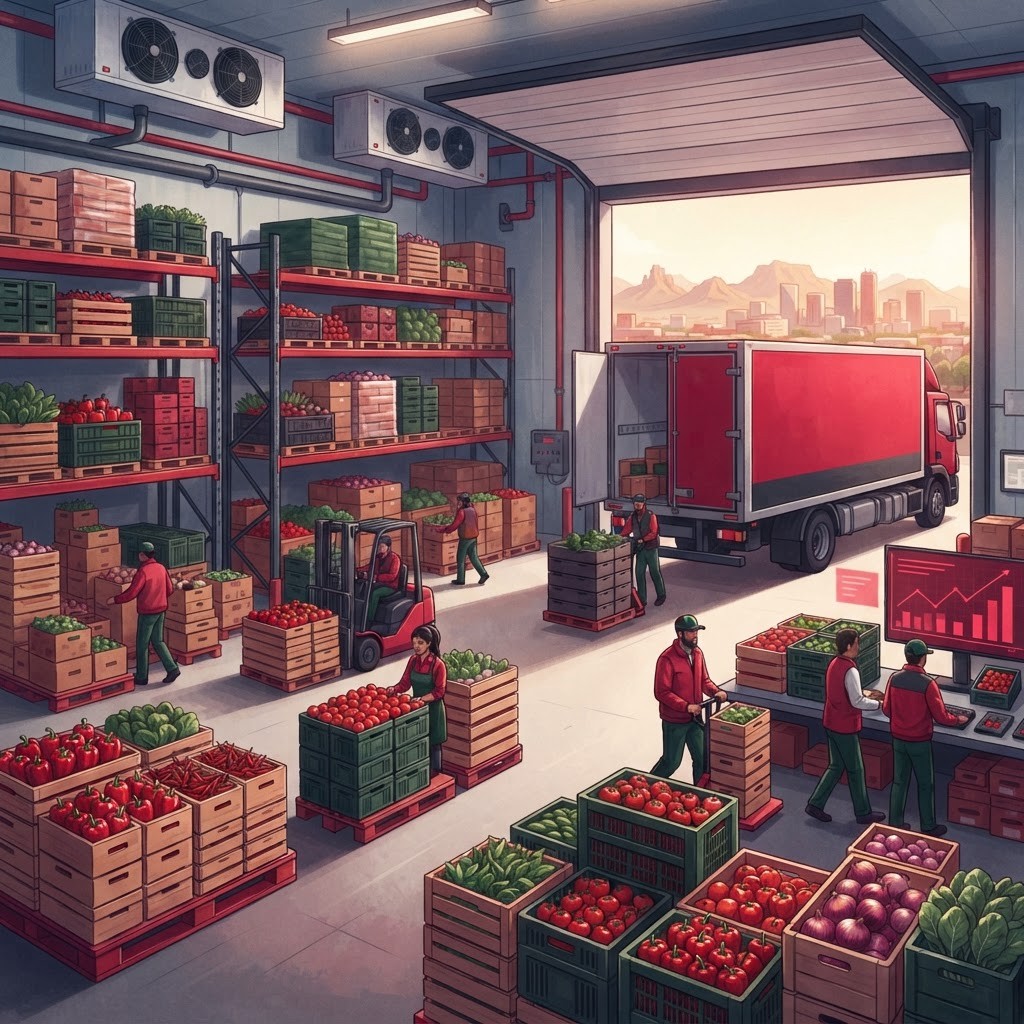
The Food Supply Landscape in El Paso
Few American cities have a food supply chain quite like El Paso's. The region sits at the northern edge of a major produce corridor, with chiles, onions, pecans, cotton-rotation vegetables, and dairy produced locally in the Mesilla and Rio Grande valleys, while enormous volumes of tomatoes, peppers, avocados, and berries cross the border year-round. That combination gives local buyers access to fresh product at prices and freshness levels that inland cities cannot match in winter months.
At the same time, El Paso's food service demand is distinctive. The city's culinary identity is built on regional Mexican and borderland cooking, which drives specific wholesale demand for masa, dried chiles, queso fresco varieties, tortillas at industrial volume, and specific beef and pork cuts. Wholesalers who understand that palate serve their customers better than national distributors applying a generic catalog.
Evaluating a Food Wholesale Partner
Food safety comes first. Ask about third-party audit certification, whether the operation maintains a documented hazard analysis and preventive controls plan, and how temperature is monitored and recorded through storage and transit. A wholesaler that can produce delivery temperature logs on request is operating at a different level than one that cannot.
Delivery reliability is the next filter. Restaurants build menus around scheduled deliveries, and a missed drop on a Friday can cost a weekend's revenue. Evaluate on-time performance, order fill rate, and how substitutions are communicated. A supplier who substitutes without notice is a liability in a kitchen with allergen protocols.
Then consider category fit, pricing structure, and support. Some operators are best served by a broadline distributor providing one truck and one invoice. Others get better quality and pricing by combining a specialist produce house, a dedicated protein supplier, and a dry goods distributor. Finally, look for value-added services: menu costing help, inventory tools, and product training all reduce operating friction.
1. Rio Grande Produce Company
Rio Grande Produce Company sources fresh fruits and vegetables from valley growers and cross-border shippers, delivering to restaurants, schools, and grocers. Its buyers work the market daily, adjusting sourcing as quality and pricing shift between regions and seasons.
Its differentiator is chile expertise. Few products matter more in this market, and the company's ability to supply specific varieties at defined heat levels and ripeness stages gives chefs consistency they cannot get from generic sourcing.
2. Franklin Foodservice Distributors
Franklin Foodservice Distributors operates as a broadline supplier, carrying frozen and refrigerated product, dry goods, disposables, and cleaning chemicals. Independent restaurants form the core of its customer base, particularly operators who need a single dependable delivery rather than managing many vendors.
The company's strength is support for small operators. Menu costing assistance, portion control guidance, and inventory par-level setup help new restaurants survive the thin-margin early years.
3. Borderland Meat and Protein Supply
Borderland Meat and Protein Supply provides beef, pork, poultry, and seafood with custom cutting and portioning. Steakhouses, taquerias, caterers, and institutional kitchens rely on specification consistency, and the company cuts to customer spec rather than offering only standard portions.
Its differentiator is traceability and aging control. Documented sourcing plus disciplined temperature and aging management deliver predictable tenderness and yield, which directly protects food cost percentages.
4. Sun City Bakery Wholesale
Sun City Bakery Wholesale supplies breads, rolls, pastries, tortillas, and pan dulce to restaurants, hotels, grocers, and cafeterias. Volume tortilla production is a defining feature of the local market, and the company operates on the daily delivery rhythm that fresh bakery requires.
Buyers value its early delivery windows. Bakery arriving before opening rather than mid-service is the difference between a smooth morning and a scramble, and the company builds routes accordingly.
5. Chihuahuan Specialty and Latin Foods
Chihuahuan Specialty and Latin Foods focuses on authentic regional ingredients: dried chiles, spices, moles, canned goods, masa, dairy such as queso fresco and crema, and traditional confections. Its customers include restaurants, grocers, and food manufacturers.
Its differentiator is depth in a narrow lane. Where broadline distributors carry one or two chile varieties, this type of specialist carries many, enabling chefs to build genuinely regional flavor profiles rather than approximations.
6. Desert Dairy Distributors
Desert Dairy Distributors handles milk, cream, butter, cheese, yogurt, and ice cream from regional dairies. Dairy is among the most temperature-sensitive and shortest-shelf-life categories, which makes cold chain discipline the entire value proposition.
The company differentiates through route density and refrigerated fleet investment. Frequent deliveries mean customers hold less inventory and waste less product, improving both quality and margin.
7. Pass of the North Beverage Wholesale
Pass of the North Beverage Wholesale supplies non-alcoholic beverages, coffee, tea, syrups, juices, and dispensing equipment. Beverage carries some of the strongest margins in food service, so equipment reliability and product consistency have outsized profit impact.
Its strength is equipment service. Providing and maintaining dispensing, brewing, and ice equipment alongside product supply eliminates finger-pointing when a machine fails during a rush.
8. Mesa Organic and Natural Foods Wholesale
Mesa Organic and Natural Foods Wholesale serves natural grocers, cafes, and health-focused restaurants with certified organic produce, plant-based proteins, gluten-free products, and clean-label pantry items. Consumer demand in this category continues to grow steadily across demographics.
Its differentiator is certification documentation. Retailers making organic or allergen-free claims need supporting paperwork, and a supplier who maintains it reduces compliance risk for the buyer.
9. Lone Star Frozen Foods Distribution
Lone Star Frozen Foods Distribution provides frozen vegetables, appetizers, proteins, desserts, and prepared items, along with cold storage and blast freezing services. Institutional kitchens serving schools, hospitals, and large employers depend heavily on frozen product for cost control and labor efficiency.
The company's advantage is storage capacity. Offering third-party frozen warehousing lets customers buy opportunistically at favorable pricing without expanding their own freezer footprint.
10. Sunland Restaurant Supply and Provisions
Sunland Restaurant Supply and Provisions combines shelf-stable food distribution with smallwares, packaging, and takeout containers. As off-premise dining has become a permanent share of restaurant revenue, packaging quality has grown into a genuine brand consideration.
Its differentiator is packaging consultation. Matching container performance to specific dishes prevents soggy, leaking deliveries that generate refunds and poor reviews.
Trends in Food Wholesale
Traceability requirements are tightening. Regulatory expectations and retailer demands increasingly require lot-level tracking from farm to plate, and distributors are investing in systems that can produce that record quickly during a recall event.
Labor scarcity is driving demand for value-added prep. Pre-cut produce, portioned proteins, and partially prepared components let kitchens operate with smaller crews. Meanwhile, waste reduction has become both an economic and reputational priority, prompting more accurate ordering tools, shorter delivery cycles, and donation partnerships for surplus product.
Practical Sourcing Advice
Audit your purchase history before negotiating. Most operators discover that a small number of items drive the majority of spend, and concentrating negotiation there yields far more savings than haggling across hundreds of line items.
Insist on receiving discipline internally. Even the best wholesaler cannot protect you if deliveries are accepted without temperature checks and quantity verification. Build a two-minute receiving routine and enforce it. Finally, cultivate a backup supplier in each critical category, because weather, border delays, and equipment failures are inevitable in this region.
Final Thoughts
El Paso's food wholesale market is uniquely advantaged by valley agriculture, cross-border produce flows, and a strong regional culinary identity. The ten companies profiled illustrate how specialization creates value, from chile sourcing expertise to cold chain reliability and packaging consultation. Choose partners based on food safety rigor, delivery dependability, and category depth, and your kitchen will run with fewer surprises and better margins.
