
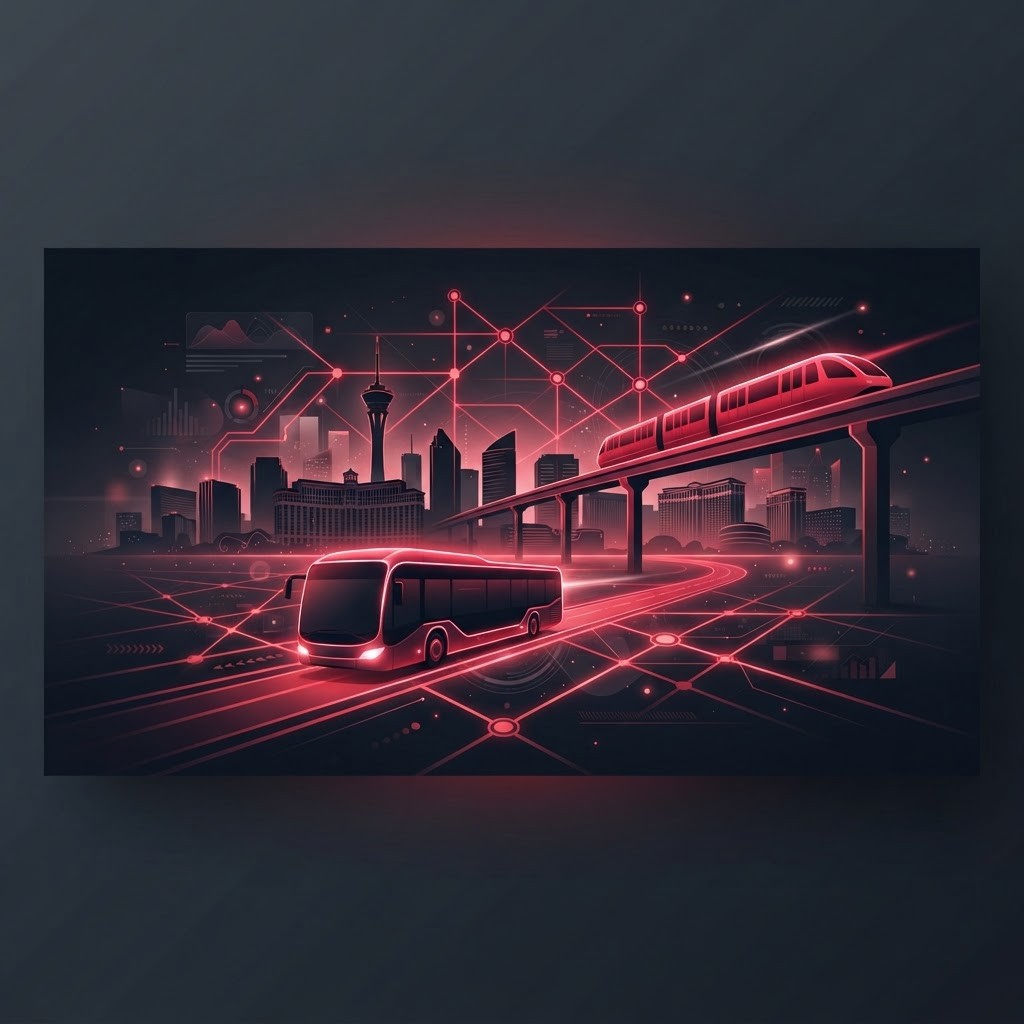
Getting Around Las Vegas Without a Car
Las Vegas has a reputation as a driving city, yet millions of residents and visitors move through it every year without ever getting behind the wheel. The valley's transit ecosystem includes high-frequency bus corridors, a private monorail serving the resort district, elevated trams connecting neighboring properties, paratransit for riders with disabilities, airport shuttles, and regional connections reaching well beyond Clark County.
Understanding the options matters because the city's layout is deceptive. The Strip looks walkable on a map, but individual resort blocks are enormous, and a single casino-to-casino walk can take twenty minutes in triple-digit heat. Choosing the right transit service can transform a frustrating day into an efficient one.
1. RTC Southern Nevada Bus Network
The Regional Transportation Commission of Southern Nevada operates the backbone of local public transit, with a large fleet covering the Las Vegas Strip, downtown, Henderson, North Las Vegas, Summerlin, and outlying neighborhoods. Routes run on numbered corridors along major arterials, with many operating on frequent daytime headways and several offering overnight service for hospitality workers on late shifts. Fare passes are available in short-term, twenty-four-hour, and multi-day formats, and a mobile ticketing app simplifies boarding.
2. The Deuce
The Deuce is the double-decker bus route running the length of the Strip and continuing into downtown Las Vegas. It is the single most useful transit option for visitors: it stops directly at major resorts, operates around the clock, and offers upper-deck views of the corridor. Because it makes frequent stops, it is best for shorter hops rather than end-to-end journeys during peak congestion.
3. Strip and Downtown Express
The SDX express service covers a similar corridor with far fewer stops, linking the resort district, the convention center area, and downtown attractions. For riders traveling a longer distance along the same axis, the express saves meaningful time compared with local service, making it a favorite during convention weeks.
4. Las Vegas Monorail
The Las Vegas Monorail is a privately operated elevated system running along the east side of the Strip, connecting several major resorts and providing convenient access to the convention district. Trains arrive frequently, avoid street traffic entirely, and offer single-ride, day, and multi-day passes. It is especially valuable for trade show attendees moving between hotels and exhibition halls.
5. Resort Tram Systems
Several complimentary trams connect clusters of neighboring resorts on the west side of the Strip. These short elevated links are free to ride, require no ticketing, and dramatically reduce walking distance between adjacent properties. Travelers often overlook them, but they are among the most efficient ways to move short distances in the resort core.
6. RTC Paratransit
Paratransit provides origin-to-destination service for riders whose disabilities prevent them from using fixed-route buses. Trips are reserved in advance, vehicles are wheelchair accessible, and the service operates in tandem with the regular network's coverage area. It is an essential accessibility layer in a metro with a large senior population.
7. Airport Ground Transportation and Shuttles
Harry Reid International Airport sits unusually close to the resort corridor, and its ground transportation options include shared-ride shuttles, scheduled hotel shuttles, and connections to nearby transit stops. Shared shuttles are budget-friendly for solo travelers, though they make multiple hotel stops, so passengers with tight schedules should factor in extra time.
8. Regional and Intercity Bus Connections
Intercity carriers link Las Vegas with Los Angeles, Phoenix, Salt Lake City, and smaller Nevada communities. For travelers without cars, these coaches offer reclining seats, onboard connectivity, and luggage capacity at a fraction of the cost of flying. Combined with local RTC routes, they make car-free regional travel realistic.
9. Downtown Loop and Neighborhood Circulators
Free and low-cost circulator services operate in the downtown core, connecting the entertainment district, the arts district, government buildings, and museums. These small-vehicle loops are ideal for short trips that would be tedious on foot in summer heat, and they help visitors explore beyond the Strip.
10. Bike Share, Scooters, and Microtransit
Micromobility rounds out the ecosystem. Shared bicycles and, in permitted areas, electric scooters cover the awkward last mile between a transit stop and a final destination. On-demand microtransit pilots and rideshare services fill gaps in low-density suburbs and late-night periods when fixed-route frequency drops.
Trends Shaping Transit in Southern Nevada
Regional planners have prioritized several long-term goals: higher-capacity corridors along the busiest arterials, improved bus rapid transit with dedicated lanes and signal priority, fleet electrification and cleaner-fuel vehicles suited to desert operating conditions, and better shade and cooling at stops, which is a genuine public health issue in a city with extreme summer temperatures. Fare technology is also improving, with account-based mobile payment reducing the friction of cash boarding.
Practical Tips for Riders
Buy a day pass if you plan more than two trips, since it usually costs less than individual fares. Download the transit app for real-time arrival information, because scheduled times can shift during peak Strip congestion. Allow extra time on convention weekends and major event nights, when traffic on Las Vegas Boulevard slows dramatically. Carry water in summer and plan to wait in shade wherever possible.
Residents commuting to hospitality jobs should check overnight route coverage carefully, as service spans vary by corridor. Visitors staying on the east side of the Strip often get the best value from combining the monorail with walking, while those on the west side benefit most from resort trams plus the Deuce. If your itinerary includes both downtown and the far south end of the Strip, the express service will save the most time.
Final Thoughts
Las Vegas transit is more capable than its car-centric image suggests. The RTC network provides genuine metro-wide coverage, the Deuce and express routes handle the tourist corridor, the monorail and trams solve resort-district movement, paratransit ensures accessibility, and micromobility closes the last-mile gap. Mixing these services strategically is the key to moving through the valley affordably and comfortably.
