
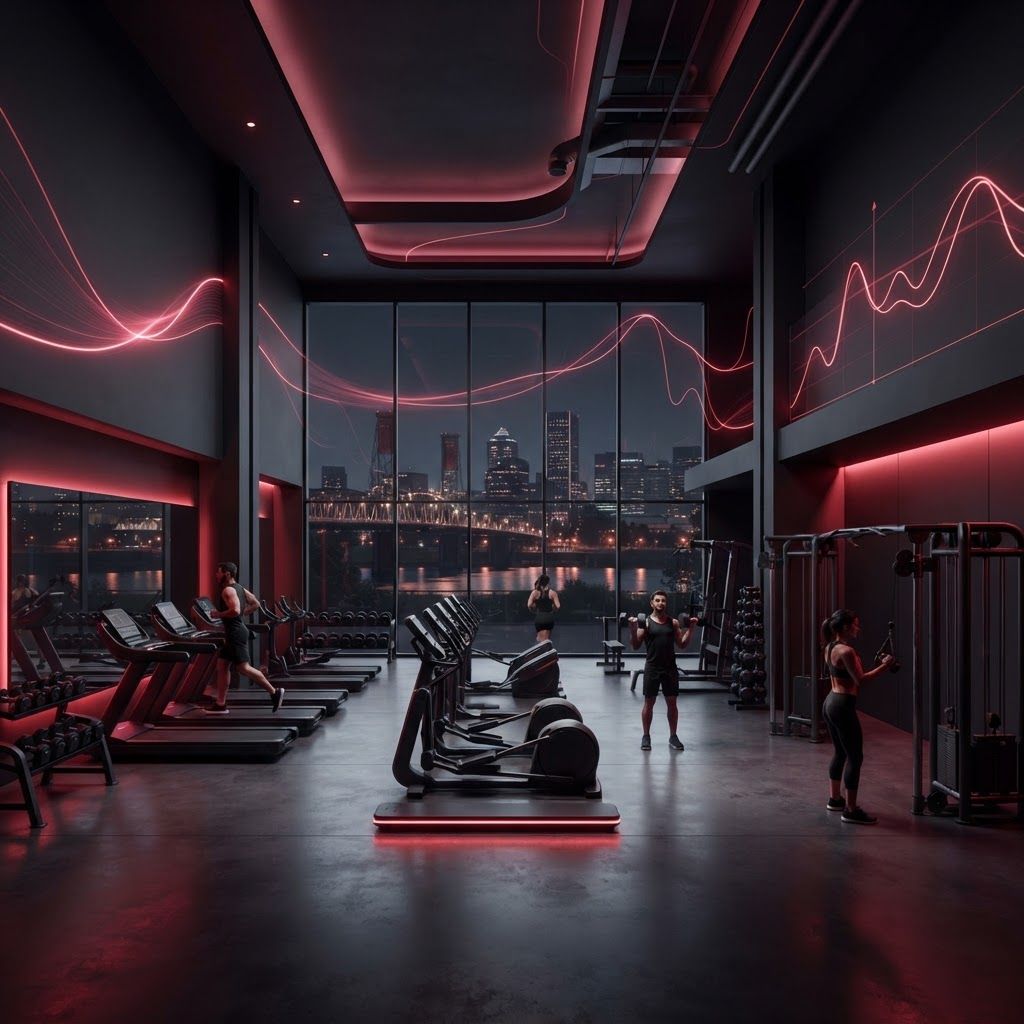
Why Portland Takes Fitness Seriously
Portland has built a reputation as one of the most active cities in the Pacific Northwest, and its fitness industry reflects that culture. Between the running trails along the Willamette River, the cycling commuters crossing the Tilikum and Hawthorne bridges, and the weekend hikers heading toward the Gorge, residents arrive at the gym already invested in movement. As a result, local fitness centers have evolved past the basic membership model. They function as training laboratories, recovery clinics, and neighborhood social hubs all at once.
The city's rainy season also plays a major role. From November through April, indoor training becomes essential, which is why the strongest Portland gyms invest heavily in climate-controlled turf areas, indoor cycling studios, lap pools, and mobility spaces. Choosing well means finding a facility that keeps you consistent during the gray months, not just during a sunny July.
The Ten Best Fitness Centers in Portland
1. Loprinzi's Gym
A genuine Portland institution, Loprinzi's has served the Southeast Portland community for decades with an old-school bodybuilding philosophy. The gym is known for its deep free-weight selection, unpretentious atmosphere, and members who prioritize consistency over trend-chasing. Lifters who want plates, benches, and space to work without waiting on a machine queue tend to make this their long-term home.
2. The Circuit Bouldering Gym
The Circuit turned climbing into a mainstream Portland fitness pursuit. With multiple locations across the metro area, it offers extensive bouldering terrain, dedicated training boards, yoga programming, and fitness areas designed around climbing-specific strength. Route setters rotate problems frequently, which keeps sessions mentally engaging and prevents the plateau that traditional cardio equipment often produces.
3. 24 Hour Fitness
For members who need flexibility above all else, 24 Hour Fitness delivers broad access across Portland and its suburbs. Locations typically include pools, saunas, basketball courts, group exercise studios, and full cardio and strength floors. The appeal is practical: shift workers, parents, and commuters can train at unconventional hours without rearranging their entire schedule.
4. Orangetheory Fitness
Orangetheory brought heart-rate-based interval training to Portland neighborhoods including the Pearl District, Hollywood, and Cedar Mill. Sessions combine treadmill work, rowing, and floor-based strength while coaches monitor effort zones in real time. Members who thrive on measurable output and coach accountability often find it the most effective structure for staying consistent through winter.
5. Firebrand Sports
Located in the Pearl District, Firebrand Sports focuses on low-impact, high-intensity training built around reformer Pilates and indoor cycling. The studio's methodology emphasizes core control, joint-friendly resistance, and precise instruction. It has become a favored option for runners and cyclists seeking cross-training that supports rather than compounds their existing training load.
6. Recreativ Fitness
Recreativ built its reputation on small-group personal training and semi-private coaching. Instead of large classes, members work in tight groups with individualized programming, which makes the model attractive to people returning from injury or starting resistance training for the first time. Coaches emphasize movement screening and progressive loading over intensity for its own sake.
7. Barre3
Founded in Portland, Barre3 grew from a single local studio into a nationally recognized brand while keeping its home-city presence strong. Classes blend isometric holds, controlled range of motion, and balance work, delivered in a notably welcoming environment. Its Portland roots and body-positive coaching philosophy continue to attract a loyal multigenerational membership.
8. Portland Barbell
Portland Barbell serves the strength-sport community with competition-grade platforms, calibrated plates, specialty bars, and coaching for powerlifting and Olympic weightlifting. The facility caters to athletes preparing for meets as well as general members who simply prefer barbell-centered programming with knowledgeable supervision.
9. Vida Fitness and Wellness Studios
Boutique wellness studios operating under the Vida umbrella emphasize the intersection of training and recovery. Offerings commonly include strength classes, mobility sessions, sauna access, and bodywork services. This integrated model reflects a broader Portland trend: treating recovery as a scheduled component of fitness rather than an afterthought.
10. YMCA of Columbia-Willamette
The YMCA remains one of the most valuable options in the city for families. Facilities typically include lap and leisure pools, gymnasiums, youth programming, senior fitness classes, and childcare, all supported by financial assistance programs. For households that want one membership to cover multiple ages and goals, few Portland alternatives match its breadth.
Trends Shaping Portland Gyms
Several clear shifts define the local market. First, recovery has become a revenue center. Contrast therapy, infrared saunas, compression boots, and guided mobility programming now appear in facilities that once offered only towels and a water fountain. Second, hybrid membership models have persisted, with many studios maintaining on-demand video libraries alongside in-person classes.
Third, strength training has decisively overtaken steady-state cardio as the primary draw, including among older members and women who previously gravitated toward class-only formats. Portland gyms have responded by expanding rack counts, adding dumbbells beyond the traditional ceiling weight, and hiring coaches with strength-specific credentials.
How to Evaluate a Portland Fitness Center
Start with logistics, because proximity predicts attendance better than amenities do. A gym within a ten-minute walk, bike ride, or drive from home or work will almost always outperform a superior facility across town. Portland's traffic patterns and limited parking in the central city make this especially true.
Next, evaluate peak-hour density. Visit at the exact time you intend to train and count how long members wait for equipment. Then examine coaching credentials, cleanliness standards, and contract terms, paying close attention to cancellation policies and annual maintenance fees. Finally, use trial passes aggressively. Most reputable Portland facilities offer a free class or day pass, and a single session reveals more about culture and fit than any brochure.
Final Thoughts
The best fitness center in Portland is the one you will actually use in February, not the one that looks most impressive in a July tour. The city offers unusual variety, from decades-old iron gyms to climbing walls, reformer studios, and full-service family facilities. Match the environment to your temperament and your calendar, and the results tend to follow naturally.
