
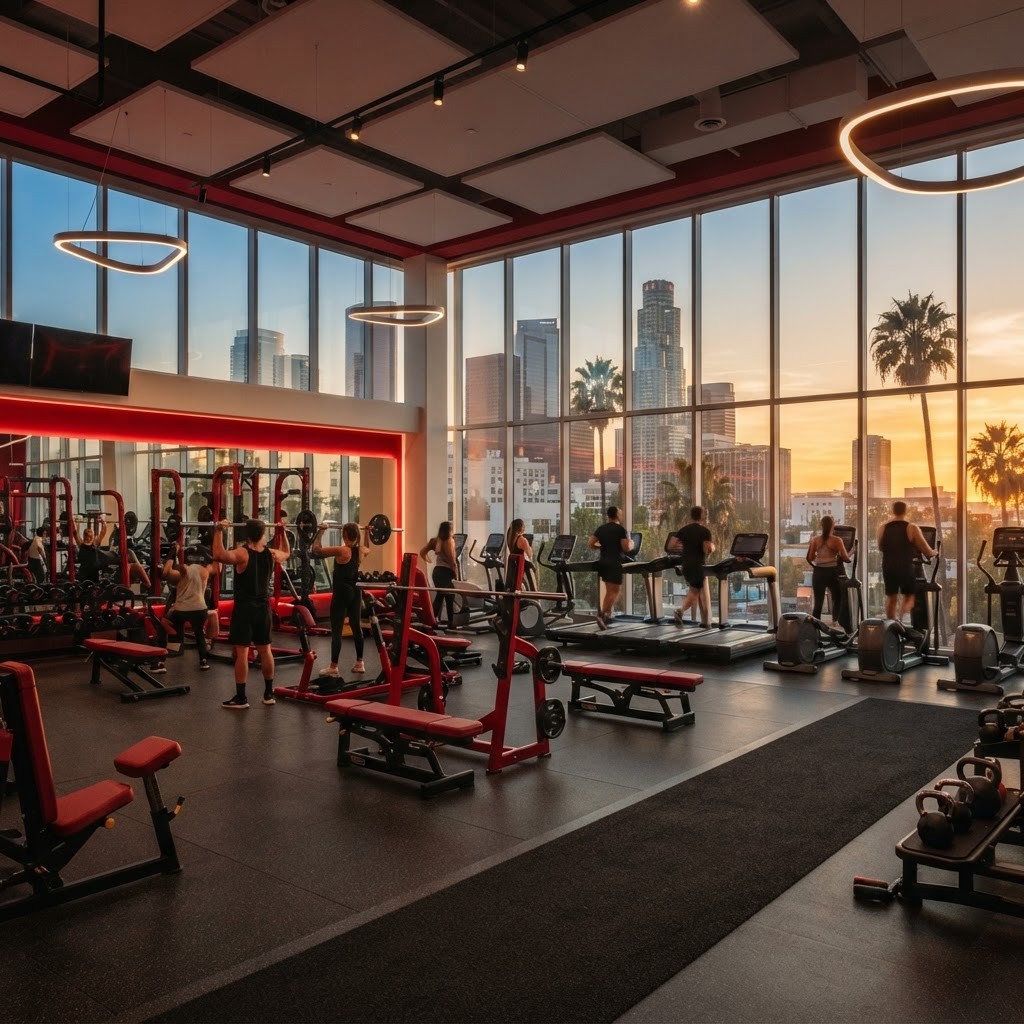
Los Angeles fitness beyond the hype
Los Angeles gym culture ranges from beachfront training and bodybuilding landmarks to polished social clubs and neighborhood recreation centers. The best fitness center is one a member can use consistently and safely. Equipment quality matters, but so do coaching standards, cleanliness, crowding, ventilation, commute time, contract terms, and whether the environment supports the person’s goals rather than someone else’s image.
1. Equinox
Equinox operates several Los Angeles clubs and is known for premium facilities, extensive group classes, personal training, and polished locker rooms. Its appeal lies in an all-in-one experience with strength, cardio, mobility, and recovery options. Prospective members should compare individual locations because layout, crowd patterns, and amenities differ.
2. John Reed Fitness
John Reed Fitness combines large training floors with bold music and design. The Downtown Los Angeles club attracts members who enjoy a high-energy environment and broad equipment selection. It can be motivating for social exercisers, though anyone sensitive to sound or seeking a quiet atmosphere should visit at their usual training time.
3. Gold’s Gym Venice
Gold’s Gym Venice is an iconic strength and bodybuilding destination. Its extensive free weights, machines, and serious training culture remain the primary draw. The gym can inspire experienced lifters and visitors interested in fitness history, while beginners may benefit from an orientation or qualified coach to navigate the large facility safely.
4. Heimat
Heimat presents a luxury fitness and lifestyle club concept with training spaces, classes, wellness amenities, and social areas. Its design-forward setting appeals to members seeking more than a conventional gym. The premium model makes sense only if the member will use the broader amenities and values the club environment.
5. Los Angeles Athletic Club
The Los Angeles Athletic Club blends historic character with fitness, aquatics, court sports, and social facilities in Downtown. Its range supports members who enjoy variety rather than a single training style. Downtown workers and residents may find the location convenient, while others should factor travel and parking into the decision.
6. Barbell Brigade
Barbell Brigade is associated with strength training, powerlifting, and a community-centered lifting culture. Specialized racks, platforms, and strength equipment make it attractive to lifters with performance goals. Newer members should learn sound technique, gradual progression, and appropriate equipment etiquette rather than copying advanced loads.
7. Training Mate
Training Mate offers energetic group workouts influenced by Australian sporting culture. Coach-led circuits can remove the uncertainty of planning and help members train alongside a community. Group training works best when coaches provide movement options and members resist sacrificing form merely to keep pace.
8. Barry’s
Barry’s is known for interval classes combining treadmill work and strength exercises. The format is efficient, structured, and high energy, with multiple Los Angeles studios. It suits people who enjoy intense coached sessions, but recovery, injury history, and current conditioning should guide frequency and exercise selection.
9. YMCA of Metropolitan Los Angeles
YMCA locations provide accessible fitness, aquatics, classes, youth programs, and community resources across the region. The inclusive model can work well for families and members seeking broad services without a luxury-club atmosphere. Facilities vary, so touring the specific branch is useful.
10. LA Fitness
LA Fitness has widespread Southern California locations and typically offers cardio equipment, weights, group classes, and selected amenities. Network convenience is a major advantage in a sprawling city. Members should assess peak-time crowding, maintenance, class schedules, and the exact terms of the membership agreement.
How to choose a gym you will actually use
Visit during the hour you expect to train. Check whether essential racks, benches, machines, or pool lanes are available, and observe whether staff maintain the floor. Ask trainers about recognized certifications, experience, assessment practices, and how programs are progressed. A good coach adapts training to the person; they do not use exhaustion as the only measure of success.
Read cancellation, initiation, freeze, and annual-fee terms before signing. Consider a facility close enough to survive Los Angeles traffic and a culture where you feel welcome. Beginners need a sensible path to confidence, while athletes may need specialized equipment. Clean surroundings, respectful conduct, and reliable access outperform fashionable extras. The right fitness center makes consistent movement easier, supports gradual progress, and remains useful after the novelty of joining fades.
Making a confident final decision
Before committing, compare at least two suitable providers and keep notes on qualifications, availability, costs, policies, and the questions each team answers well. Independent reviews can reveal patterns, but they should be weighed alongside verified credentials and direct consultation because individual experiences differ. Bring a current medication list, relevant records, and clear goals to any health-related appointment. Ask what outcomes are realistic, how progress or quality is measured, who handles follow-up, and what happens when needs change. Los Angeles offers extraordinary choice, yet a prestigious name is useful only when the service matches the individual. Careful research, transparent communication, appropriate professional oversight, and a sustainable location usually produce a better decision than convenience, advertising, or price considered alone.
